Ecthyma (including ecthyma gangrenosum)
LAST UPDATED: Nov 22, 2021
Introduction
Ecthyma is a cutaneous infection, predominantly due to Group A streptococci and staphylococci, characterised by the formation of adherent crusts, beneath which ulceration develops.
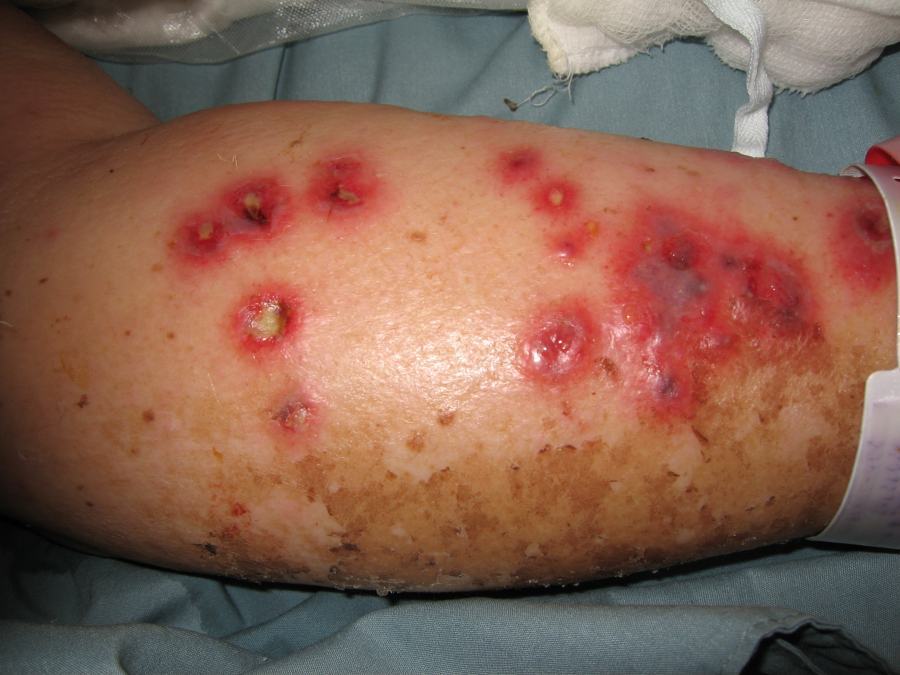
Ecthyma gangrenosum is an uncommon cutaneous infection usually associated with Pseudomonas aeruginosa bacteraemia, and occurs invariably in unwell and immunocompromised patients, especially when there is a prolonged spell of neutropenia. The characteristic lesions of ecthyma gangrenosum are haemorrhagic pustules that evolve into necrotic ulcers with a tender erythematous border.
This chapter is set out as follows:
Aetiology
-
In developed countries ecthyma mainly affects children, whereas in countries with poorer hygiene and nutrition any age can be affected
-
Ecthyma gangrenosum is usually associated with Pseudomonas aeruginosa bacteraemia
-
In addition to the organisms referred to in the introduction, other bacteria, fungi and viruses, including herpes simplex, have been implicated
Clinical findings
Ecthyma
- A condition in which the inflammation caused by a neglected pyogenic infection involves the entire epidermis - lesions can evolve from within sites of pre-existing trauma or boils, and are most commonly found on the buttocks, legs and feet
-
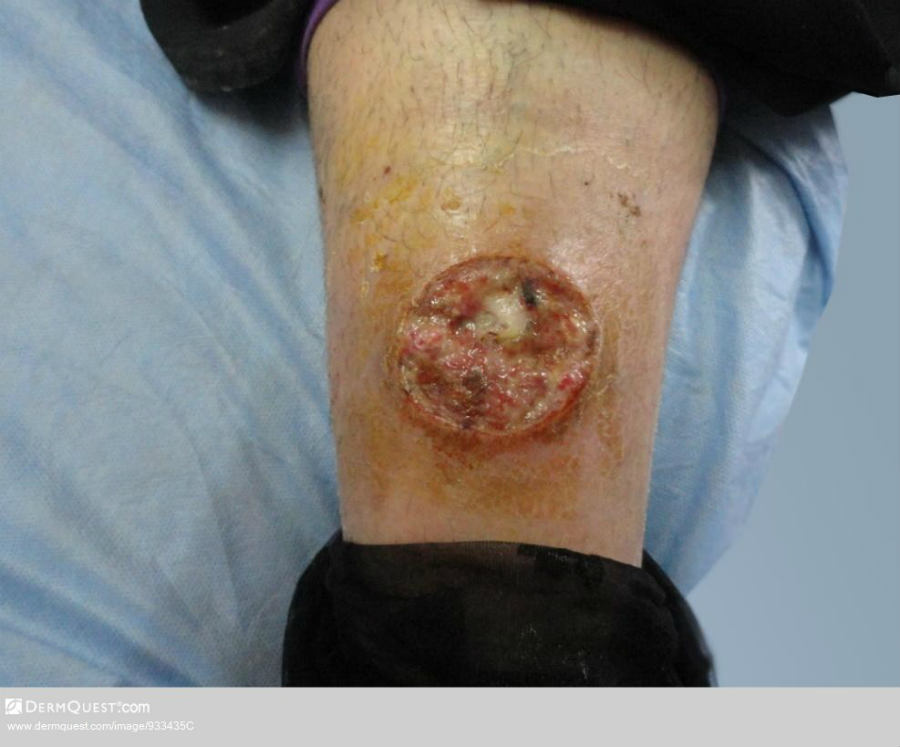
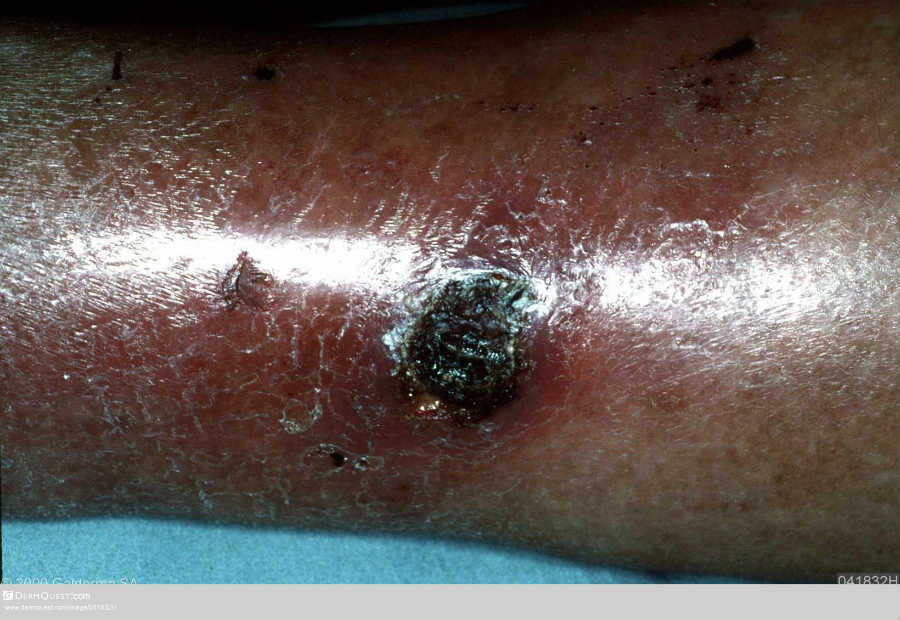
The initial lesion is composed of one or more pustules or vesicles on an erythematous base. The lesion is soon covered by a crust, which can be thick and adherent. The margin can be indurated, raised and violaceous
-
Untreated, lesions may enlarge slowly over weeks-months to a diameter of 2-3 cm, and then heal with scarring
-
Patients are usually otherwise well
Ecthyma gangrenosum
-
Erythema gangrenosum is characterised by single or multiple cutaneous or mucous membrane ulcers that are most often associated with prolonged spells of neutropenia
-
Lesions resemble ecthyma. They first present as a pustule or nodule, which quickly develops a central haemorrhagic area that subsequently breaks down to form a large necrotic ulcer with a tender erythematous border
-
Patients are usually unwell
Clinical Images
Please refer to notes on image rights at bottom of the page with regards to individual image
ownership.
Investigations
-
Skin swabs should be sent for C+S and virology
-
In ecthyma gangrenosum blood cultures are usually positive for Pseudomonas aeruginosa
-
Occasionally skin biopsies are required, one for histology (light microscopy), and a second for tissue culture looking for bacteria, fungi, and mycobacteria
Management
Ecthyma
-
General measures
-
In the short-term patients should use separate towels and flannels to prevent the spread of infection
-
In the longer-term good hygiene is needed to try and prevent recurrence
-
Topical antibiotics - for milder infections
-
Fusidic acid cream
-
Mupirocin should only be used in cases of fucidin resistance
-
Oral antibiotics - for more extensive or persistent cases
-
Flucloxacillin is first line
-
Erythromycin or clarithromycin can be used in cases of penicillin allergy or resistance
-
The duration of treatment varies; in some cases several weeks may be necessary until the lesions resolve
Ecthyma gangrenosum
-
Prompt recognition and inpatient care is required as a high mortality rate is reported with delayed diagnosis and therapy, as well as with multiple lesions and neutropenia
-
Mortality rates of pseudomonas sepsis in immunocompromised patients range from 18-96%
-
If the lesion fails to respond to antimicrobials, surgical debridement of the spreading, necrotic tissue may be required
Disclaimer - the author PCDS cannot accept responsibility for any misleading or incorrect statements, and the management of individual patients remains the direct responsibility of the individual doctor. We do however hope that visitors to this site can contact us regarding comments that are considered misleading or incorrect so that we can continue to improve the site.
Image Rights - The PCDS would like to thank Dermatoweb, DermQuest (Galderma), and others who have contributed images. All named individuals and organisations maintain copyright for the relevant images.