Mucocele (syn. mucous extravasation cyst; mucous retention cyst; ranula)
LAST UPDATED: Jul 25, 2021
Introduction
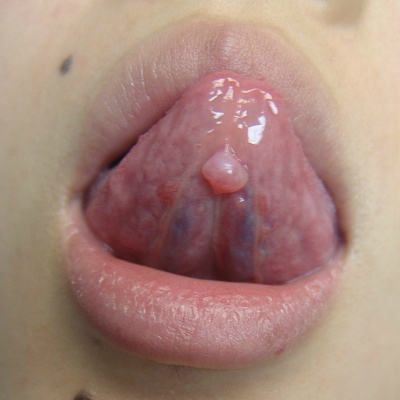
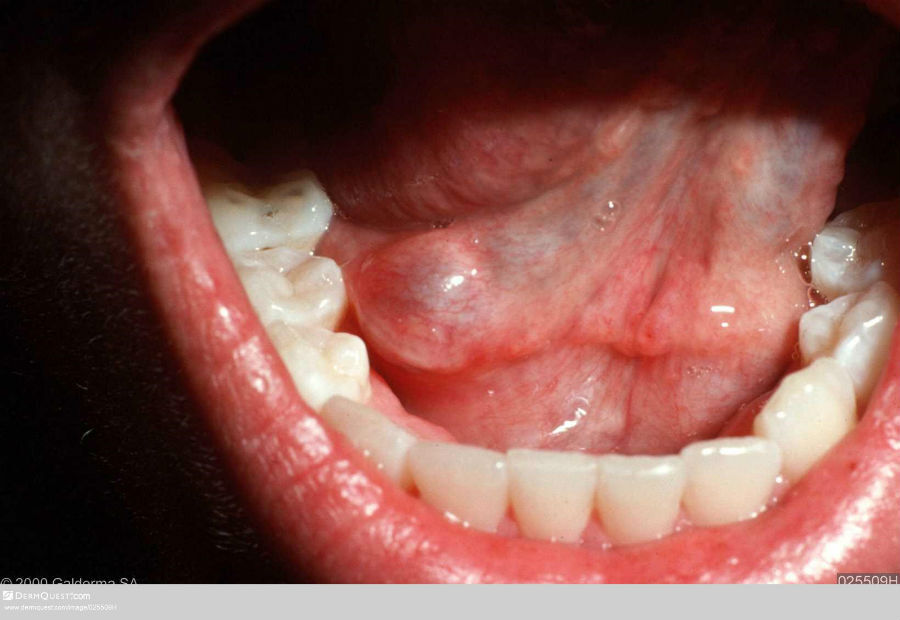
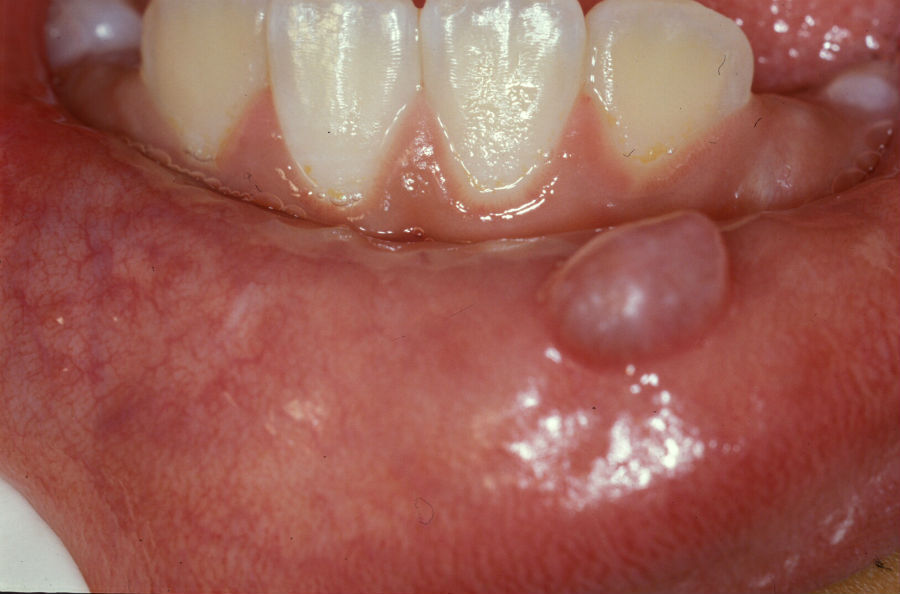
A mucocele is a benign, mucous-containing cystic lesion of the minor salivary glands presenting as a distinct, fluctuant, painless swelling of the mucosa, especially the lower lip.
This chapter is set out as follows:
Aetiology
-
Mucoceles develop as a result of changes to the minor salivary glands, leading to mucous accumulation and local swelling
-
There are two types of mucocele:
-
Extravasation mucocele - results from a broken salivary gland duct, with the subsequent spillage of mucous into the soft tissue around the gland
-
Retention mucocele - results from the decrease or absence of glandular secretion produced by the blockage of salivary gland ducts, with a subsequent build up of mucous
-
Most mucoceles develop as a result of mechanical injury, mainly from the lower lip becoming caught between the maxillary anterior teeth and the mandibular anterior teeth during mastication or with the habit of biting one's lip. They can also arise secondary to chronic inflammation, and occasionally are congenital
Clinical findings
Distribution
- Although mucoceles can occur anywhere in the oral cavity where minor salivary glands are present, approximately 75-80% of cases occur on the lower lip, followed by the floor of the mouth (syn. ranula), ventral tongue, and buccal mucosa
Morphology
- About 75% of lesions are smaller than 1 cm in diameter
-
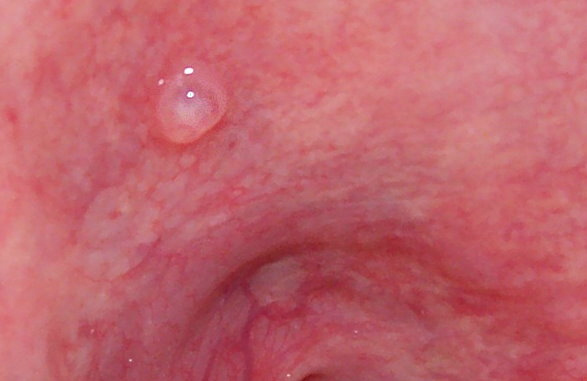
Superficial lesions take on a bluish to translucent hue, whereas deep lesions have normal mucosal coloration. Bleeding into the swelling may impart a bright red and vascular appearance
-
Clinical features include a non-tender, mobile, dome-shaped enlargement with intact overlying epithelium
-
Palpation reveals a fluctuant mass that does not blanch on compression
Clinical Images
Please refer to notes on image rights at bottom of the page with regards to individual image
ownership.
Management
Step 1: conservative management
- In general, no treatment is needed
-
Mucoceles may spontaneously resolve, especially in infants and young children. In a recent retrospective study, approximately 44% of mucoceles in children spontaneously resolved after an average of three months
Step 2: surgery
-
For larger, more troublesome lesions, surgical excision of the mucocele along with the adjacent associated minor salivary glands is recommended
-
The risk for recurrence is minimal when appropriate surgical excision has been performed
Disclaimer - the author PCDS cannot accept responsibility for any misleading or incorrect statements, and the management of individual patients remains the direct responsibility of the individual doctor. We do however hope that visitors to this site can contact us regarding comments that are considered misleading or incorrect so that we can continue to improve the site.
Image Rights - The PCDS would like to thank Dermatoweb, DermQuest (Galderma), and others who have contributed images. All named individuals and organisations maintain copyright for the relevant images.