Eczema: eczema herpeticum

LAST UPDATED: May 30, 2024
Introduction

Atopic patients are at risk of developing more extensive eruptions of herpes simplex (eczema herpeticum) and varicella-zoster infections when compared to non-atopic individuals. 

This chapter is set out as follows: 


Aetiology

  • Most cases of eczema herpeticum are due to herpes simplex virus types 1 or 2 

History

  • Usually arises during a first episode of a herpes simplex infection
  • Eczema herpeticum may also complicate recurrent herpes. However, repeated episodes of eczema herpeticum are unusual
  • It can affect all ages but is more commonly seen in infants and children with atopic eczema 

Clinical findings

Cutaneous features

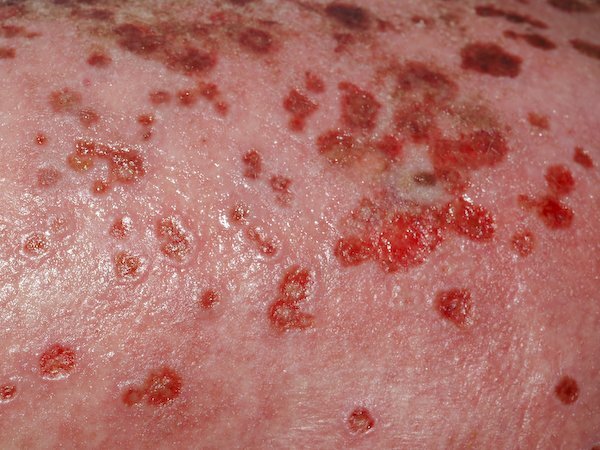
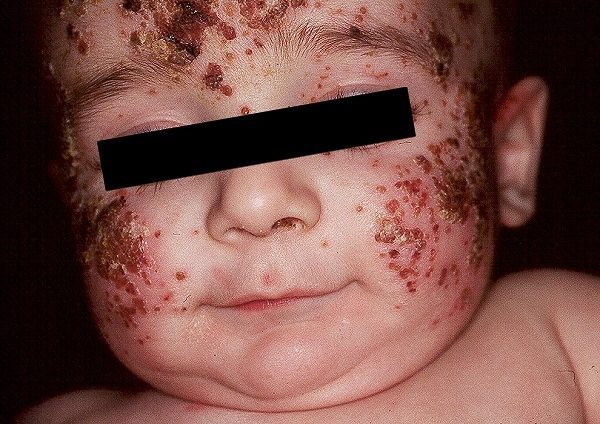
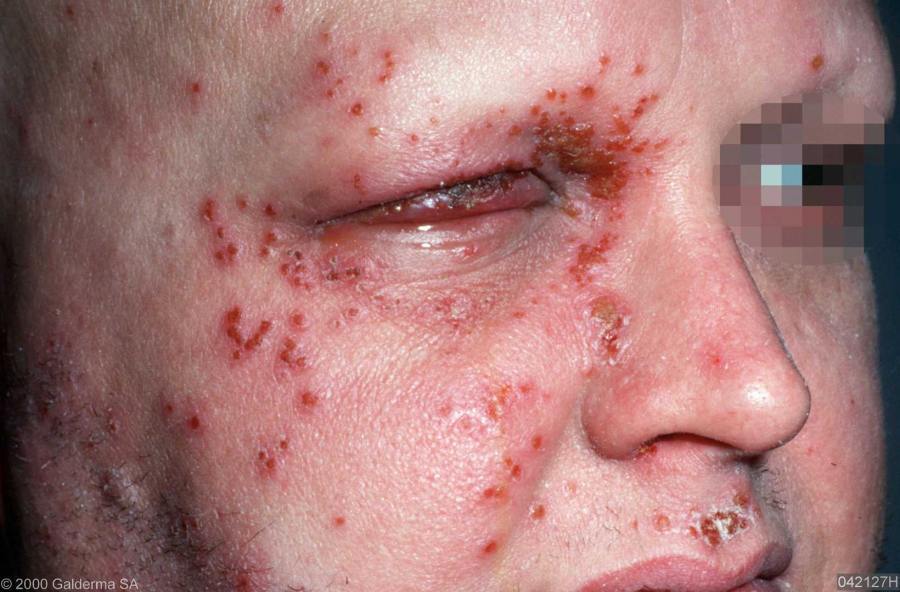
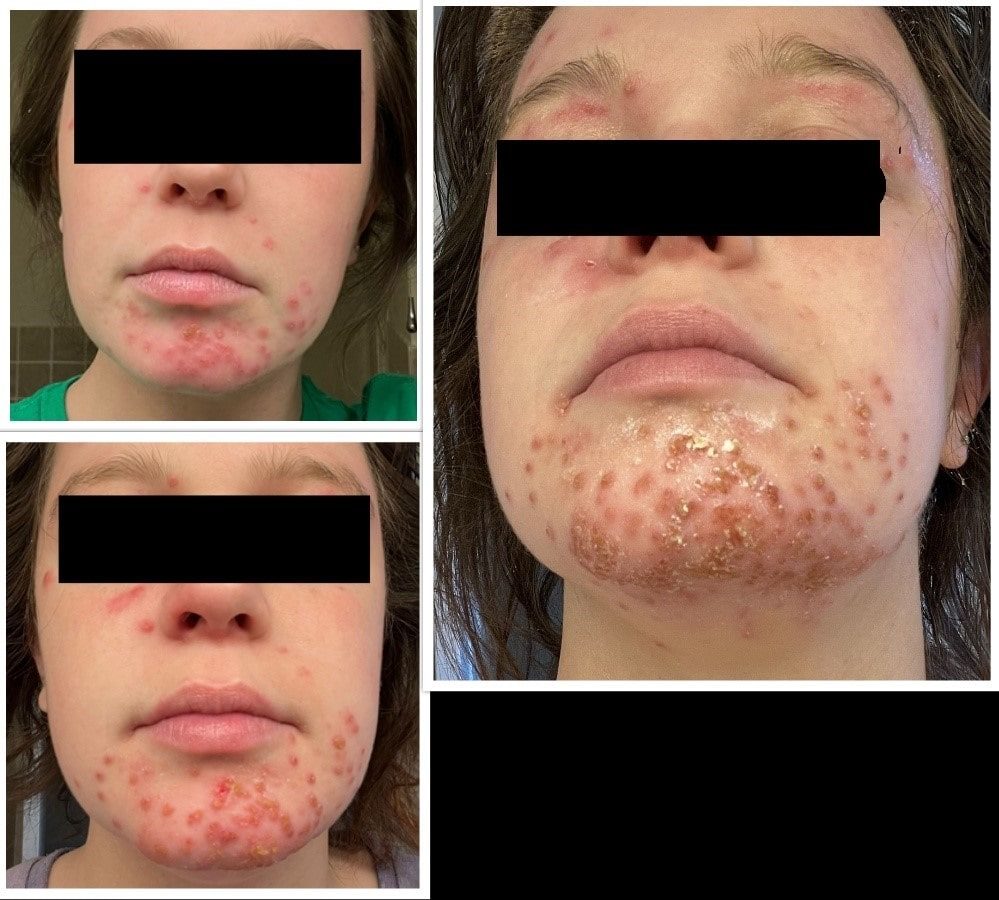
  • Starts with clusters of itchy or painful vesicles / punched-out monomorphic erosions, which may coalesce
  • Any site may be affected, most commonly the face and neck. Lesions can occur in normal skin or in sites actively or previously affected by atopic eczema or other skin conditions
  • New patches form and spread over a period of 7 to 10 days, and can become widespread
  • Secondary bacterial infection with staphylococci or streptococci may lead to impetigo and / or cellulitis

Systemic features

  • Fever, lethargy or distress

Clinical Images

Please refer to notes on image rights at bottom of the page with regards to individual image ownership.

Investigations

  • If the clinical diagnosis is uncertain infection can be confirmed by viral swabs taken from the base of a fresh blister, however, beware of false negative results 

Management

  • Treat suspected eczema herpeticum immediately with systemic aciclovir and discuss the same day with the on-call dermatologist as admission may be needed - systemic eczema herpeticum is uncommon, but can be fatal
  • If eczema herpeticum involves the skin around the eyes, refer for same-day ophthalmological advice

Disclaimer - the author PCDS cannot accept responsibility for any misleading or incorrect statements, and the management of individual patients remains the direct responsibility of the individual doctor. We do however hope that visitors to this site can contact us regarding comments that are considered misleading or incorrect so that we can continue to improve the site.

Image Rights - The PCDS would like to thank Dermatoweb, DermQuest (Galderma), and others who have contributed images. All named individuals and organisations maintain copyright for the relevant images.

Quick Links

The following pharmaceutical companies have had no involvement in the content of this website or in our conference programmes

Almirall
Galderma
Glenmark
Johnson & Johnson
La Roche-Posay
LEO Pharma
Pierre Fabre
Schuco