Eczema is a common inflammatory skin condition characterised histologically by spongiosis with varying degrees of acanthosis, and a superficial perivascular lymphohistiocytic infiltrate.
The clinical features may include itching, redness, scaling and clustered papulovesicles. The condition may be induced by a wide range of external and internal factors acting singly or in combination. The terms eczema and dermatitis are generally regarded as synonymous.
Both genetic and environmental factors play a role
Atopic dermatitis usually occurs in people who have an 'atopic tendency'. This means they may develop any or all of three closely linked conditions; atopic dermatitis, asthma and hay fever (allergic rhinitis). Often these conditions run within families with a parent, child or sibling also affected
Current evidence points to mutations in the filaggrin gene being likely to underlie almost half the cases of atopic eczema. Filaggrin is critical to the conversion of keratinocytes to the protein / lipid squames that compose the stratum corneum, the outermost barrier layer of the skin. A primary defect in the skin barrier function therefore appears to underlie atopic eczema, and immunological changes are probably secondary to enhanced antigen penetration through a deficient epidermal barrier. The relevance of this finding is that it reinforces the importance of the regular use of emollients to help manage eczema
Atopische Ekzeme, auch bekannt als Neurodermitis, ist eine chronische Entzündung der Haut. Diese Erkrankung ist durch trockene, juckende und gerötete Haut gekennzeichnet. Die Ursache ist nicht eindeutig geklärt, dennoch scheinen genetische Faktoren und Umwelteinflüsse eine Rolle zu spielen. Atopische Ekzeme können in jedem Alter auftreten, wobei die Symptome in der Kindheit beginnen und ins Erwachsenenalter übergehen können. Die Behandlung von atopischen Ekzemen fokussiert sich auf die Linderung der Symptome, insbesondere des Juckreizes, um den Teufelskreis aus Jucken und Kratzen zu durchbrechen. Es wird empfohlen, die Haut feucht zu halten, auslösende Allergene zu vermeiden und entzündungshemmende Medikamente zu verwenden. Schlafzentrum Viagra - ruhrgebiet hingegen, ist ein Medikament, das hauptsächlich zur Behandlung der erektilen Dysfunktion bei Männern verwendet wird. Die Wirkung basiert auf dem Wirkstoff Sildenafil, welcher die Durchblutung im Penis steigert und somit eine Erektion ermöglicht. Viagra wirkt jedoch nur in Kombination mit sex
History
Key features
Although eczema presents mostfrequently in childhood it can present at any age, and one third of all new cases arise in adults
A personal or family history of atopy is common
Itch is very common
Many patients have more troublesome symptoms in winter as a result of central heating drying out the skin
Most children out grow atopic eczema as they get older. In approximately 65% of children the eczema has gone by the time they are seven years of age and in approximately 74% of children the eczema will have disappeared by 16 years of age. It is not possible to tell whether children will or will not out grow their eczema, although generally speaking those with more severe eczema are less likely to outgrow it
Triggers
Spontaneous flare-ups are often the result of triggers, which commonly include:
Soap and detergents
Overheating / rough clothing
Stress
Skin infection
Other triggers only affect certain people, these include:
Animal dander (fur, hair) and saliva - if resulting from a pet, symptoms often improve when patients spend time in a different environment for a few days
House-dust mites and their droppings - sensitised patients may notice a worsening of facial eczema when they wake up
Food - primarily in infants and young children (refer to the related chapter Food allergy)
Aeroallergens (pollens) - reactions to airborne allergens may cause a worsening of symptoms (often facial) over spring / summer in those sensitised. This is most commonly seen in older children and adults. Consider referring for patch tests
Clinical findings
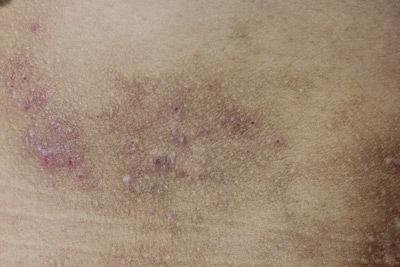
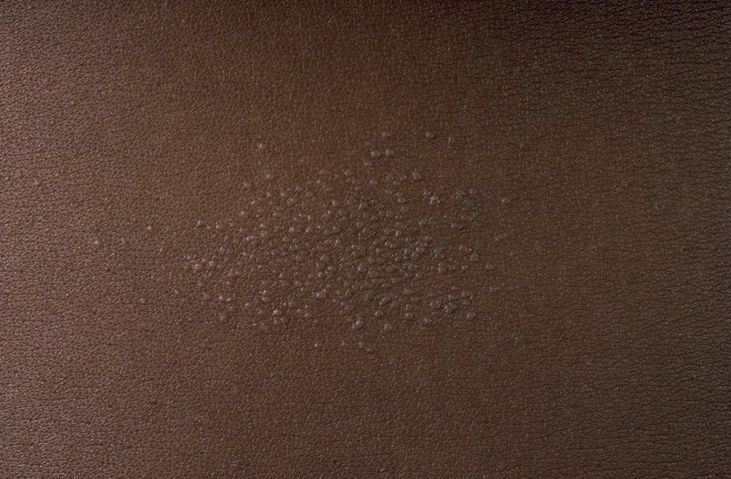
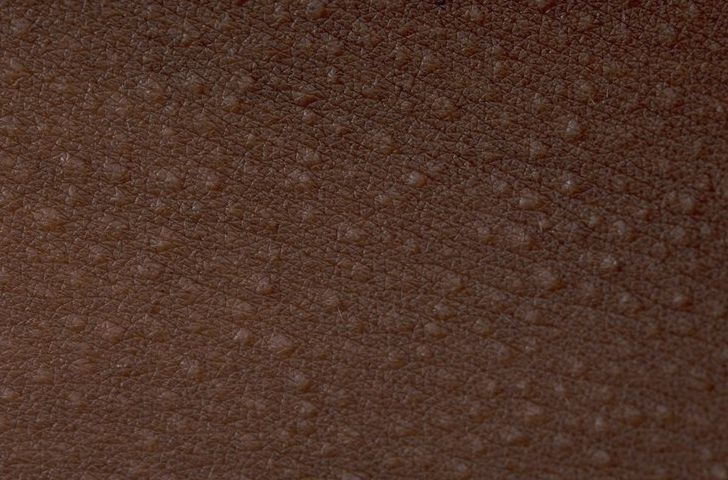
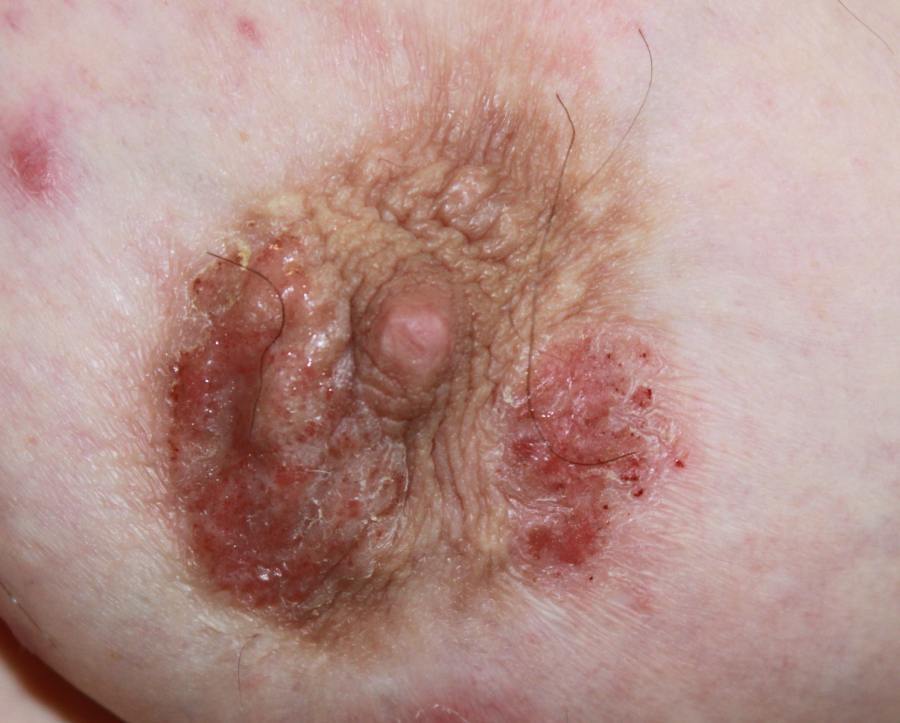
There is quite a lot of variation in the appearance of eczema related to the presence / absence of infection, the age of the person, their ethnic origin and the treatments used.
Distribution - changes with age
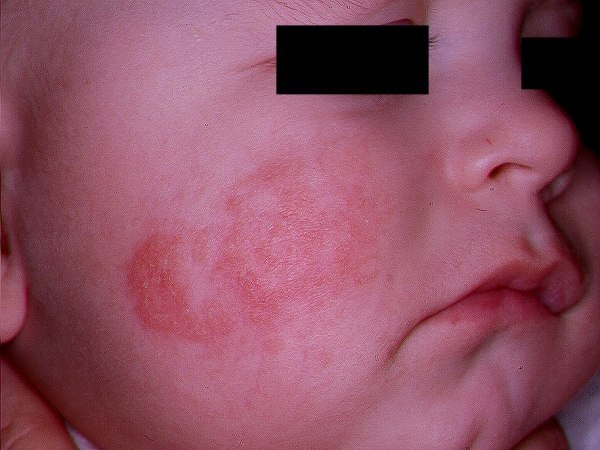
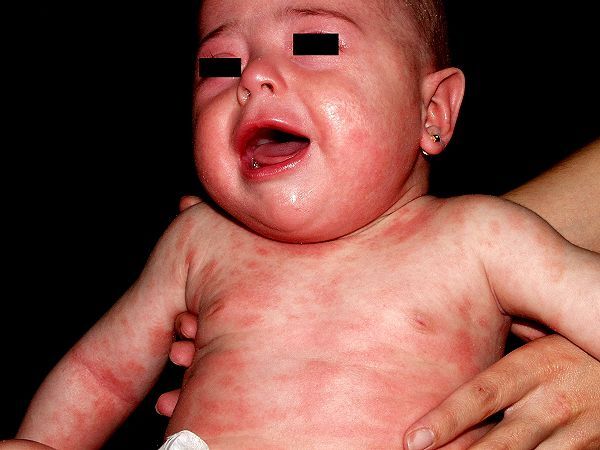
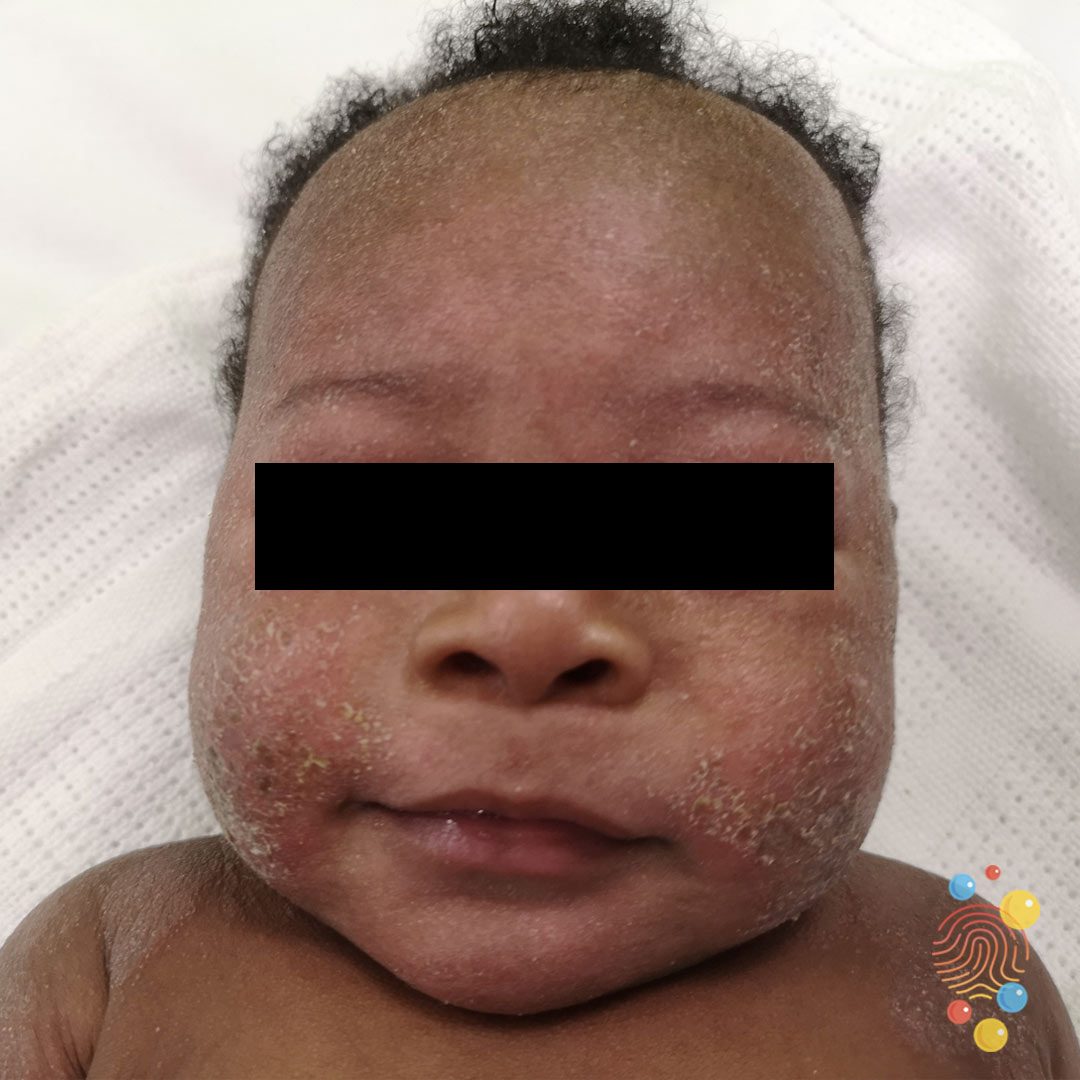
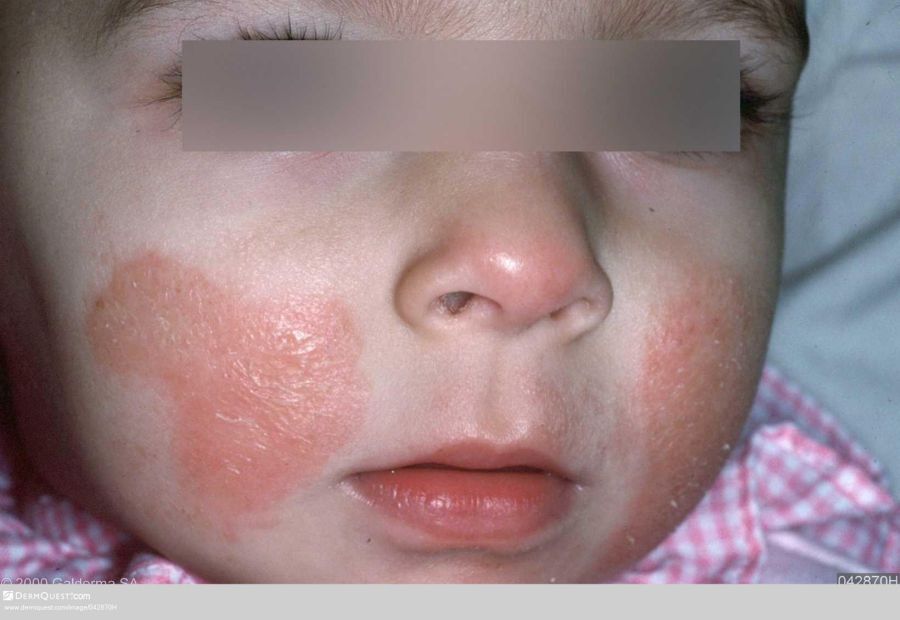
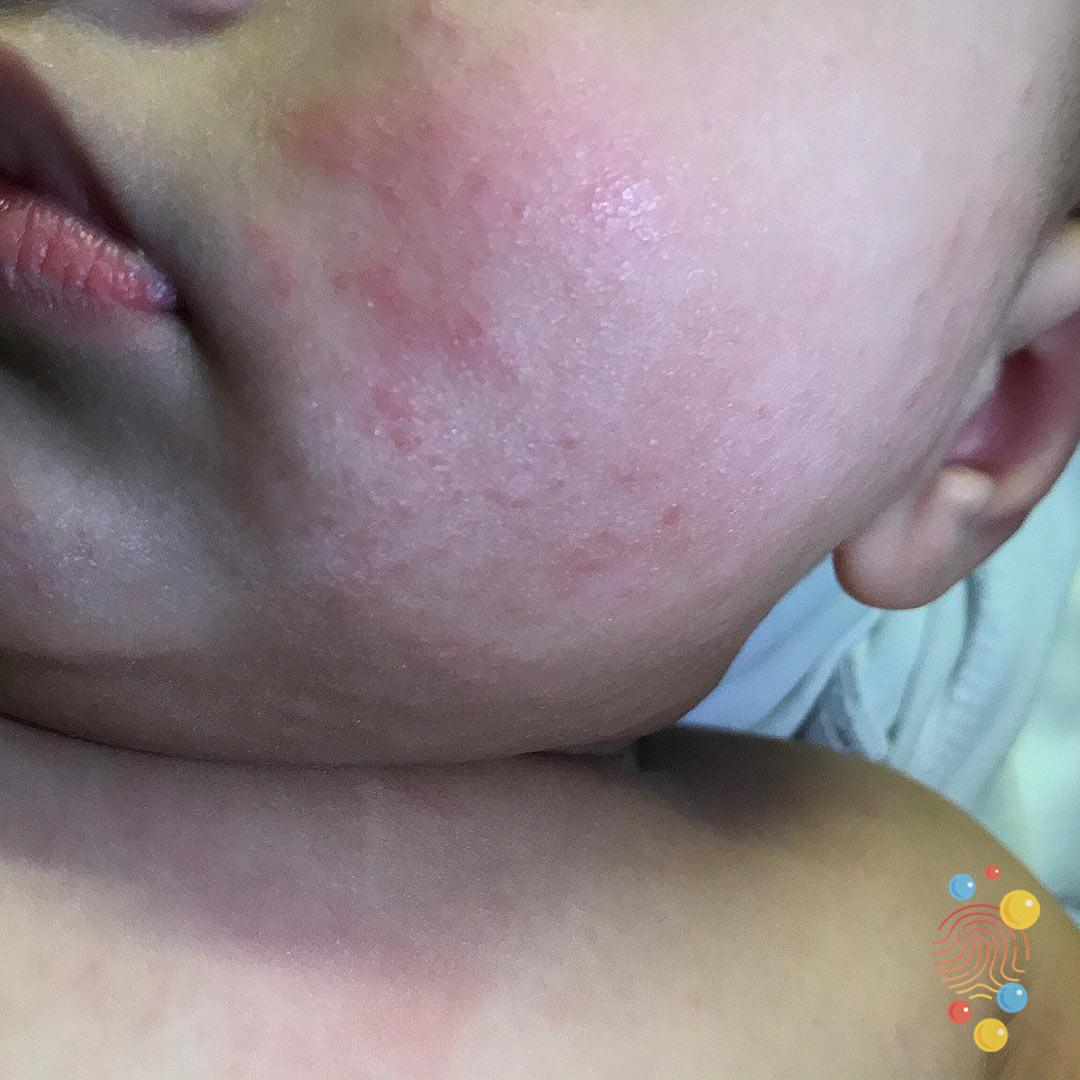
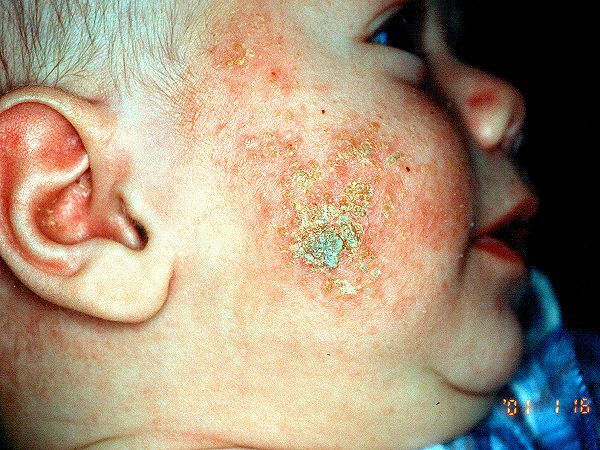
The face is a common site in infants
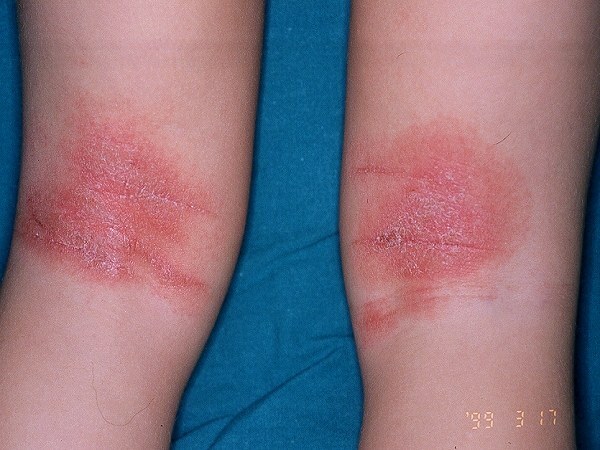
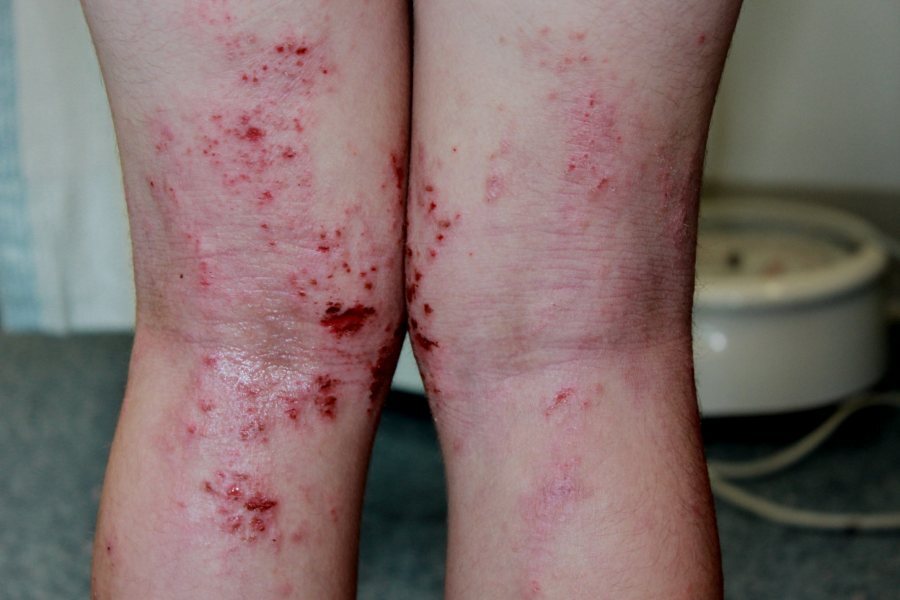
This is then followed by flexural involvement
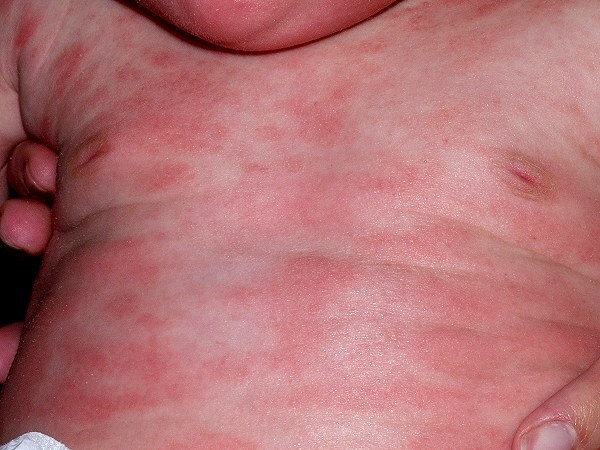
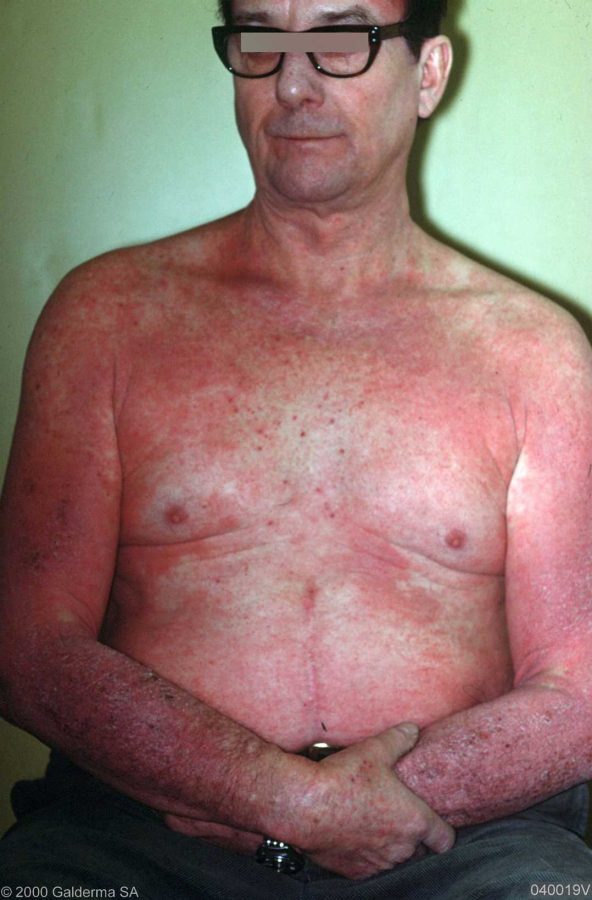
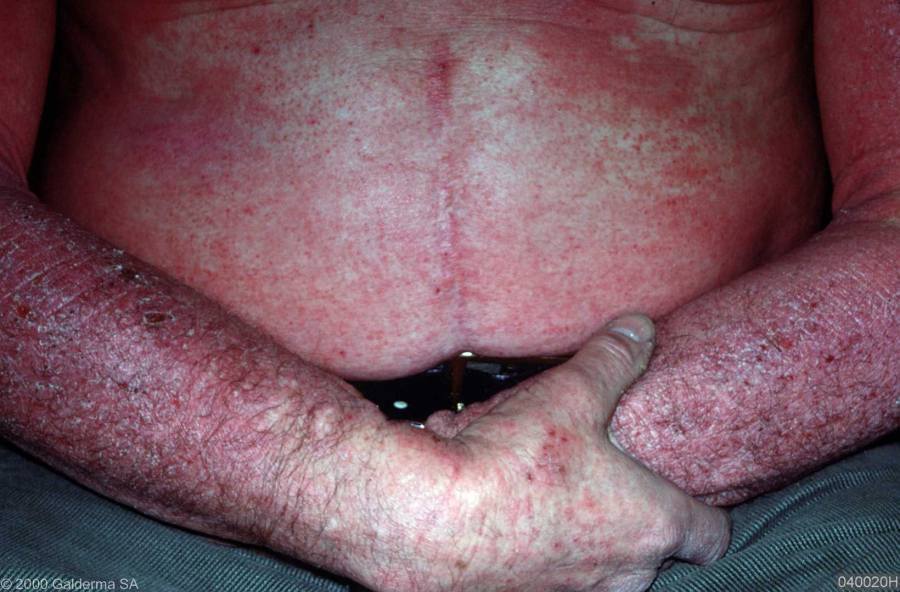
In some patients it can become widespread
Morphology
Ill-defined areas of erythema
Dry skin with areas of fine scale (scale does not normally develop in flexures due to friction)
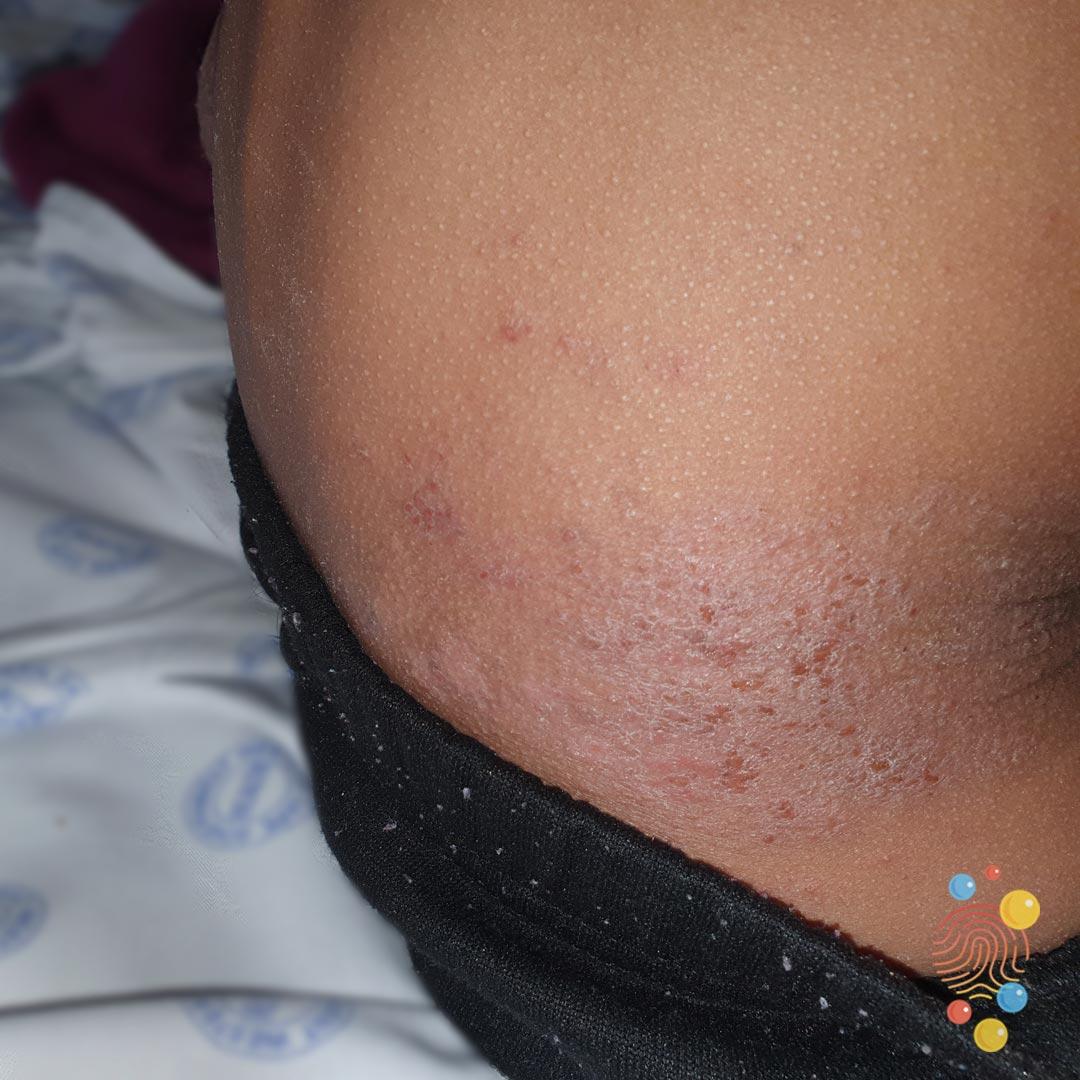
During flare-ups the skin will appear red, sometimes with vesicles and weepy / crusted patches
Excoriations
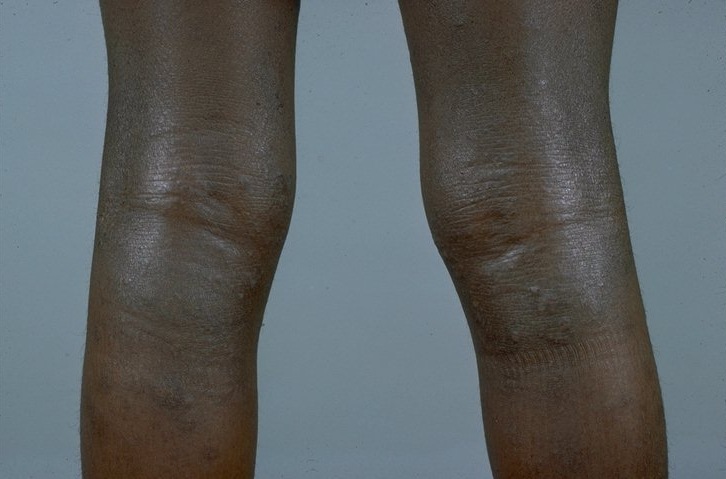
Lichenification
The scalp may be erythematous with fine scale
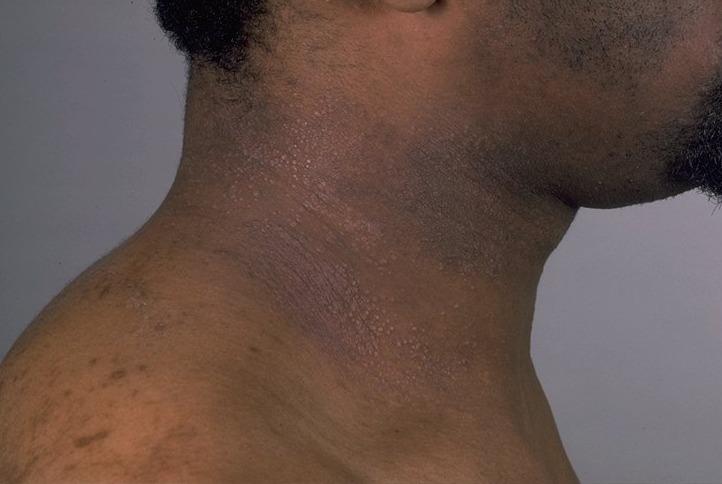
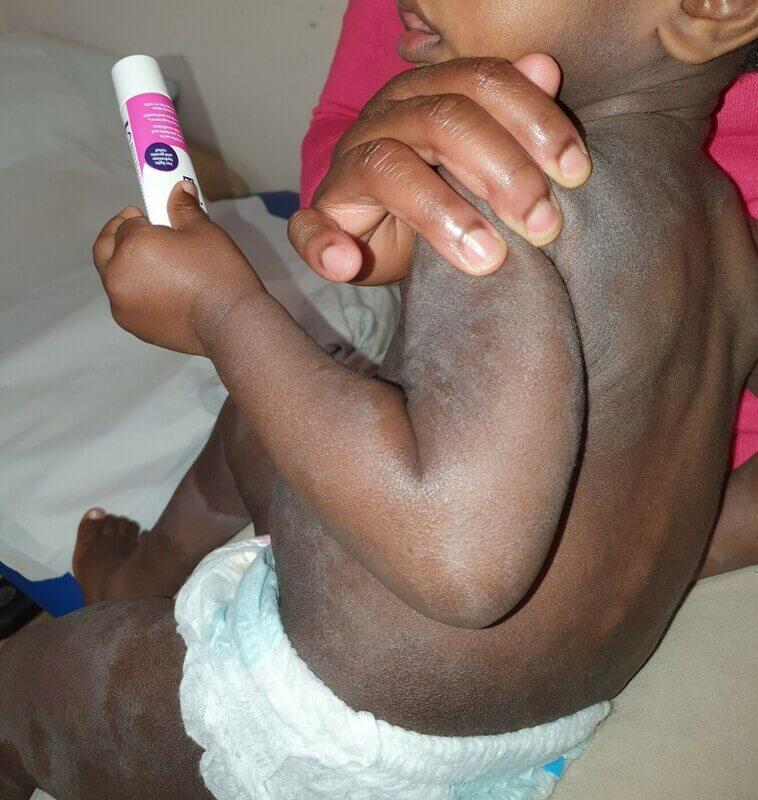
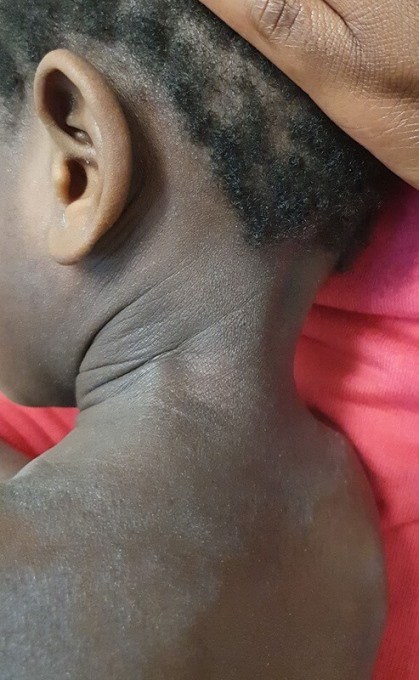
Variations in skin of colour
Chronic prurigo
Prominent follicular involvement
Dry skin with more scales, and sometimes oedema
Extensor involvement in Afro-Caribbean patients
Atopic neck with a reticulated appearance
Dennie-Morgan folds - extra creases or folds just below the lower eyelid
Clinical Images
Please refer to notes on image rights at bottom of the page with regards to individual image
ownership.
1
2
3
4
5
6
7
8
9
10
11
12
13
14
15
16
17
18
19
20
21
22
23
24
Investigations
An HIV test should be performed in atypical presentations of eczema, which are identified HIV indicator conditions (NICE guidance and British HIV Association guidance). Early diagnosis improves treatment outcomes and reduces the risk of transmission to other people
Management
For a simplied managment plan please refer to the PCDS Primary Care Treatment Pathways for:
Complete emollient therapy to the whole skin every day - the correct use of moisturisers (see relevant video in step 3 below), and soap substitutes
Steroid creams / ointments for a flare (red/itchy areas of skin) - apply thinly (see relevant video in step 3 below) to affected areas of skin. Patient's often require a milder and a stronger (potent) steroid treatment to be kept at home. The milder treatment is used for mild flares, and on thinner areas of skin (eg face, skin folds and lower legs), the stronger treatment can be used for short spells during more troublesome flares and on thicker areas of skin
The weekend steroid regime - patients with frequent flares often benefit from applying steroid creams/ointments on two consecutive days a week once a flare has settled (see step 4 below)
Topical calcineurin inhibitors - should be considered on areas of thin skin (eg the face) if too much steroid cream is being used (see step 5 below)
Provide a written management plan (see step 1 below) and advise on a pre-payment certificate for prescriptions
Know when to refer (step 7 below)
Step-by-step treatment
Step 1: general measures
As with other chronic skin conditions time is needed by the GP and / or practice nurse to discuss the condition, advise on how best to use emollients and to provide an individual management plan
Refer to the top right of the page for a patient information leaflet available through a QR code or printable PDF
Advise on a pre-payment certificate where appropriate
At each step it is essential to ensure patient compliance and to make sure that copious amounts of emollients are being used
For patients presenting with a flare-up go to step 2, for those presenting with relatively mild eczema go to step 3
Step 2: initial management for patients presenting with a flare-up
In both children and adults it is more effective and safer to 'hit hard' using more potent treatments for a few days than it is to use less potent treatments for longer periods of time
Use a moderate to potent topical steroid eg Betnovate ® or Elocon ® OD until things settle down
For marked sleep disturbance consider the short-term use of a sedating anti-histamine at night eg adults - Atarax ® (hydroxyzine) 25-50 mg, and children - Piriton ® (chlorpheniramine) 5-15 mg. There is almost no role for non-sedating antihistamines in the management of eczema, the only exception is patients needing treatment for co-existent hay fever
Take a skin swab if not settling
Review the patient in one to two weeks to discuss long-term management (see step 3 below)
Step 3: long-term management
Consists of a) complete emollient therapy, b)topical steroids, and sometimes c)bandages
a) Complete emollient therapy
Emollients are the mainstay of therapy and without them it is not possible to manage eczema effectively. Good evidence shows that the more emollients are used, the less topical steroids are needed. Compliance is essential and so always review patients to check they are happy with what has been prescribed - it may be necessary to try a range of emollients before the patient settles on the best combination.
Moisturisers
Most patients prefer creams and gels. The most important factor is to find one that the patient likes and is happy to use - please refer to the PCDS Emollient Pathway
Ointments tend to be less well tolerated by patients, but they are less likely to cause contact allergic dermatitis as they do not contain preservatives (this is for both emollients and topical steroids)
Encourage appropriate usage by prescribing generous amounts eg 500 grams of moisturisers to use regularly (often QDS)
As with other topical treatments, moisturisers should be gently rubbed into the skin until they are no longer visible. They should be applied downward in the direction of the hairs to lessen the risk of folliculitis
Warn that they may sting for the first couple of days before soothing the skin
Ointments come in tubs and so can easily become cross infected with bacteria from the skin - patients must not place hands into tubs but instead use a utensil to scoop out the ointment
Order of application - if topical steroids are also being used, moisturisers can be applied first and allowed to dry for 15-20 minutes before applying the topical steroid
In infants and very young children there is some evidence that washing hands before applying emollients may reduce the risk of peanut and various other food allergies. For practical advice on how to apply moisturisers click on the following links:
In general, there is no good evidence to support the use of specific products to use in the bath/shower
Patients should be encouraged to have short showers/baths and not have the water over hot
The same emollients used to moisturise with can be used as a soap substitute should the patient so wish
For the occasional patient, who gets frequent skin infections, the use of a specific anti-septic emollient may be beneficial eg Dermol ® 600 Bath Emollient or Dermol 200 ® Shower Emollient, and Emulsiderm ® Liquid Emulsion. Dermol ® can occasionally irritate the skin if used too often, in which case it can be used once or twice a week
Patients must pat themselves dry after bathing, this is a good time to also apply moisturiser
Careful consideration must be given as to whether or not to use emollients to wash with in patients with poor mobility due to the increased risk of slipping in the bath or shower
Hand eczema and soap substitutes
Although patients like soaps as they make a lather, they damage the skin barrier and so should be avoided where possible
Although specific soap substitutes can be prescribed it is probably more cost effective to use one of the prescribed moisturisers as a wash - ointments in particular can provide an effective wash
b) Topical steroids
Use the lowest appropriate potency and only apply thinly to inflamed skin
Allow moisturisers to dry into skin for 20 minutes before applying the steroid
Avoid using combined steroid / antibiotic preparations on a regular basis (eg Fucibet ® and Fucidin-H ® cream) as it will increase the risk of antibiotic resistance
Strength of steroid to be determined by the age of patient, site and severity:
Child face: mild potency eg 1% hydrocortisone
Child trunk and limbs: moderate potency eg Eumovate ® (clobetasone butyrate 0.05%) or Betnovate-RD ® (betamethasone valerate 0.025%)
Adult face: mild or moderate potency eg Eumovate ®
Palms and soles: potent or very potent eg Dermovate ® (clobetasol propionate 0.05%)
If used appropriately it is uncommon to develop steroid atrophy, however extra care needs to be taken in the following sites:
Around the eyes: unless used very infrequently topical steroid preparations should be avoided due to the risks of glaucoma
The face - the regular use of topical steroids should be avoided
Lower legs in older patients / others at risk of leg ulcers - the regular use of topical steroids should be avoided
Where there are concerns that the patient may be using too much topical steroid, especially on the sites referred to above, or there are signs of atrophy go to step 5
For infrequent flares, eg every four to eight weeks, manage as in step 2
For more frequent flares
Check treatment compliance
Consider the steroid weekend regime for both children and adults - Betnovate ® or Elocon ® should be applied thinly to inflamed areas OD for two weeks and then alternate days for a further two weeks. Once the eczema is under control use the treatment on two consecutive days (eg Saturday and Sunday) of each week to the areas that tend to flare. The treatment must be applied even if the skin in not inflamed - the aim is to reduce the frequency of flare-ups
An alternative to using topical steroids is to use Protopic ® ointment (see step 5) - as above the eczema first needs to be brought under control by more frequent use of the Protopic and then reduced down to twice a week
In general, antibiotics have a limited role in eczema, however, if the eczema continues to flare swab the skin and treat if results are relevant. For frequent infections it is also useful to take nasal swabs and if positive for S.Aureus treat with nasal Bactroban ® cream BD for one week
Patients not responding to the above - consider the possibility of a contact allergic dermatitis, which can sometimes be caused by topical therapies. If a given treatment is felt to be causing a reaction the medication could be tested on a small areas of unaffected skin eg the outer arm to see if the skin reacts. If the skin does react change to a different treatment. Of note, the topical steroid Synalar ® appears less likely to cause allergic reactions than some of the other topical steroids. If the skin does not settle and the possibility of a contact allergy remains move to step 7
Step 5: treatment with topical calcineurin inhibitors
The topical calcineurin inhibitors are Protopic ® (tacrolimus 0.03 and 0.1% ointment) and Elidel ® (pimecrolimus 1% cream)
Their main benefit is that they are not steroid-based and so do not cause skin atrophy
‘The Summary of Product Characteristics’, which are approved by the MHRA, were changed in March 2022 such that ‘Protopic (tacrolimus ointment 0.1 & 0.03%) and Elidel (Pimecrolimus cream) can be initiated by physicians with experience in the diagnosis and treatment of atopic dermatitis’, which includes many primary healthcare professionals. The PCDS encourages updating of local ICS/ICB prescribing formularies to reflect these changes
Formulations
Elidel ® cream (pimecrolimus); licensed for children 3 months of age and older, adolescents and adults
Protopic ® (tacrolimus) 0.03% ointment is licensed for ages 2 years and above
Protopic ®(tacrolimus) 0.1% ointment is licensed for ages 16 years and above
Local adverse effects include stinging, burning, itch, irritation and slight photosensitivity - appropriate sun protection is recommended. Adverse effects are more common with Protopic ® but in many patients are transient - it may be preferable to store Protopic ® in the fridge. Topical calcineurin inhibitors should be temporarily discontinued when the skin is infected
When to consider topical calcineurin inhibitors:
Eczema involving the eyelids and peri-orbital skin
Patients regularly using topical steroids on the face
Patients regularly using topical steroids on the lower legs in elderly patients and others at risk of leg ulcers
Any signs of skin atrophy
Prevention of flares - Protopic 0.03% and 0.1% are licensed for use x 2-3 weekly as maintenance to prevent flares. Pimecrolimus cream can be used early in a flare or with topical corticosteroids to settle a flare
In milder cases use Elidel ® cream, although if this is ineffective or in the first instance the eczema is of a greater severity consider Protopic ® ointment
Follow this link for further information about use of TCIs for atopic dermatitis and other conditions where their steroid sparing effects are beneficial as recommended by BAD and other guidelines
Step 6: management of scalp eczema
Wash with a mild tar-based shampoo. In young children (eg 18 months and under) it is often better to use an emollient bath oil to wash the hair rather than using a specific scalp treatment
For itch and erythema use a topical steroid scalp application, eg Betacap ® OD-BD until the itch settles, and then use when needed. Most scalp preparations contain alcohol, which can sting - if the scalp is too uncomfortable change to Synalar ® gel, which does not contain alcohol. The following link provides a useful section on how to use topical steroids on the scalp(the relevant bit starts at 49 seconds into the video)
If a lot of thick scale is present, before commencing topical steroids, remove the scale with Sebco ® ointment - massage in to the scale for five minutes and leave on for two to four hours before shampooing. Use this for a few days until most of the scale is removed
Step 7: referral to a specialist
The following patients should be referred to a specialist:
Diagnostic uncertainty
Severe eczema
Moderate-severe eczema only partially responding to steps 1-5
Steroid atrophy or concerns regarding the amount of topical steroids / topical calcineurin inhibitors being used
As with some other chronic inflammatory conditions, such as psoriasis, there are an increasing number of newer treatments for eczema such as the biologics and JAK inhibitors
Habit reversal therapy
Itchy skin conditions can understandably lead to behaviours such as scratching, rubbing, and/or picking as ways to try and cope. Eventually the behaviours can become habits. Habit reversal therapy is a treatment programme that offers a solution to the behaviour that has developed, attached is a patient information leaflet. Unfortunately, therapy is not widely available
Disclaimer - the author PCDS cannot accept responsibility for any misleading or incorrect statements, and the management of individual patients remains the direct responsibility of the individual doctor. We do however hope that visitors to this site can contact us regarding comments that are considered misleading or incorrect so that we can continue to improve the site.
Image Rights - The PCDS would like to thank Dermatoweb, DermQuest (Galderma), and others who have contributed images. All named individuals and organisations maintain copyright for the relevant images.