Eczema: napkin eczema
LAST UPDATED: Oct 20, 2023
Introduction
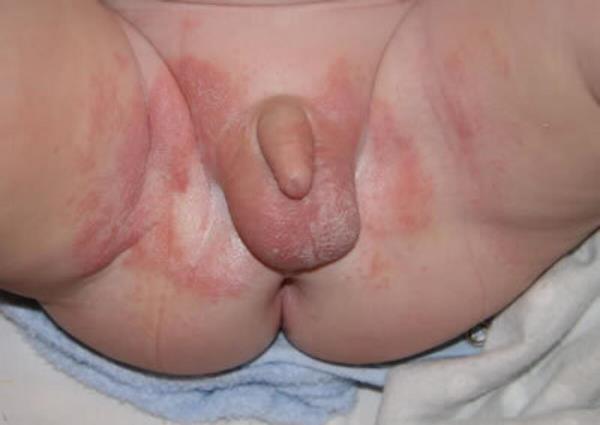
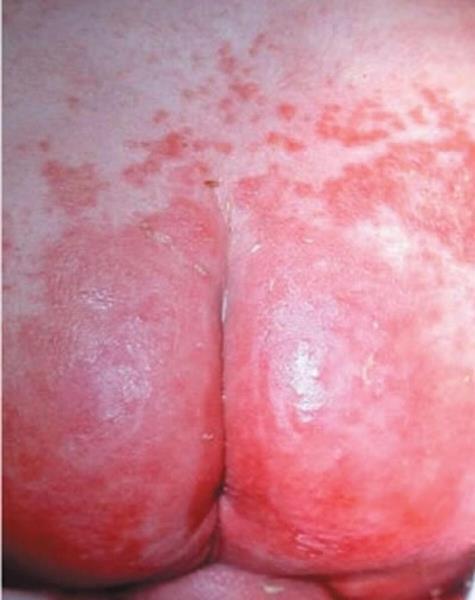
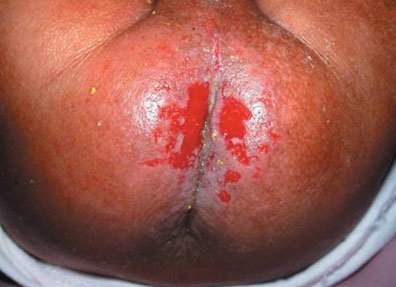
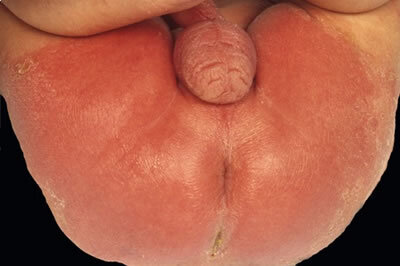
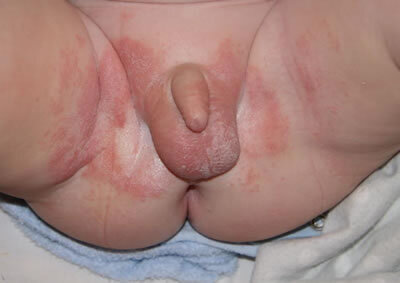
Napkin eczema is usually caused by the contact irritant effects of the nappy contents, in which case skin folds tend to have relative sparing (unless associated with a secondary infection such as candida).
This chapter is set out as follows:
Aetiology
-
A contact irritant effect of the nappy contents is the main cause - flexures tend to be spared
-
A similar picture can be seen as part of atopic eczema
-
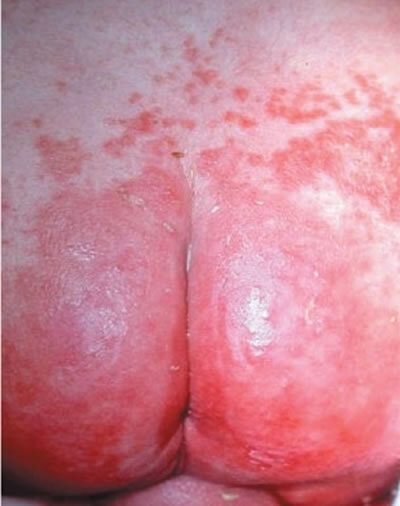
Secondary infection with bacteria and candida is not uncommon, the latter causes satellite lesions with no sparing of the folds
-
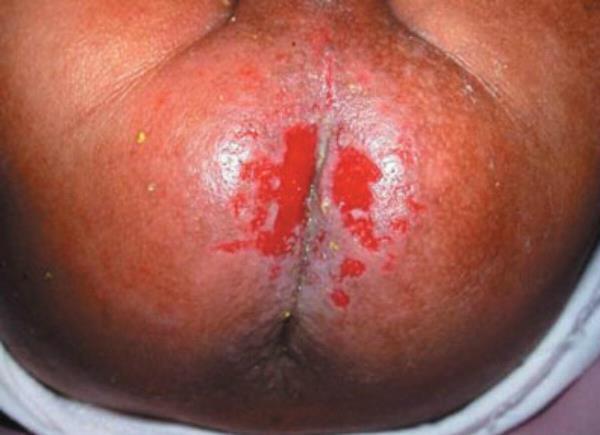
The prolonged wearing of wet or soiled nappies may indicate ammoniacal dermatitis, which causes erosions and ulceration - this is less common now that disposable nappies are widely used
Clinical Images
Please refer to notes on image rights at bottom of the page with regards to individual image
ownership.
Management
General management advise
- Consider using a nappy with high absorbency (for example, disposable gel matrix nappies compared with non-disposable nappies)
- Leave nappies off for as long as possible to help skin drying of the nappy area
- Clean the skin and change the nappy every 3–4 hours, or as soon as possible after wetting or soiling, to reduce skin exposure to urine and faeces
- Ensure the nappy fits properly (too tight increases skin occlusion; too loose minimises absorption of fluids)
- Parental/carer choice will depend on issues such as convenience, cost, and environmental impact
- Use water, or fragrance-free and alcohol-free baby wipes
- Dry gently after cleaning - avoid vigorous rubbing
- Bath the child daily - avoid excessive bathing (such as more than twice a day) which may dry the skin excessively
- Do not use soap, bubble bath, lotions, talcum powder, or topical antibiotics which can have an irritant effect
Management of mild erythema in an asymptomatic child
- Advise on the use of a barrier preparation to protect the skin, such as Metanium ® Nappy Rash Ointment or Conotrane ® cream
- Advise to apply thinly at each nappy change
Management of significant erythema and/or apparent discomfort
- In addition to the above, treat with an antifungal / hydrocortisone combination such as Daktacort ® cream BD. Stronger topical steroids such as Trimovate ® cream are occasionally needed for a few days
- If there is limited response take a swab and treat infection accordingly
- Consider referral for moderate-severe cases not responding to treatment
Disclaimer - the author PCDS cannot accept responsibility for any misleading or incorrect statements, and the management of individual patients remains the direct responsibility of the individual doctor. We do however hope that visitors to this site can contact us regarding comments that are considered misleading or incorrect so that we can continue to improve the site.
Image Rights - The PCDS would like to thank Dermatoweb, DermQuest (Galderma), and others who have contributed images. All named individuals and organisations maintain copyright for the relevant images.