Acrocyanosis

LAST UPDATED: Nov 21, 2021
Introduction

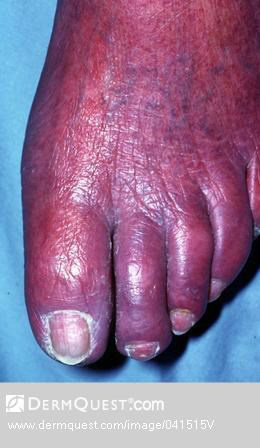
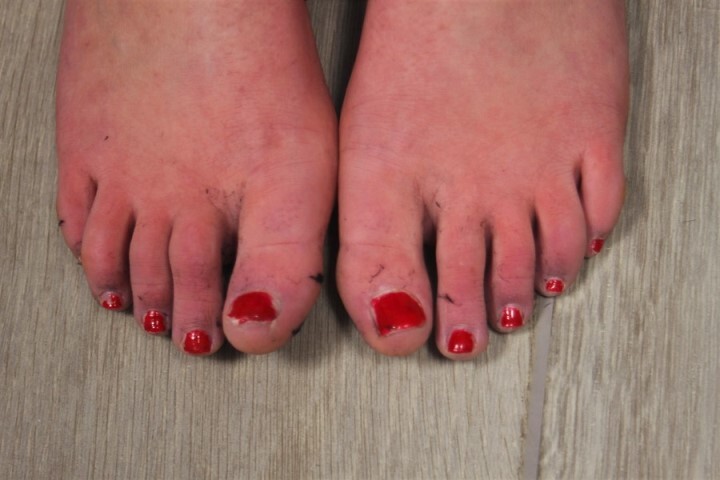
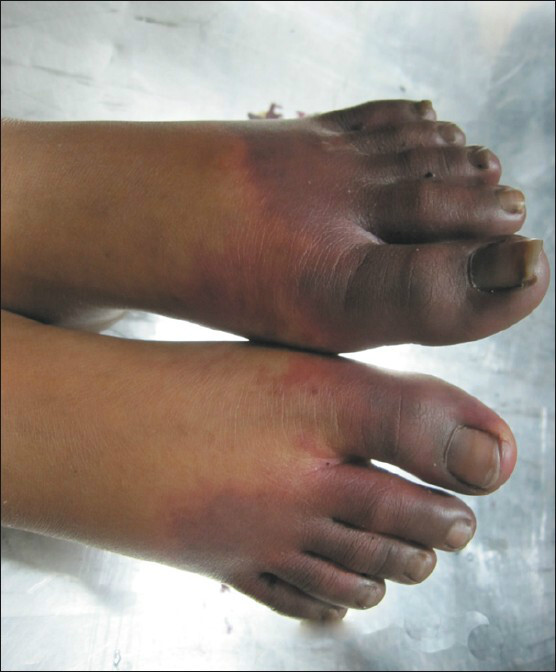
Acrocyanosis is characterised by painless discoloration, of different shades of blue, affecting the extremities. The colour change has relative persistence with aggravation by cold exposure, and the condition is frequently associated with localised hyperhidrosis.

This chapter is set out as follows:


Aetiology

  • Primary acrocyanosis is idiopathic
  • Secondary acrocyanosis has numerous causes including hypoxaemia, connective tissue disorders, cryoglobulinaemia, the antiphospholipid syndrome, malignancy (eg paraproteinaemia), anorexia nervosa, and it can be drug-induced

History

  • Idiopathic acrocyanosis usually starts in adolescence and persists into adult life
  • Pain or significant discomfort is uncommon

Clinical findings

  • Bluish discoloration of the skin may have different hues, affecting fingers and toes and involving, in some cases, the entire hands and feet and even forearms
  • Parts of the head, especially the nasal tip and ears, may be affected although less frequently
  • Almost all acrocyanosis patients have marked clamminess and hyperhidrosis of hands and feet, which may be very striking on the volar surfaces and tend to worsen in warmer temperatures while the color changes improve
  • Most often, acrocyanosis is confused with Raynaud’s phenomenon as both are aggravated by cold and emotional stress; both present with blue discoloration of the fingers and hyperhidrosis. Acrocyanosis is differentiated from Raynaud’s phenomenon by relative persistence of skin color changes, and absence of paroxysmal pallor. However, episodes of Raynaud’s superimposed on acrocyanosis are not uncommon and may complicate the diagnosis. While Raynaud’s phenomenon is marked by clear paroxysms, the persistence of color changes in acrocyanosis is also relative as many cases will improve in the summer

Clinical Images

Please refer to notes on image rights at bottom of the page with regards to individual image ownership.


Investigations

  • Cases of primary acrocyanosis starting in young patients who are otherwise well require only limited investigations eg FBC and standard biochemistry
  • Where secondary acrocyanosis is suspected (eg starting in adults, presence of pain, asymmetry, ulceration and necrosis, livedo reticularis, or other significant skin changes) more detailed investigations are required along the lines of those for connective tissue disorders and vasculitis

Management

  • This is usually a benign condition without any serious complications, except in cases of secondary acrocyanosis with underlying serious disease
  • Drug-induced acrocyanosis will improve on cessation of the causal drug
  • Treatments such as calcium-channel blockers are ineffective

Disclaimer - the author PCDS cannot accept responsibility for any misleading or incorrect statements, and the management of individual patients remains the direct responsibility of the individual doctor. We do however hope that visitors to this site can contact us regarding comments that are considered misleading or incorrect so that we can continue to improve the site.

Image Rights - The PCDS would like to thank Dermatoweb, DermQuest (Galderma), and others who have contributed images. All named individuals and organisations maintain copyright for the relevant images.

Quick Links

The following pharmaceutical companies have had no involvement in the content of this website or in our conference programmes


Almirall
Galderma
Glenmark
Johnson & Johnson
La Roche-Posay
LEO Pharma
Pierre Fabre
Schuco