Acrodermatitis enteropathica
LAST UPDATED: Nov 21, 2021
Introduction
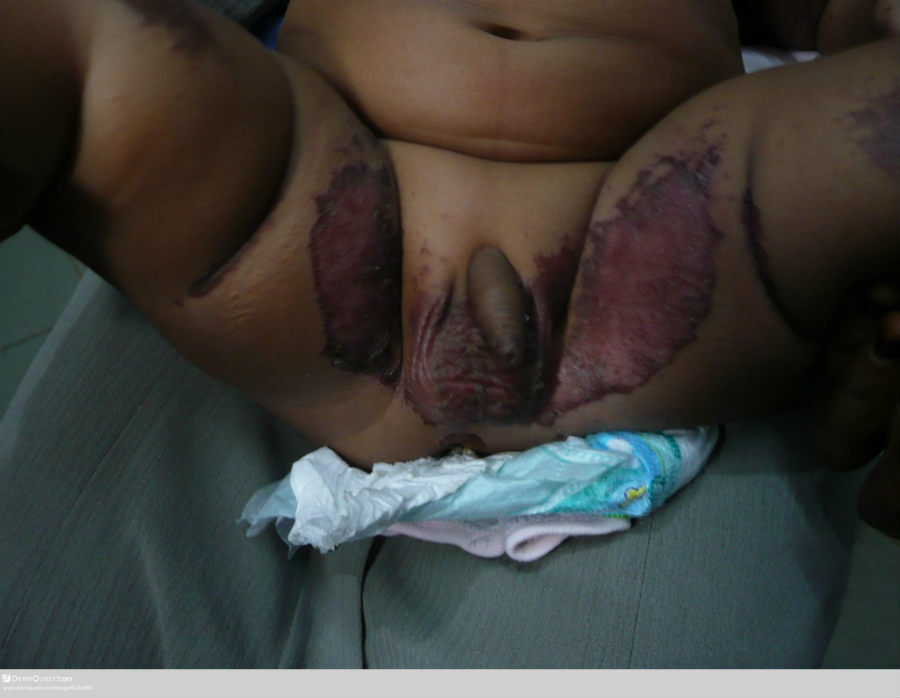
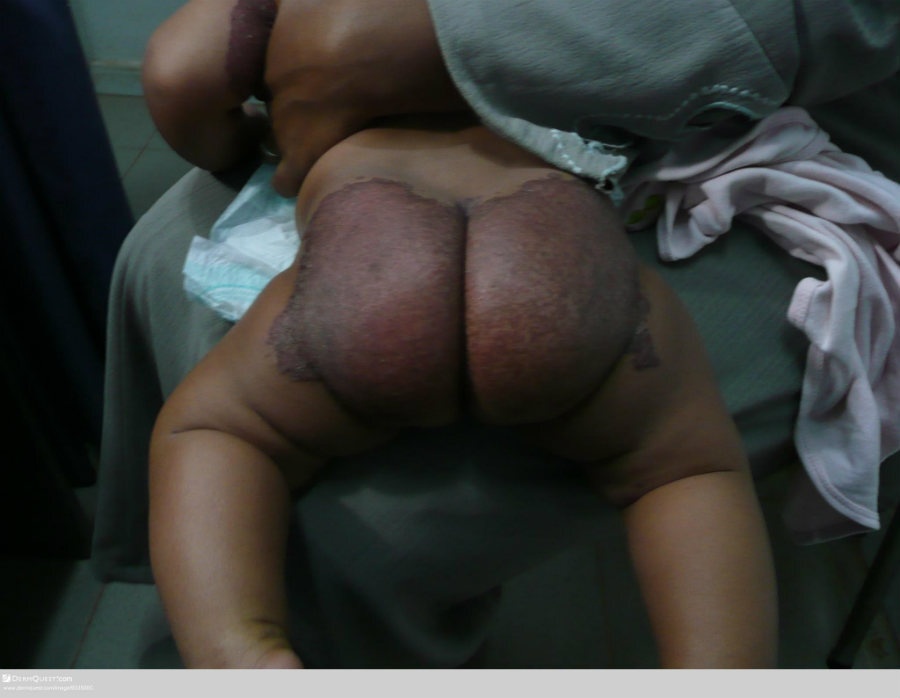
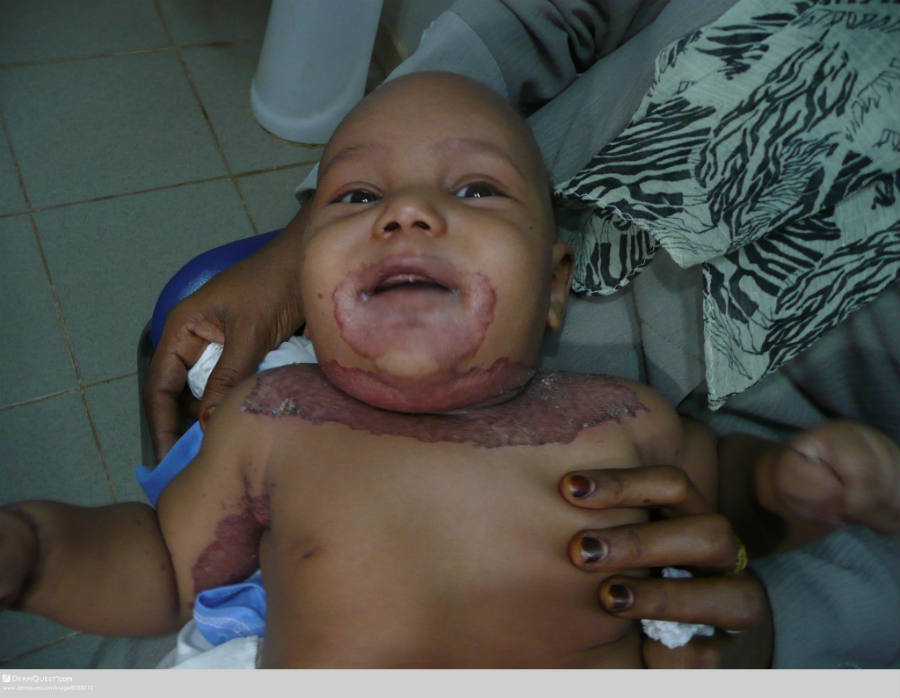
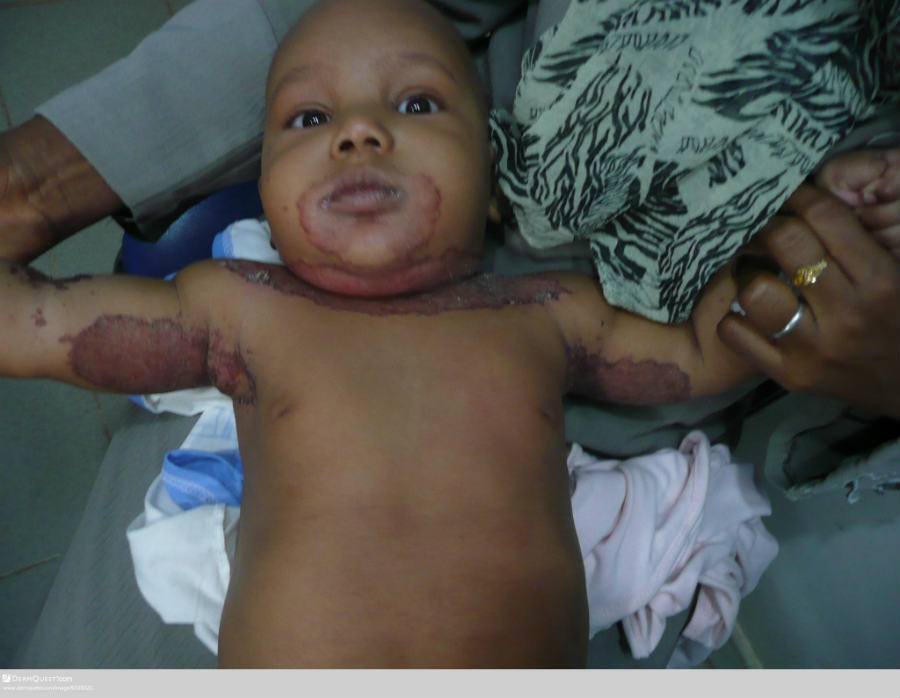
Acrodermatitis enteropathica is a rare genetic condition where there is malabsorption of zinc through the intestinal cells. It is characterised by well-demarcated erythema and crusting around the mouth and/or anus, alopecia, and diarrhoea.
This chapter is set out as follows:
Aetiology
-
Acrodermatitis enteropathica is very rare affecting approximately 1:500,000 individuals
-
It is associated with mutations in the gene SLC39A4, which codes the zinc intestinal transporter protein ZIP4
-
The inheritance is autosomal recessive (ie one defective gene must be inherited from each parent)
History
-
Males and females are equally affected
-
Symptoms usually occur in bottle-fed infants within a few days or weeks after birth and breast-fed infants soon after weaning
-
Zinc deficiency may rarely arise in adults as a consequence of dietary deficiency, intestinal malabsorption, after traumatic events such as burns or surgery, the Nephritic syndrome, and the Glucagonoma syndrome
Clinical findings
Distribution
- Predominantly around body openings such as the mouth, anus, and eyes
- The skin on the elbows, knees, hands, and feet may also be involved
Morphology
- Well-demarcated erythema
-
Erythema progresses to vesicles, bullae, pustules, desquamation and crusting
Other cutaneous features
- Alopecia
-
Secondary infection is common
-
Impaired wound healing
-
Paronychia
-
A red glossy tongue and mouth ulcers
Non-cutaneous features
- Apathy and irritability
- Diarrhoea and failure to thrive
- Frequently blepharitis, conjunctivitis and photophobia
Clinical Images
Please refer to notes on image rights at bottom of the page with regards to individual image
ownership.
Investigations
-
Serum zinc concentration is usually low but can be normal
Management
-
Patients respond to oral zinc sulphate within a few days. The normal dose is 150–400 mg/day in childhood; a lower dose may suffice after puberty but 400–500 mg/day is needed during pregnancy. Treatment is life long
-
If zinc sulphate causes gastric problems other zinc preparations have been recommended but they are not widely available
Disclaimer - the author PCDS cannot accept responsibility for any misleading or incorrect statements, and the management of individual patients remains the direct responsibility of the individual doctor. We do however hope that visitors to this site can contact us regarding comments that are considered misleading or incorrect so that we can continue to improve the site.
Image Rights - The PCDS would like to thank Dermatoweb, DermQuest (Galderma), and others who have contributed images. All named individuals and organisations maintain copyright for the relevant images.