Angiosarcoma (syn. malignant haemangioendothelioma)

LAST UPDATED: Mar 24, 2026
Introduction

Cutaneous angiosarcomas are rare, aggressive malignant endothelial-cell tumours of vascular or lymphatic origin.

This chapter is set out as follows:


Aetiology

  • Angiosarcoma makes up 4.16% of all soft tissue sarcomas
     
  • Although angiosarcoma can affect any age, the median age at diagnosis is 71 years old. There are slightly more females than males affected 
     
  • In most cases the cause is unknown, although a history of excessive sun exposure is common
     
  • Angiosarcoma can can occur secondary to:
    • Chronic lymphoedema (Stewart-Treves syndrome) 
    • Previous radiotherapy - angiosarcomas of the breast are more likely to be found in women who have had radiotherapy to treat breast cancer

Clinical findings

Distribution

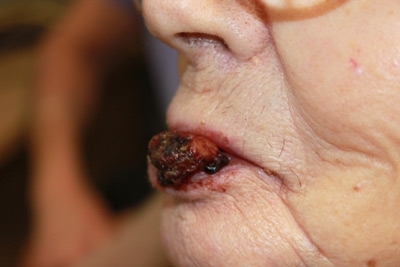
  • The head and neck is the most common site for primary lesions, although they can occur anywhere on the skin or within the body

Morphology

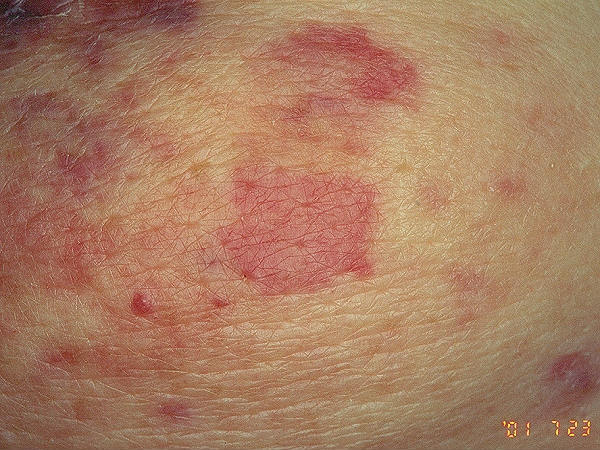
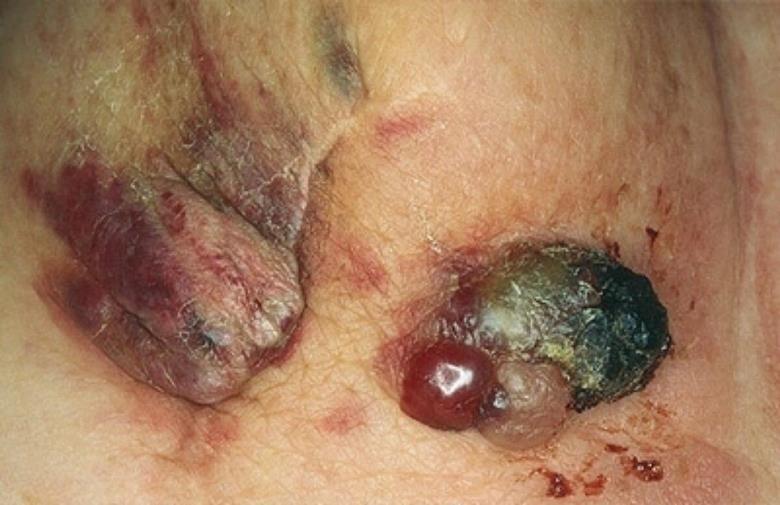
  • The initial presentation may be subtle with bruises / thin purple patches and plaques
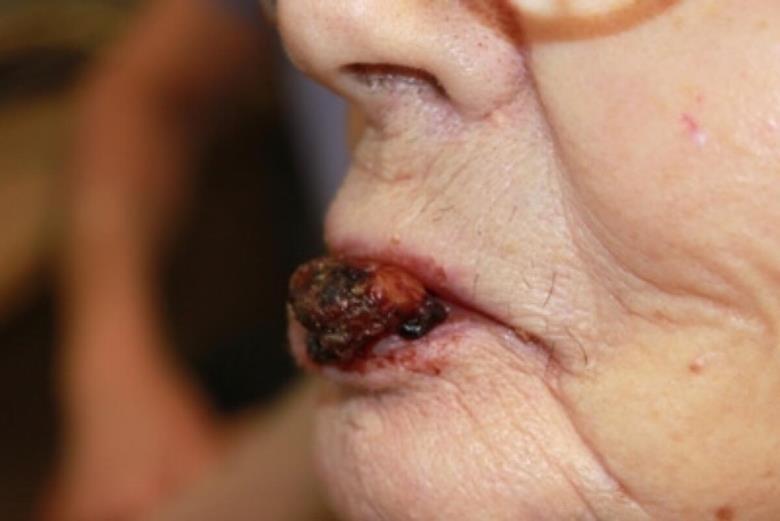
  • Lesions become more nodular and ulcerate with time
  • Metastases are common and lesions on limbs are particularly aggressive

Clinical Images

Please refer to notes on image rights at bottom of the page with regards to individual image ownership.
Management

  • Management is in Secondary / Tertiary care - suspected cases should be referred on an urgent skin cancer (or sarcoma) pathway  
     
  • Surgical treatment is first-line. Other treatment options include radiotherapy, chemotherapy, and immunotherapy
     
  • Prognosis:
    • 62% of people diagnosed with angiosarcoma in England survive their disease for one year or more (2013-2017)
    • 32% of people diagnosed with angiosarcoma in England survive their disease for five years or more (2013-2017)

Disclaimer - the author PCDS cannot accept responsibility for any misleading or incorrect statements, and the management of individual patients remains the direct responsibility of the individual doctor. We do however hope that visitors to this site can contact us regarding comments that are considered misleading or incorrect so that we can continue to improve the site.

Image Rights - The PCDS would like to thank Dermatoweb, DermQuest (Galderma), and others who have contributed images. All named individuals and organisations maintain copyright for the relevant images.

Quick Links

The following pharmaceutical companies have had no involvement in the content of this website or in our conference programmes

Almirall
Galderma
Glenmark
Johnson & Johnson
La Roche-Posay
LEO Pharma
Pierre Fabre
Schuco