Childhood granulomatous periorificial dermatitis (syn. facial Afro-Caribbean childhood eruption)
LAST UPDATED: Jan 13, 2022
Introduction
Childhood granulomatous periorificial dermatitis (CGPD), also known as facial Afro-Caribbean childhood eruption (FACE), is a rare, distinctive form of perioral dermatitis, characterised by monomorphous, small papules around the mouth, nose and eyes that histopathologically show a granulomatous pattern. It occurs most commonly in prepubertal children of African descent.
This chapter is set out as below:
Aetiology
-
The cause is unknown, although the long-term use of topical steroids may induce or exacerbate CGPD
History
-
It most commonly affects prepubescent children, and is more common in boys
-
Although CPDG is most often seen in dark-skinned individuals, especially of African descent, it has been reported in fair-skinned children
Clinical findings
Distribution
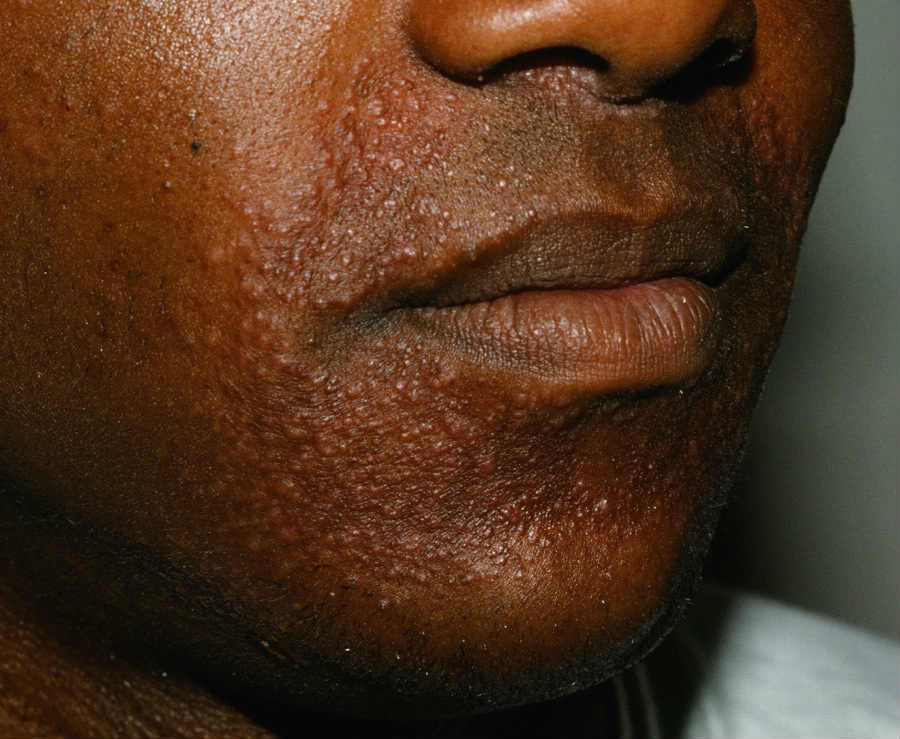
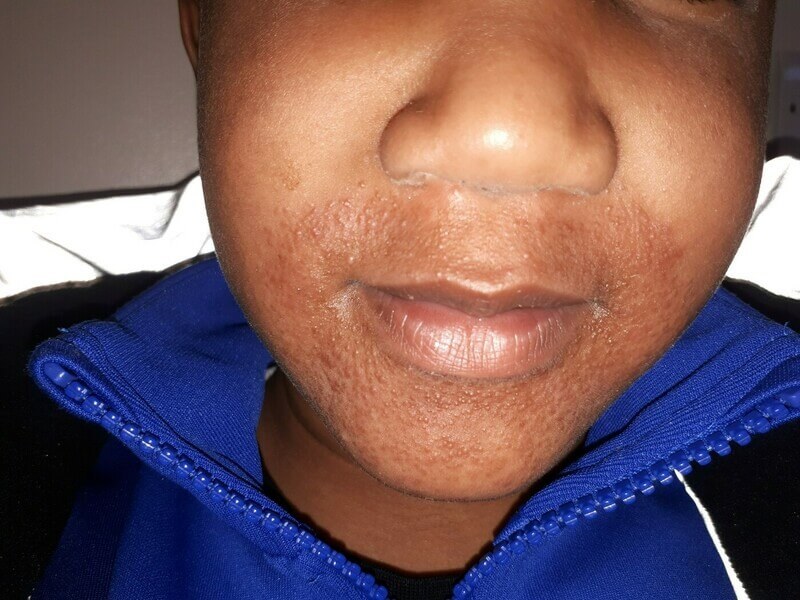
- Principally around the mouth, nose and eyes, but can affect other parts of the head and neck
Morphology
- 1-3 mm, skin‐coloured, dome‐shaped papules
- The lack of pustules, less prominent erythema and scaling, along with the presence of perifollicular granulomatous infiltrate seen on biopsy can differentiate CGPD from perioral dermatitis
Clinical Images
Please refer to notes on image rights at bottom of the page with regards to individual image
ownership.
1
2
Investigations
-
The diagnosis is usually clinical. If a diagnostic biopsy is required histology shows upper dermal and perifollicular granulomatous infiltrates. Granulomatous infiltrates consist of epithelioid macrophages, lymphocytes, and giant cells. In some biopsy specimens the infiltrate is more diffuse, in others, well-formed non-caseating granuloma are surrounded by lymphocytes. CGPD may also show epidermal change with mild to moderate spongiosis. The results of special stains and cultures are always negative for mycobacteria and fungus (reference: Rook's Textbook of Dermatology)
Management
-
CGPD is self-limiting and usually resolves in a few months, although can persist for up to three years. If a topical corticosteroid is being used, this should be stopped
-
Milder cases can be treated with topical tetracycline, clindamycin, erythromycin, or metronidazole
-
More troublesome cases can be treated with 4-6 weeks of oral erythromycin / clarithromycin, or a tetracycline such as lymecycline 408 mg OD or doxycycline 100 mg OD (tetracyclines contra-indicated if under 12 years of age, and in pregnancy)
Disclaimer - the author PCDS cannot accept responsibility for any misleading or incorrect statements, and the management of individual patients remains the direct responsibility of the individual doctor. We do however hope that visitors to this site can contact us regarding comments that are considered misleading or incorrect so that we can continue to improve the site.
Image Rights - The PCDS would like to thank Dermatoweb, DermQuest (Galderma), and others who have contributed images. All named individuals and organisations maintain copyright for the relevant images.