Darier’s disease
LAST UPDATED: May 28, 2022
Introduction
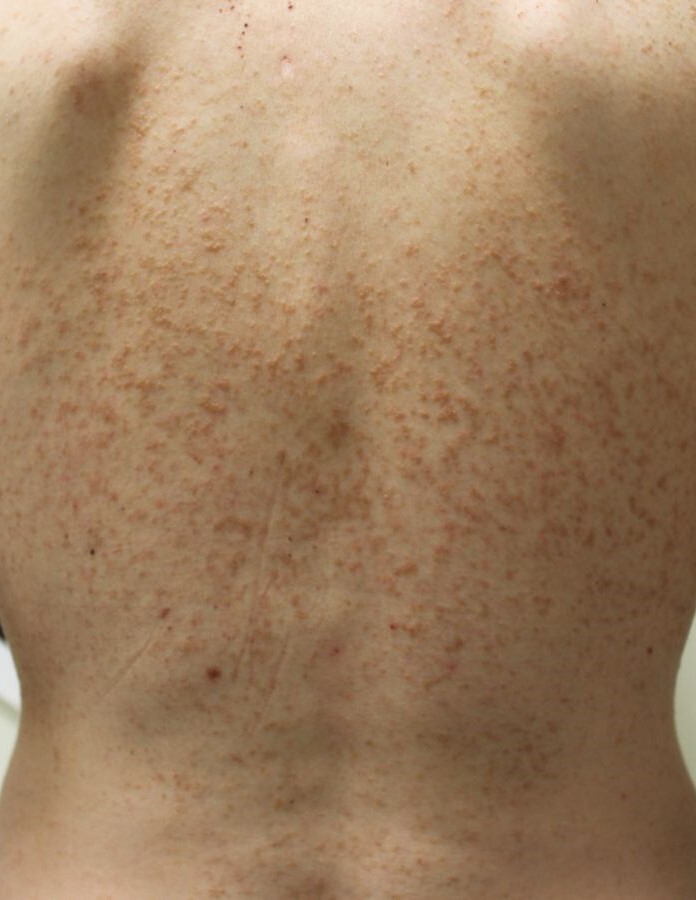
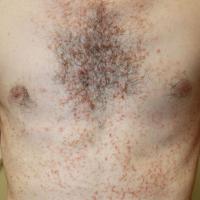
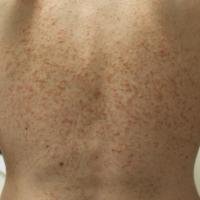
Darier's disease is a rare, chronic, autosomal dominant condition, that usually arises in adolescence, and is characterised by scaly papules, most frequent on the upper trunk.
This chapter is set out as follows:
Aetiology
-
Darier's disease is inherited as autosomal dominant, meaning that a single gene passed from one parent causes the condition. The chance of a child inheriting gene if one parent is affected is 1 in 2 but not all people with the abnormal gene will develop symptoms of the disease
-
The gene in Darier's disease has been identified as ATP2A2 at chromosome 12q24.1, an abnormality in this gene affects desmosome function, which results in reduced cell-to-cell adhesion
History
-
Symptoms tend to first present in the second decade of life
-
Heat and sunlight can exacerbate symptoms
- Extensive, malodorous and painful skin can impact on social interaction, work or school
Clinical findings
Distribution
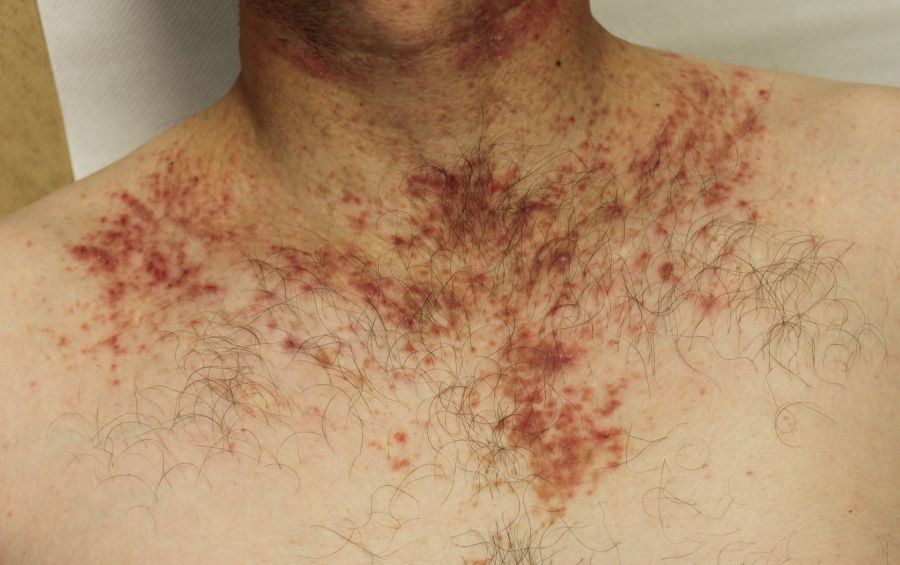
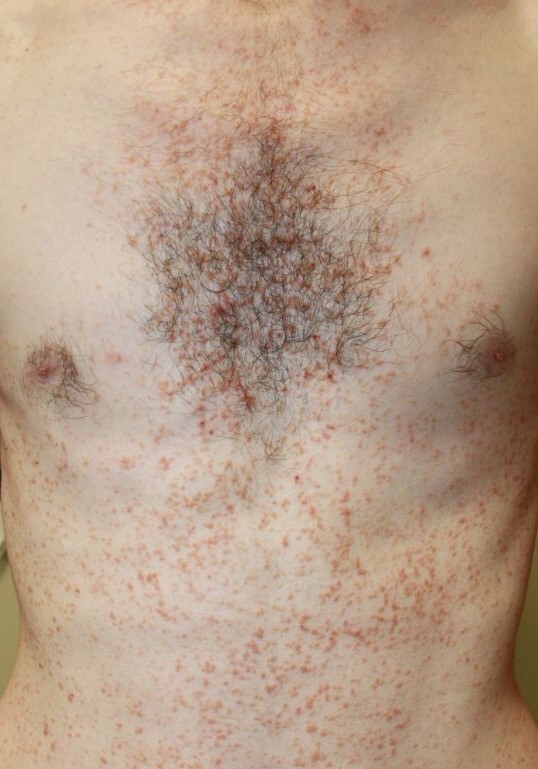
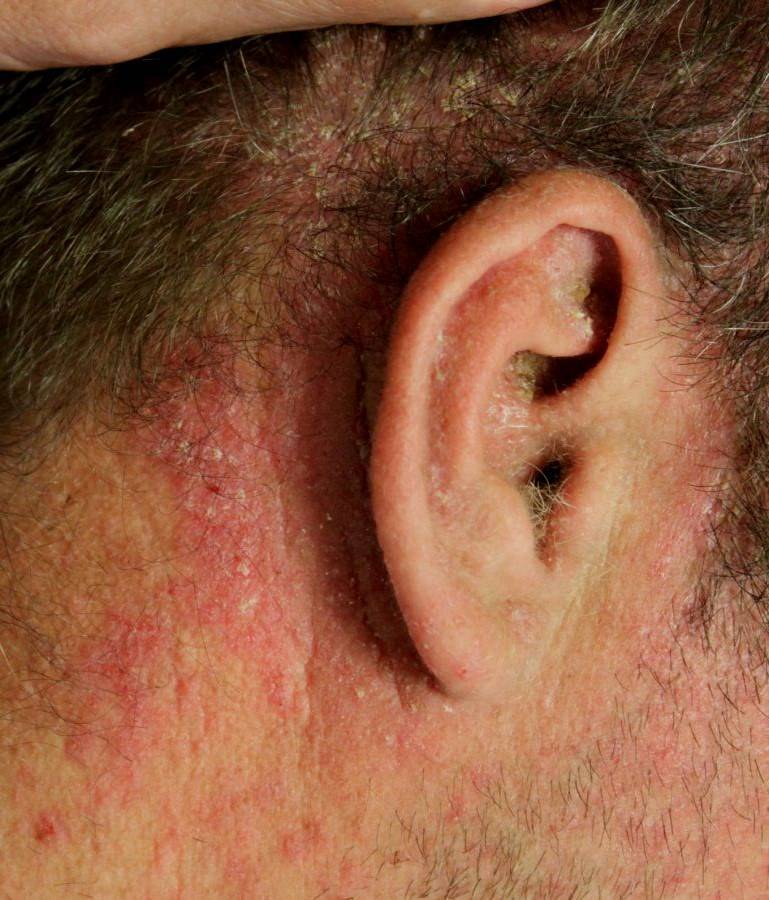
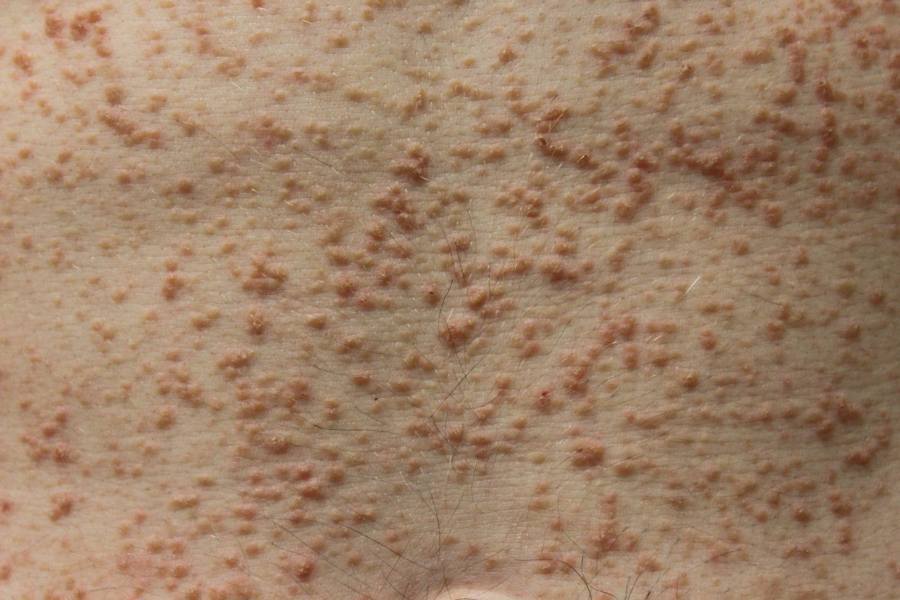
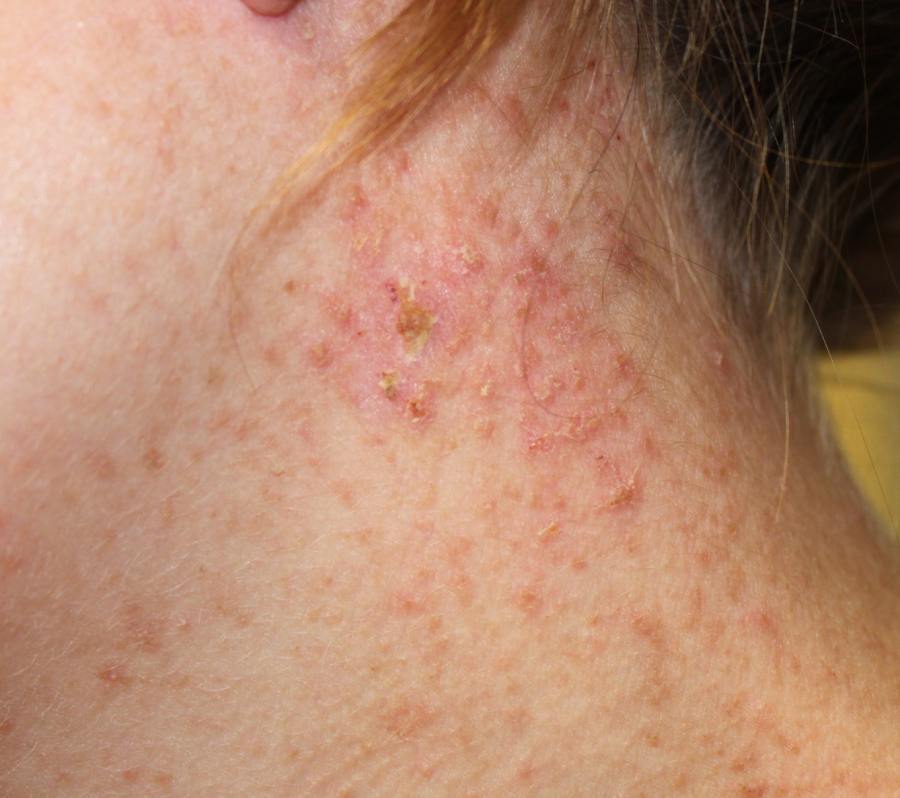
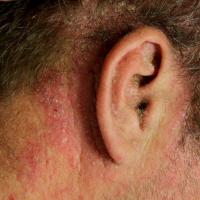
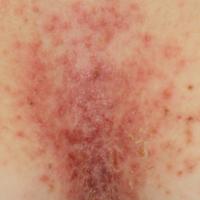
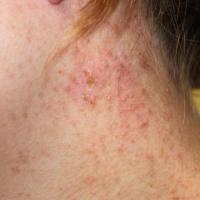
- The seborrhoeic areas of the trunk and face (ie more central), along with the scalp, hairline, temples and ears are the most commonly affected sites
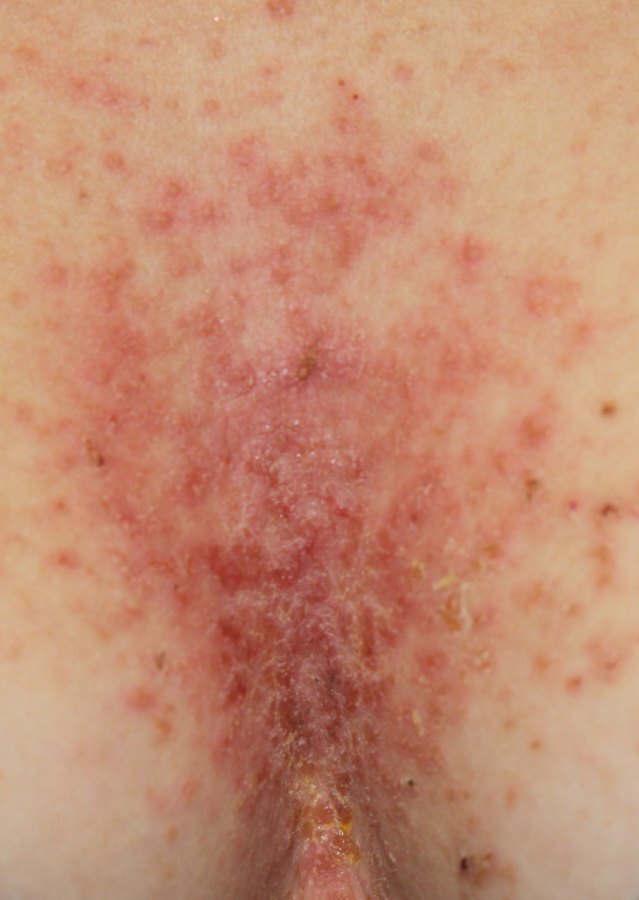
- The flexures are also commonly involved
- Less commonly Darier's can have a Blaschkoid distribution
Morphology
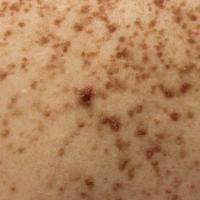
- There can be significant variation between individuals, with some having very mild skin changes, while others have extensive lesions
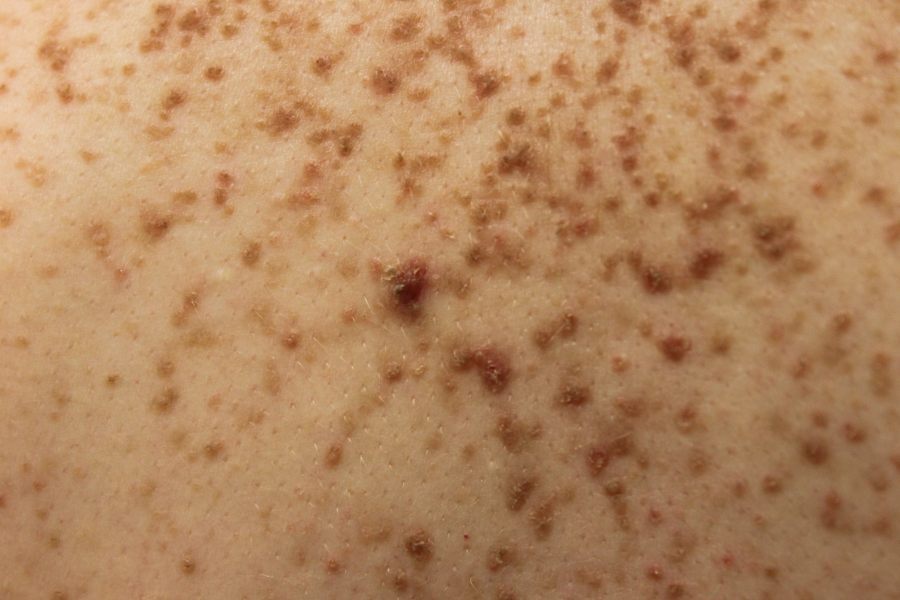
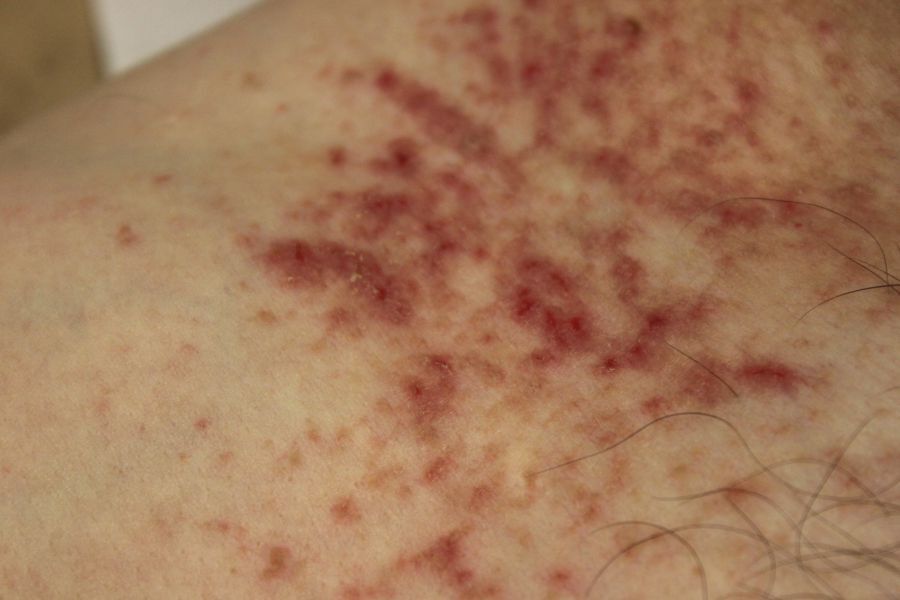
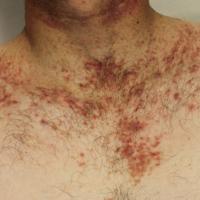
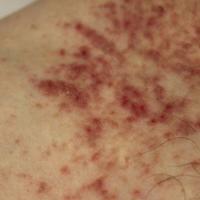
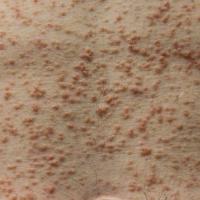
- The characteristic lesion is a persistent, greasy-looking, firm, rough papule, which is skin-coloured or yellow-brown. Lesions can coalesce to form large warty plaques, which if arise in the flexures can be very malodorous
- The scalp is often heavily crusted, and has a rough feel
- Less common presentations include multiple pale macules, especially in darker-skinned individuals, and nodular acne
Other cutaneous features
-
Lesions on the hands and nails
-
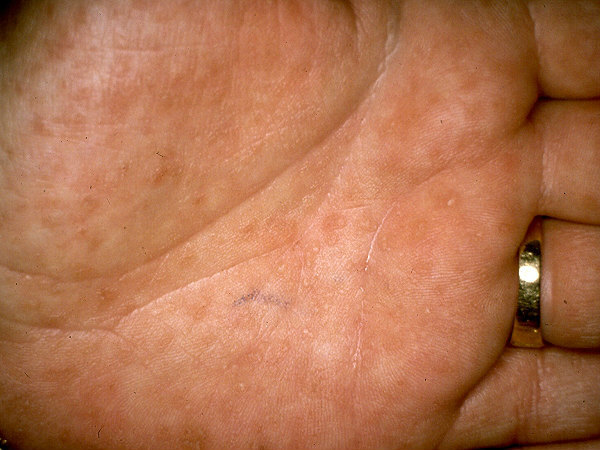
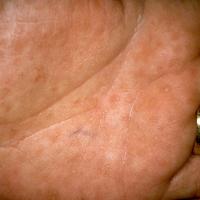
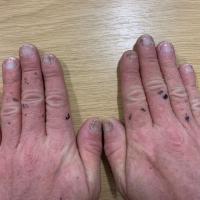
Small pits on the palms and soles are very characteristic
-
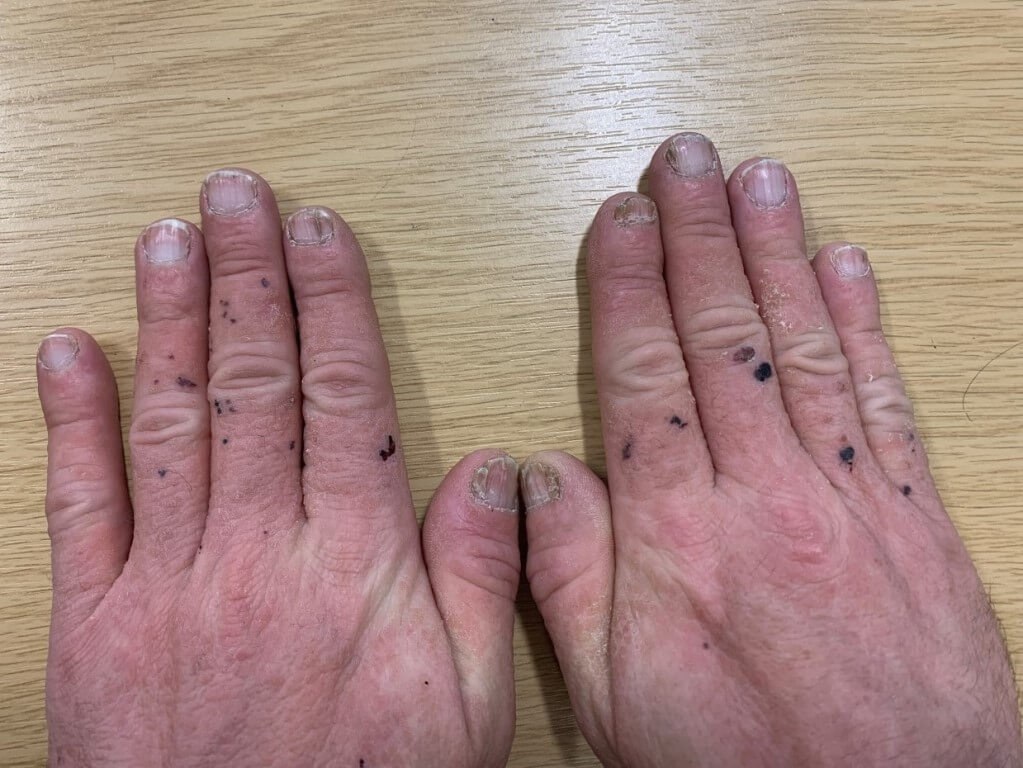
Flat-topped papules on the dorsa of the hands and feet can be a very early sign
-
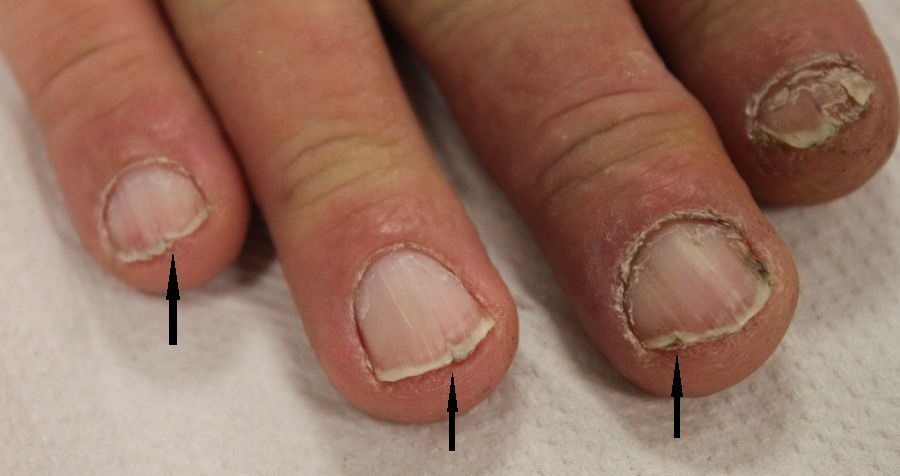
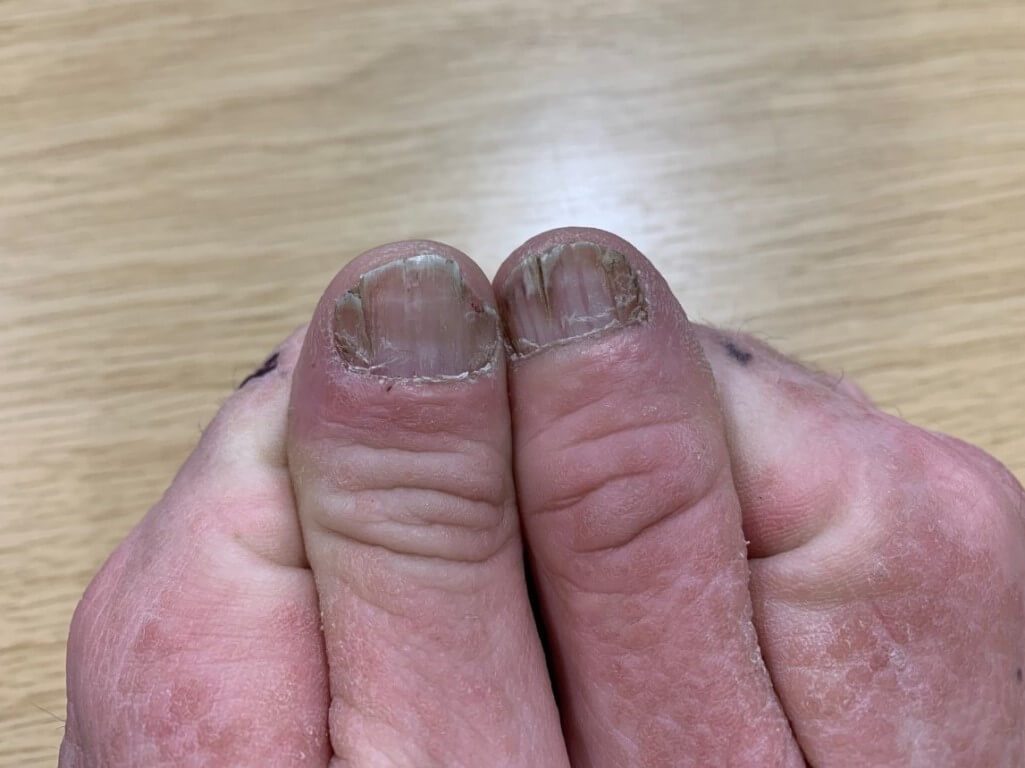
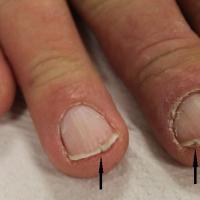
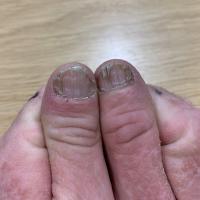
Most patients will have white or red longitudinal bands affecting the nails, often ending in a characteristic V-shaped notch at the free edge of the nail
-
Mucous membranes
-
Mucous membrane involvement is uncommon
- Ocular manifestations include hyperkeratotic plaques and seborrhoeic debris at the eyelid margin. The chronic blepharitis is associated with dry eyes and occasionally corneal erosion
- Secondary infection
- Impetiginisation and eczematisation are common, and patients have an increased susceptibility to infection with herpes simplex and herpes zoster, severe infections may be disseminated or fatal
Non-cutaneous features
- Neuropsychiatric features - depression, bipolar disorder, epilepsy and intellectual difficulties have been reported
Clinical Images
Please refer to notes on image rights at bottom of the page with regards to individual image
ownership.
1
2
3
4
5
6
7
8
9
10
11
12
13
Investigations
-
Darier's disease is usually diagnosed clinically
-
Occasionally a skin biopsy is required, showing focal acantholytic dyskeratosis (disordered cell adhesion)
Management
General management principles
-
Provide a patient information leaflet on Darier's disease
-
Supply appropriate quantities (ie 500g) of an emollient to use as a moisturiser. Given the increased incidence of skin infection consider using an emollient with an antiseptic property eg the Dermol ® range
- Moderately potent to super-potent topical steroids can be used on sore / inflamed skin - if associated with recurrent infections then use a combined treatment of topical steroids with antifungals / antibiotics
- If herpetic infection is suspected stop topical steroids and treat with oral antivirals, eg aciclovir
More severe disease - refer
- Oral retinoids (acitretin 0.25–0.5 mg/kg/day or isotretinoin 0.5 mg/kg/day) are usually effective treatments but are teratogenic
- Pulse ciclosporin can be used to manage severe flares
Prognosis
-
Although persistent, many patients with Darier's disease are relatively mildly affected
-
Patients with more severe disease have a chronic relapsing-remitting pattern
-
Spontaneous resolution is uncommon
Disclaimer - the author PCDS cannot accept responsibility for any misleading or incorrect statements, and the management of individual patients remains the direct responsibility of the individual doctor. We do however hope that visitors to this site can contact us regarding comments that are considered misleading or incorrect so that we can continue to improve the site.
Image Rights - The PCDS would like to thank Dermatoweb, DermQuest (Galderma), and others who have contributed images. All named individuals and organisations maintain copyright for the relevant images.