Folliculitis decalvans
LAST UPDATED: Nov 22, 2021
Introduction
Folliculitis decalvans is a rare chronic condition of the scalp characterised by painful, recurrent purulent follicular exudation resulting in a scarring alopecia.
This chapter is set out as follows:
Aetiology
-
The cause of folliculitis decalvans is uncertain
-
Staphylococcus aureus may be grown from the pustules, however in the vast majority of people who develop a bacterial pustular folliculitis of the scalp it is transient, resolves without antibiotics and heals without scarring, which is not the case in folliculitis decalvans
-
It may be that staphylococcus aureus, together with a deficient host immune response lead to the development of this condition
History
-
Folliculitis decalvans affects both men and women. Men may be affected from adolescence onwards, whereas women tend not to develop this condition until their fourth decade
-
Symptoms include itch, pain and tightness. Sometimes no discomfort is felt at all
Clinical findings
Distribution
- Although it is usually confined to the scalp any hair bearing area can be affected
- In the scalp the vertex and occipital areas are the most commonly affected sites. Sometimes it spreads along the scalp margin in a coronal pattern
Morphology
-
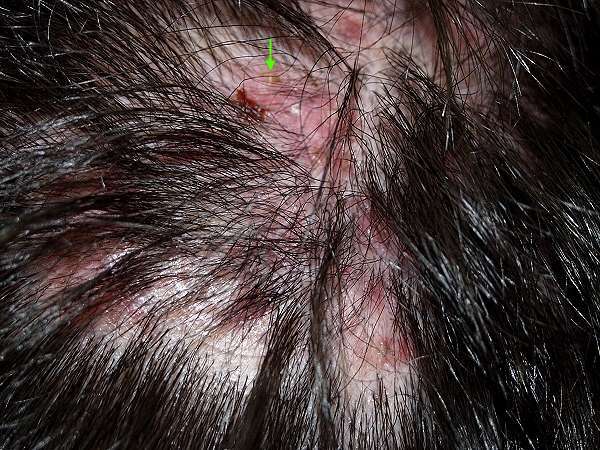
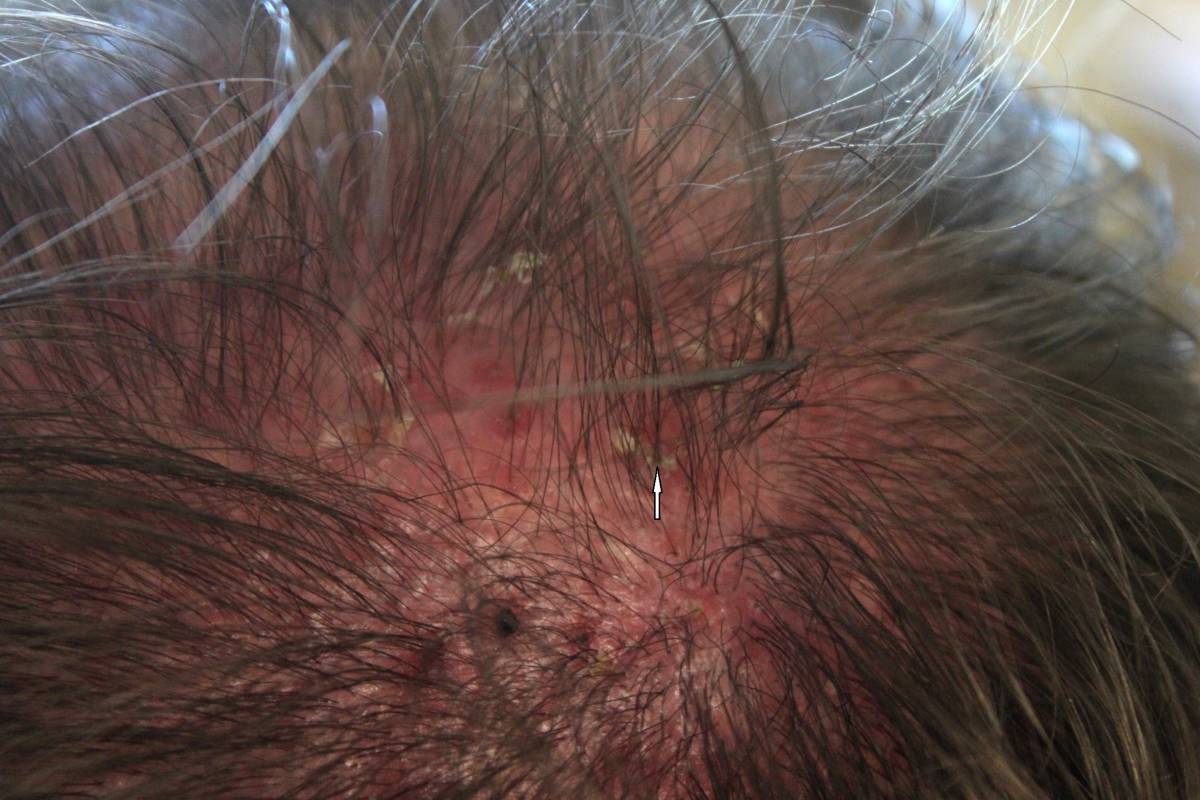
Patients usually present with one or more round patches of scarring hair loss (cicatricial alopecia), usually surrounded by pustules, crusting and sometimes erosions
-
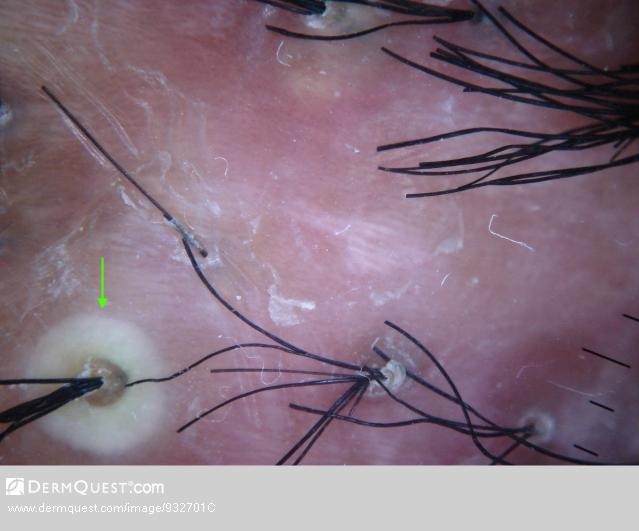
Dermoscopic features - marked 'dolls hair' tufting, scale, perifollicular and interfollicular erythema, pustules. Crusting will be present if the inflammation is very active
-
Eventually the hairs are shed as the follicle is completely destroyed and leaves behind a scar
-
The disease may remain limited to a few small patches or may progress slowly over time causing extensive hair loss
Clinical Images
Please refer to notes on image rights at bottom of the page with regards to individual image
ownership.
Management
General measures
- Patients are best referred promptly - the referral letter must state that the patient has a scarring alopecia as once scarred the hair will never regrow
Treatment options
- A three month trial of an antibiotic, which can be extended / repeated if helpful:
- Lymecycline 408 mg OD or doxycycline 100 mg OD
- Rifampicin 300 mg BD with clindamycin 300 mg BD
- Notes on rifampicin prescribing - before commencing treatment the BNF advises checking U&E and LFT, if these are normal then further checks are usually unnecessary as liver damage is rare, and if it does occur it is usually within the first six weeks of treatment. Patients should be advised to stop treatment and seek urgent medical attention should they develop signs of hepatotoxicity (fever, malaise, vomiting, jaundice)
-
10-20 mg isotretinoin OD, to build up to a maximum of 0.5mg/Kg per day, higher doses can make matters worse
-
Occasionally, focal recalcitrant areas can be excised
Disclaimer - the author PCDS cannot accept responsibility for any misleading or incorrect statements, and the management of individual patients remains the direct responsibility of the individual doctor. We do however hope that visitors to this site can contact us regarding comments that are considered misleading or incorrect so that we can continue to improve the site.
Image Rights - The PCDS would like to thank Dermatoweb, DermQuest (Galderma), and others who have contributed images. All named individuals and organisations maintain copyright for the relevant images.