Hydroa vacciniforme

LAST UPDATED: Aug 08, 2021
Introduction

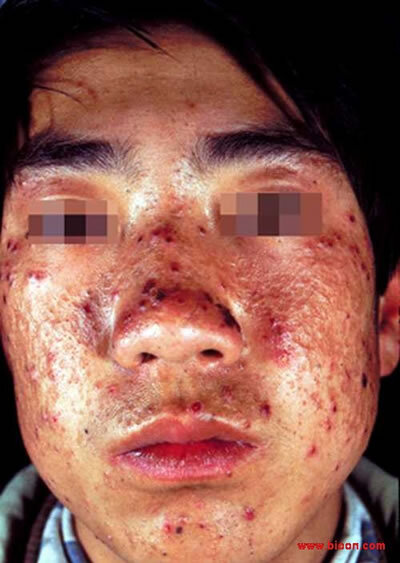
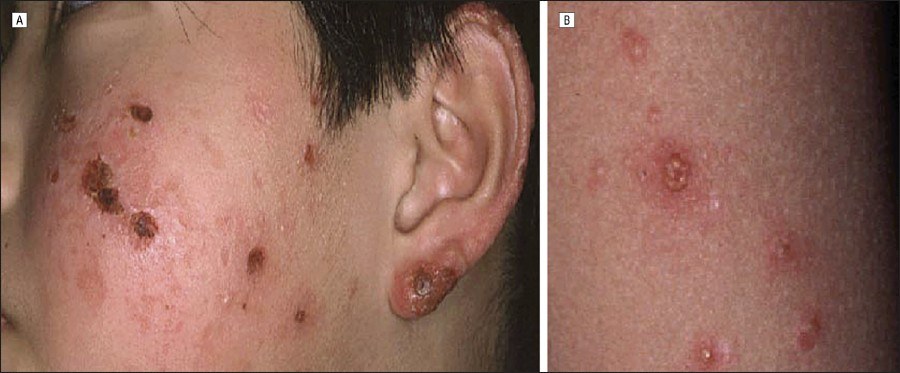
Hydroa vacciniforme is a rare, UV-induced, intermittent, bullous, scarring eruption of some or all of the exposed skin, typically occuring in children with a mean age of onset of 7.9 years.

This chapter is set out as follows:


Aetiology

  • Unknown 

History

  • Patients typically present with seasonal symptoms in spring / summer
  • Following exposure to direct or window glass‐transmitted light, intensely itchy crops of papules and vesicles, often arising on a background of erythema and oedema, occur on exposed sites within 12–24 hours. A burning sensation and pain may occur
  • There may be systemic malaise and fever during acute episodes

Clinical findings

Distribution

  • Lesions arise symmetrically, predominantly on the face, hands or forearms, and back of hands

Morphology

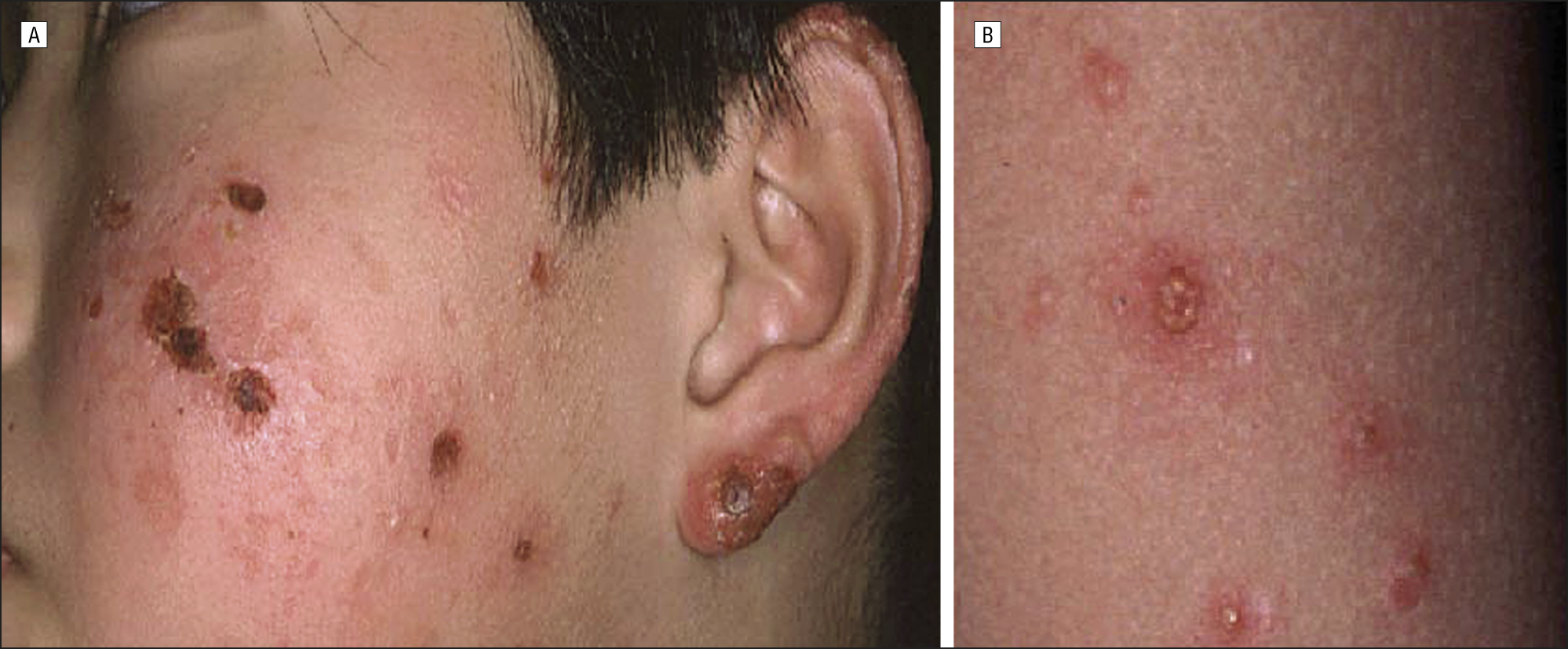
  • Papules and vesicles
  • As the vesicles resolve, haemorrhagic crusting develops and as this detaches, chickenpox-like scarring remains, which can be severe 

Other features

  • There may rarely be cartilage destruction of the ears or nose
  • Contractures of the digits
  • The eyes can also be affected, with photophobia, conjunctivitis, keratitis, anterior uveitis, scarring and visual impairment
  • Oral mucosal involvement is rare but can occur

Clinical Images

Please refer to notes on image rights at bottom of the page with regards to individual image ownership.

Investigations

  • The differential includes porphyria and lupus so FBC, ANA, ENA and porphyrin screening are required
  • Phototesting is usually undertaken 

Management

  • Provide a patient information leaflet on UV protection, window film is also required 
  • Topical steroids
  • Management in Secondary Care - oral steroids, β‐carotene, azathioprine, ciclosporin and antimalarials have all been tried, although their benefits are unproven 
  • The condition is difficult to manage but often resolves in adolescence

Disclaimer - the author PCDS cannot accept responsibility for any misleading or incorrect statements, and the management of individual patients remains the direct responsibility of the individual doctor. We do however hope that visitors to this site can contact us regarding comments that are considered misleading or incorrect so that we can continue to improve the site.

Image Rights - The PCDS would like to thank Dermatoweb, DermQuest (Galderma), and others who have contributed images. All named individuals and organisations maintain copyright for the relevant images.

Quick Links

The following pharmaceutical companies have had no involvement in the content of this website or in our conference programmes


Almirall
Galderma
Glenmark
Johnson & Johnson
La Roche-Posay
LEO Pharma
Pierre Fabre
Schuco