Lymphoedema
LAST UPDATED: Jul 15, 2021
Introduction
Lymphoedema is a chronic swelling resulting from failure of lymphatic drainage. Primary lymphoedema is due to an intrinsic genetic abnormality of the lymphatic system. Secondary lymphoedema results from damage to an otherwise normal lymphatic system eg from surgery, radiotherapy, infection or trauma.
This chapter is set out as follows:
Aetiology
Introduction
-
Lymph is a fluid derived from blood plasma. It is pushed out through the capillary wall by pressure exerted by the heart or by osmotic pressure at the cellular level. Lymph contains nutrients, oxygen, and hormones, as well as toxins and cellular waste products generated by the cells. As the interstitial fluid accumulates, it is picked up and removed by lymphatic vessels that pass through lymph nodes, which return the fluid to the venous system
-
A recent study has suggested that over 200,000 people in the UK may be living with lymphoedema
Primary lymphoedema
-
Primary lymphoedema develops when there is an intrinsic genetic abnormality of the lymphatic system, and is usually present at birth
-
It is much less common than secondary lymphoedema, and is estimated to affect around 1:6000 people
Secondary lymphoedema
There are several causes including the following:
-
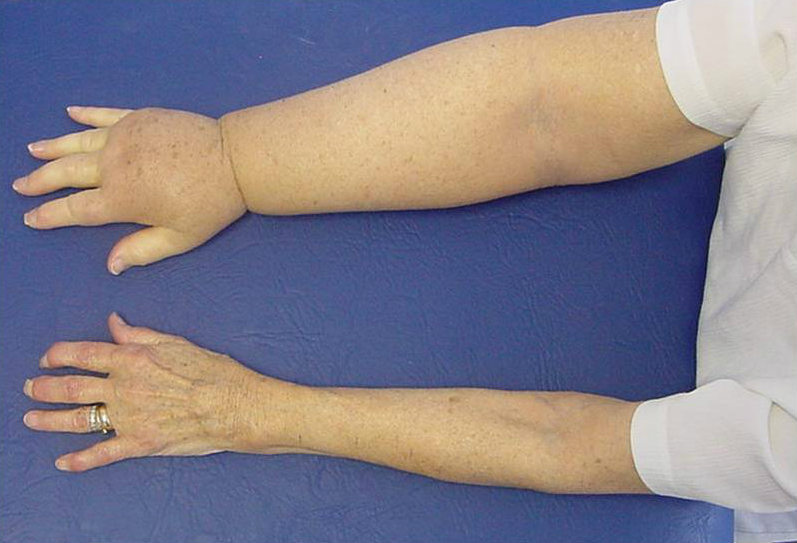
Lymph node dissection - as part of the treatment for breast cancer an axillary clearance may be performed in which all or most of the lymphatic tissue in the axilla is removed. In melanoma and sometimes in other types of cancer a similar procedure may be performed either in the axilla or the groin, depending on the site of the tumour. Although in many patients other lymphatics can compensate for the loss of lymphatic tissue, in some patients this is not enough and lymphoedema develops in the arm or the leg. After surgery lymphoedema may not develop immediately, it can develop gradually as the operation site heals and scar tissue develops. About one-third of patients who develop lymphoedema will do so more than one year after their breast cancer surgery
-
Radiotherapy - significant lymphoedema can also occur after radiotherapy, which can damage lymphatic vessels. In patients who have had both surgery and radiotherapy there is an even greater risk of developing lymphoedema
-
Obstruction from the malignancy - lymphoma, and metastases from a number of tumours including prostate cancer, cervical cancer, breast cancer, and melanoma can invade the lymphatic vessels, blocking them
-
Chronic venous disease - can result in venous hypertension and secondary damage to the lymphatic system as it becomes overloaded and unable to function effectively
-
Obesity - can cause lymphoedema or exacerbate pre-existing lymphoedema
-
Trauma - can directly damage lymph vessels
- Reduced mobility/paralysis - muscle contractions are important to help lymph move, if contractions are reduced then lymph will accumulate
-
Infection and elephantiasis
-
In severe soft tissue infections the inflammation can spread to the lymphatics (lymphangitis) and cause damage, leading to scarring around the lymphatics
-
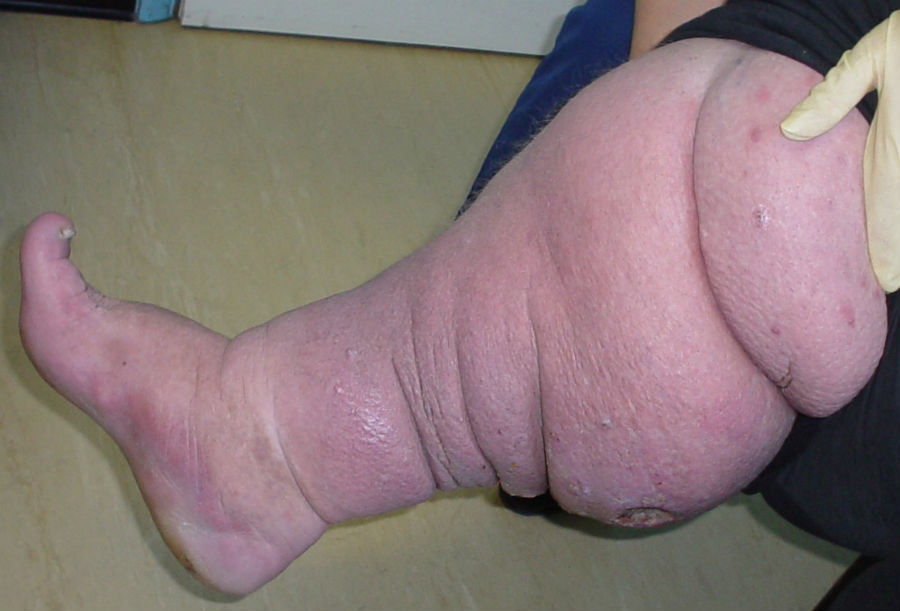
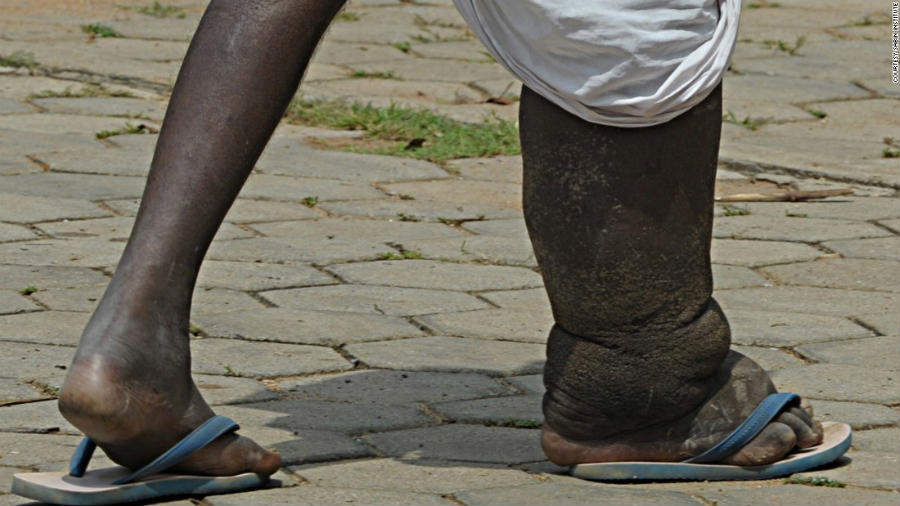
Elephantiasis is a condition characterised by gross lymphoedema of an area of the body, especially the limbs. Other areas commonly affected include the external genitalia. In tropical countries filariasis (a parasitic round worm) is the most common cause of such lymphodema. In medical literature the terms lymphatic filariasis and elephantiasis may be used interchangeably, however, there are other causes of elephantiasis including certain sexually transmitted diseases (eg lymphogranuloma venereum), tuberculosis, leishmaniasis, leprosy, environmental factors such as exposure to certain minerals (eg silica), and in some cases no cause can be identified (idiopathic)
Clinical findings
Primary lymphoedema
-
The damaged lymphatic system is usually present at birth (usually as a result of underdevelopment)
-
Affects both sexes, although 70-80% of cases are female
-
The age of onset varies - oedema is present at birth in 10% of cases, 80% develop swelling before 35 years and 10% after 35 years
-
The commonest sites for swelling are the legs, arms, genitalia and face
Secondary lymphoedema
Initially the symptoms and signs may be very slight and almost unnoticeable. If left untreated the swelling may get bigger and eventually become permanent. Some or all of the following may be experienced:
-
Symptoms may include a feeling of tightness and heaviness in a limb, altered sensation, tenderness, reduced range of movement
-
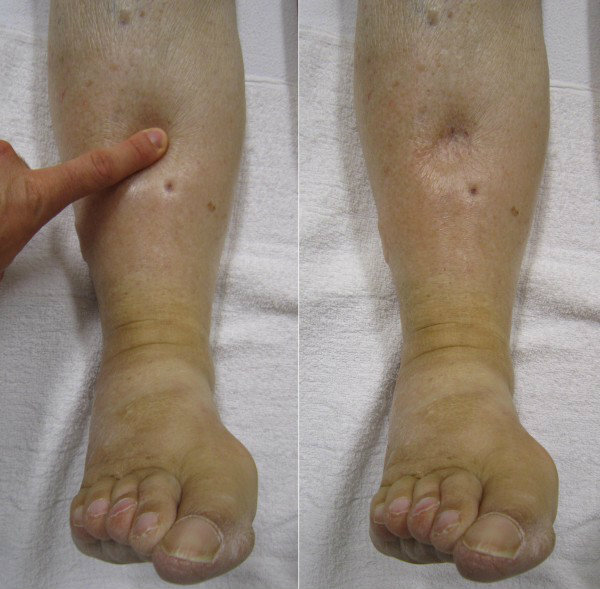
The oedema is initially pitting, however, over time it becomes non-pitting
-
The skin can ooze a clear or yellow fluid, and/or can have a foul-smelling odour
-
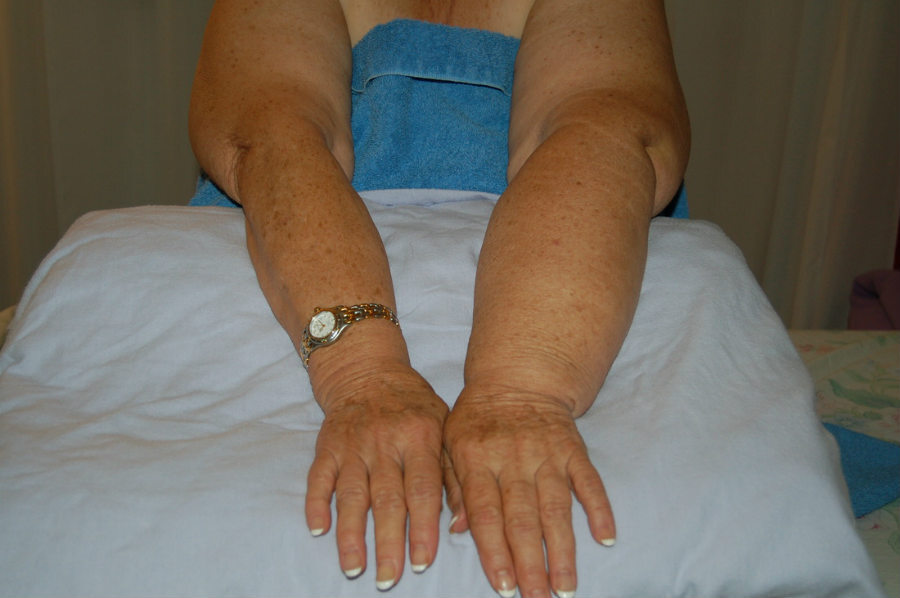
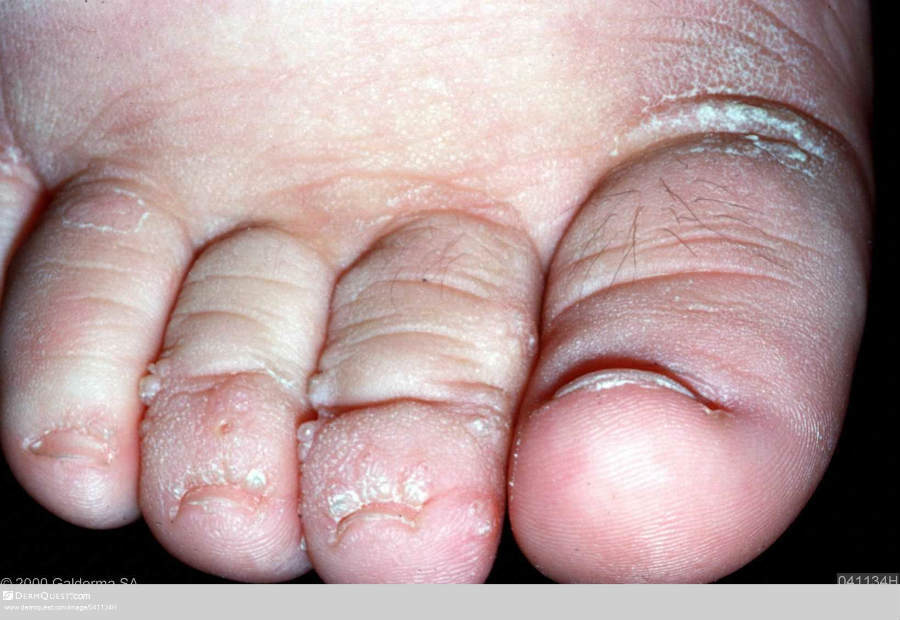
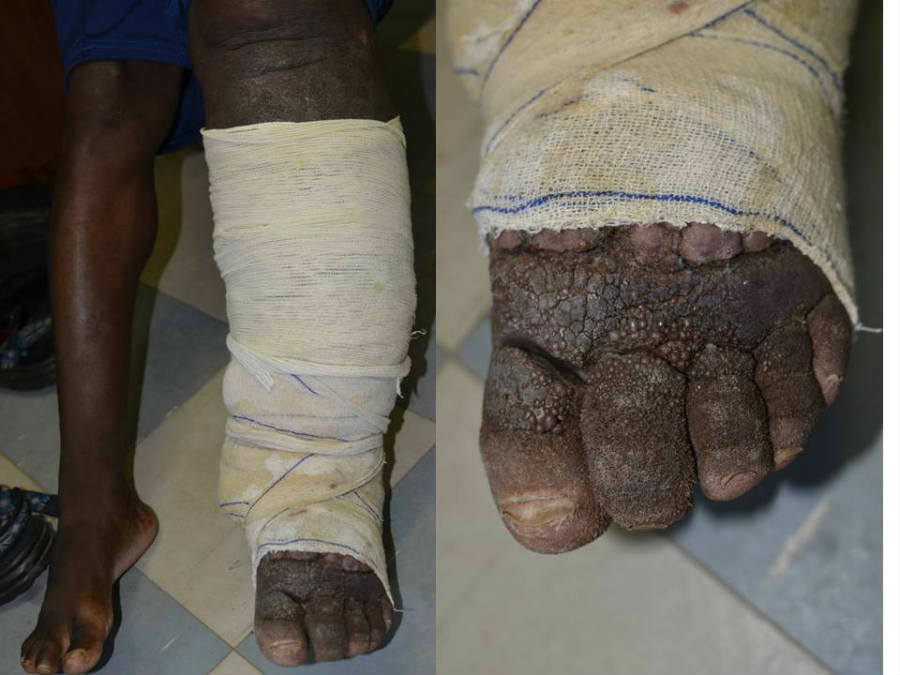
If lymphoedema is left untreated and the swelling gets worse, skin changes may occur - erythema of the affected area and thickening of the skin, which appears as peau d'orange skin and woody oedema. Areas of skin can become cobblestoned, hyperkeratotic, with papillomatous plaques (elephantiasis nostra verrucosa) most commonly seen on the shins
-
The skin becomes more prone to infection and ulceration
-
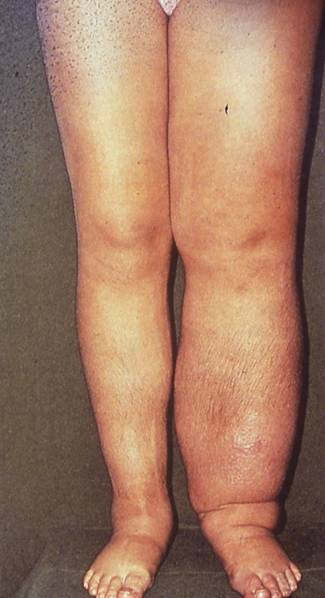
Lymphoedema of the legs is often worse than that of the arms as lymphatic drainage from the legs is more difficult. Walking becomes more difficult as the patient carries the excess weight
Clinical Images
Please refer to notes on image rights at bottom of the page with regards to individual image
ownership.
Investigations
-
Investigations may be required depending on the suspected aetiology
-
Imaging studies, such as CT or MRI, will be required if there is a suspicion of malignancy
Management
-
Active treatment is best commenced in the early stages of lymphoedema - in the UK many patients are managed by lymphoedema nurse specialists
-
Generally, there are four components of care that will be recommended for people with mild to moderate swelling of their limbs:
-
Good skin care to keep the skin and tissues in good condition and to prevent/reduce the risk of infection
-
External support/compression in the form of elastic compression garments to help prevent the swelling from building up in the limb
-
A programme of exercise and movement to try and maximise lymph drainage without overexertion (this would cause the swelling to worsen)
-
Simple Lymphatic Drainage (SLD) - a gentle massage technique that is based on the principles of Manual Lymphatic Drainage (MLD). It involves the use of simple hand movements to try and move the swelling out of the affected area. It is designed to be carried out by patients themselves, their relatives or carers
-
Reassessment and monitoring of progress is essential to ensure good results. It is also vital that patients help themselves. Lymphoedema is a long-term, chronic condition and one that requires a high level of motivation and compliance by the patients themselves
-
The following link shows videos of a number of bandaging techniques used in leg oedema
Other resources
There are a number of other treatments that can be used for moderate-severe lymphoedema. For more information please refer to the following groups:
Disclaimer - the author PCDS cannot accept responsibility for any misleading or incorrect statements, and the management of individual patients remains the direct responsibility of the individual doctor. We do however hope that visitors to this site can contact us regarding comments that are considered misleading or incorrect so that we can continue to improve the site.
Image Rights - The PCDS would like to thank Dermatoweb, DermQuest (Galderma), and others who have contributed images. All named individuals and organisations maintain copyright for the relevant images.