Naevus of Ota, Ito and Hori

LAST UPDATED: Oct 30, 2025
Introduction

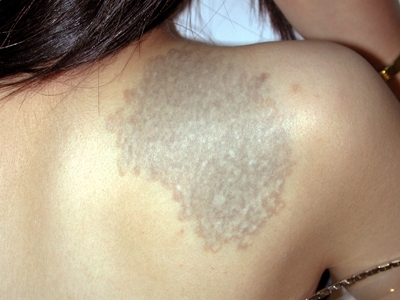
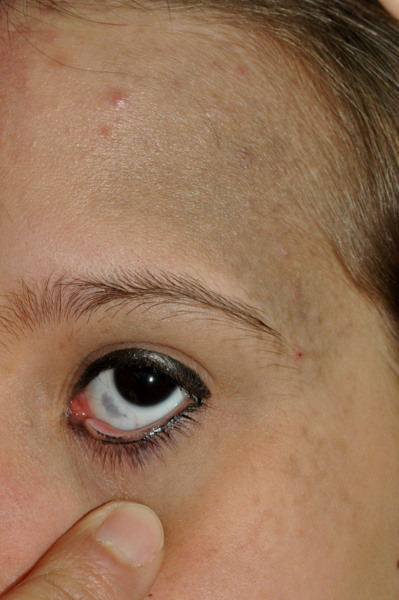
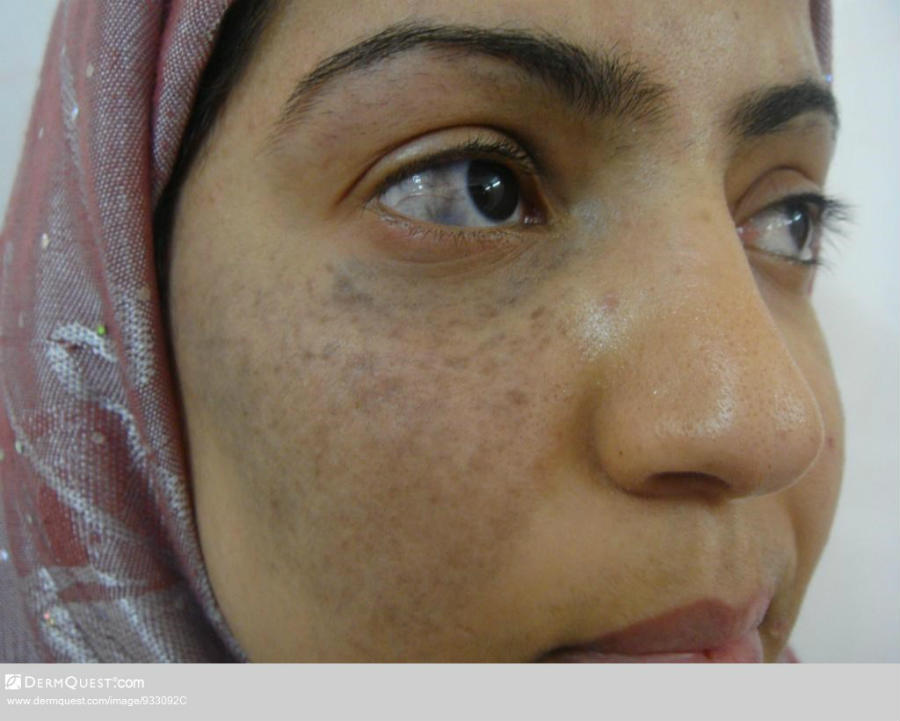
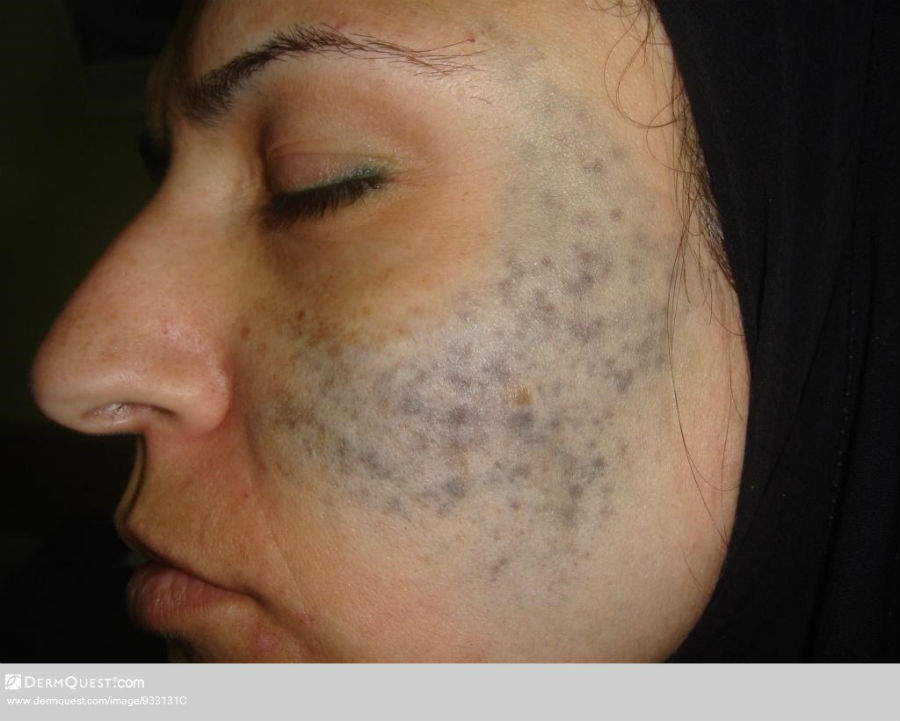
Naevi of Ota, Ito and Hori are blue/grey to slate-brown patches of hyperpigmentation. The particular colouring results from dermal melanocytosis - the presence of functional melanocytes in the dermis. These cells have failed to reach their proper location in the basal layer of the epidermis during embryonic migration from the neural crest.

This chapter is set out as follows:


History

  • Naevi of Ota are much more common than naevi of Ito
  • Most commonly found in Asian populations, especially in Japanese individuals. They are very uncommon is Caucasians
  • Naevi of Ota and Ito are often present at birth but may appear later in life
  • The naevus of Hori is not present at birth and is therefore a form of acquired dermal melanocytosis

Clinical findings

  • Blue/grey to slate-brown patches of hyperpigmentation
     
  • Distribution - naevus of Ota
    • Usually unilateral
    • Skin - the ophthalmic and maxillary divisions of the ophthalmic nerve
    • The sclera can be involved, and sometimes other parts of the eye
    • Occasionally the hard palate
    • A naevus of Hori is similar to naevus of Ota but affects both sides of the face
       
  • Distribution - naevus of Ito
    • Usually unilateral
    • The shoulder girdle region

Clinical Images

Please refer to notes on image rights at bottom of the page with regards to individual image ownership.

Management

  • Cosmetic camouflage can be used to try and cover up the affected area - patients can be referred to a camouflage team for best advice on how to cover up the affected areas. Camouflage teams tend to be based in hospital outpatient departments, if this is not so contact your local dermatology department, Changing Faces, or the British Red Cross. Alternatively patients may wish to use their own fake tan products
     
  • Laser therapy is occasionally used in patients with lighter skin, however, multiple treatments are needed and recurrence is common. Laser therapy is generally ineffective in patients with darker skin
     
  • Routine follow up is not required - transformation in to a melanoma is rare, especially in non-Caucasian people, and so patients should simply be asked to observe the lesion and report any changes 
     
  • Eyes - naevi of Ota can be associated with glaucoma and so if the eye is affected patients require routine eye examinations

Disclaimer - the author PCDS cannot accept responsibility for any misleading or incorrect statements, and the management of individual patients remains the direct responsibility of the individual doctor. We do however hope that visitors to this site can contact us regarding comments that are considered misleading or incorrect so that we can continue to improve the site.

Image Rights - The PCDS would like to thank Dermatoweb, DermQuest (Galderma), and others who have contributed images. All named individuals and organisations maintain copyright for the relevant images.

Quick Links

The following pharmaceutical companies have had no involvement in the content of this website or in our conference programmes


Almirall
Galderma
Glenmark
Johnson & Johnson
La Roche-Posay
LEO Pharma
Pierre Fabre
Schuco