Necrolytic migratory erythema

LAST UPDATED: Jul 26, 2021
Introduction

Necrolytic migratory erythema (NME) is, in most cases, associated with a glucagonoma, which is a slow growing malignant tumour predominantly arising in the α‐cells of the pancreas. The triad of an unusual dermatosis, recent‐onset diabetes and weight loss should trigger consideration of NME, although cutaneous manifestations may precede the diagnosis of glucagonoma by several years.

This chapter is set out as follows:


Aetiology

  • Most glucagonoma's arise in the α‐cells of the pancreas, and can be part of a multiple endocrine neoplasia syndrome. Rarely, glucagon‐secreting tumours can arise at other sites eg bronchial or naso‐pharyngeal
  • Similar symptoms can arise in the absence of a glucagon‐secreting tumour (Pseudoglucagonoma syndrome), secondary to pancreatic insufficiency, coeliac disease and intestinal malabsorption syndromes, inflammatory bowel disease, cirrhosis, non‐pancreatic malignancies and the Myelodysplastic syndrome

History

  • A glucagonoma is very rare and usually affects adults over the age of 50
  • There is often a delay in diagnosis as patients usually present with nonspecific complaints, such as weight loss, diabetes, diarrhoea, and stomatitis, additionally early cutaneous lesions may be mild and histology non-diagnostic. Over time skin lesions become more uncomfortable
  • Other features may include venous thrombosis, neurological and psychiatric symptoms

Clinical findings

Distribution

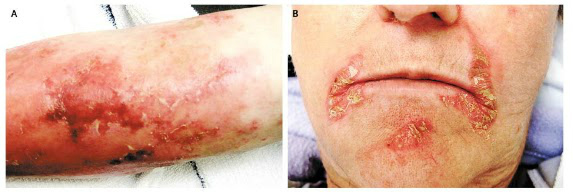
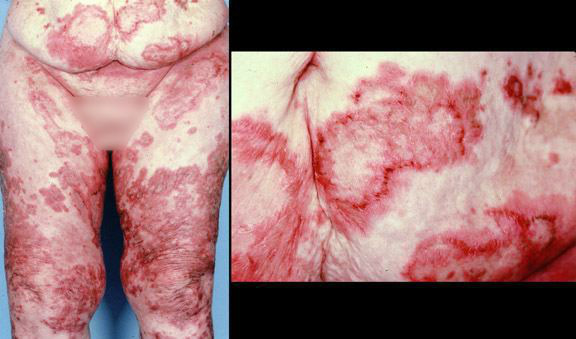
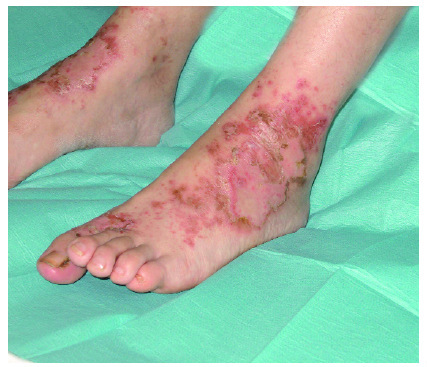
  • Can involve any site but it most often affects the perineum, buttocks, groin, lower abdomen, and lower extremities, areas subject to greater pressure and friction

Morphology

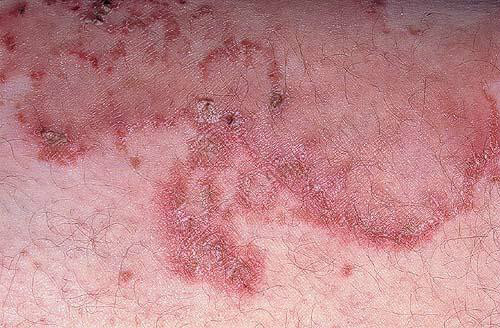
  • Lesions wax and wane in a cycle of about 10 days, beginning with an erythematous patch that blisters centrally, erodes, and then crusts over and heals with hyperpigmentation
  • They are typically annular or polycyclic and may become confluent

Other features

  • May include glossitis and dry, cracked lips

Clinical Images

Please refer to notes on image rights at bottom of the page with regards to individual image ownership.

Investigations

  • Blood tests
    • May reveal diabetes mellitus, anaemia, and deranged LFTs if there is liver involvement 
    • Serum glucagon levels may be very raised
  • Skin biopsy
    • Histology may reveal inflammation and separation of the superficial layers of the epidermis
  • Once a diagnosis has been made further blood tests are required to look for evidence of a multiple endocrine neoplasia syndrome, as well as imaging studies to identify the source of the glucagonoma

Management

  • NME usually resolves once the glucagonoma has been surgically removed. However, if the tumour has already spread to other organs such as the liver, surgery is not as effective
  • Chemotherapy may help some patients
  • Prognosis - unfortunately, about 50% of patients die within five years of diagnosis

Disclaimer - the author PCDS cannot accept responsibility for any misleading or incorrect statements, and the management of individual patients remains the direct responsibility of the individual doctor. We do however hope that visitors to this site can contact us regarding comments that are considered misleading or incorrect so that we can continue to improve the site.

Image Rights - The PCDS would like to thank Dermatoweb, DermQuest (Galderma), and others who have contributed images. All named individuals and organisations maintain copyright for the relevant images.

Quick Links

The following pharmaceutical companies have had no involvement in the content of this website or in our conference programmes


Almirall
Galderma
Glenmark
Johnson & Johnson
La Roche-Posay
LEO Pharma
Pierre Fabre
Schuco