Papular urticaria
LAST UPDATED: Jul 27, 2021
Introduction
Papular urticaria is a common, itchy condition manifested by recurrent, and often grouped, papules caused by a hypersensitivity reaction to insect bites. Affected individuals rarely notice the bites. Despite of its name it is not a true urticaria.
This chapter is set out as follows:
Aetiology
-
The most commonly identified causes are insects that live on cats and dogs, particularly the human flea (Pulex irritans) and mites
-
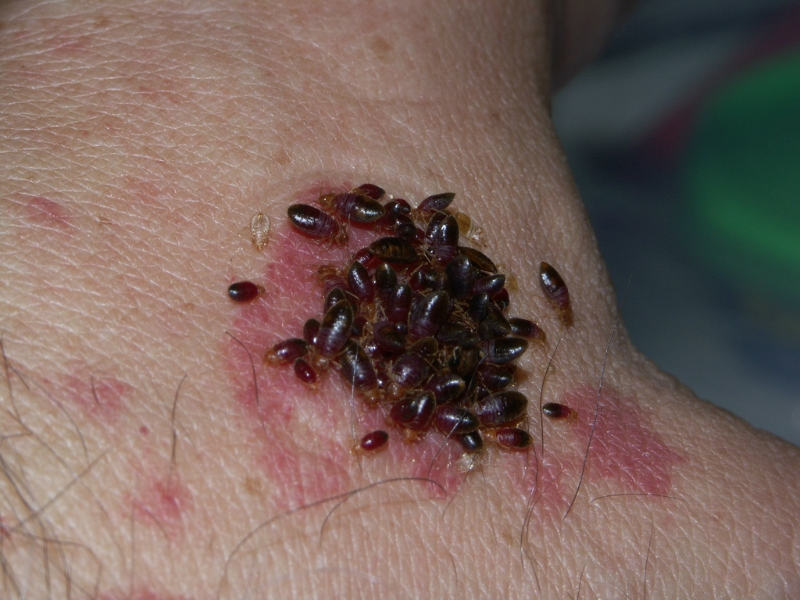
Bed bugs seem to be resurging in developed countries, possibly due to international travel and changes in pest control practices. The two main species of bed bugs are Cimex lectularius and Cimex hemipterus, which are found in temperate areas and tropical zones, respectively
-
Other causes include mosquitoes and various other insects
History
-
The condition is more common in children, but also affects adults. Symptoms are more prevalent in the spring and summer, but may arise at any time of the year depending on the cause. More than one household member may be affected
- Fleas and mites
-
Enquire about pets, especially cats and dogs
-
Bed bugs
-
Are usually transported passively, mainly in clothing and luggage, so history of recent travel is important
-
They can also be transported in old furniture eg mattresses and sofas
-
Less commonly, they spread actively from room to room in communities, mainly through electric wiring or ventilation ducts
-
Because bed bugs feed at night and inject an anaesthetic when biting, the initial bite is not felt. Symptom onset, caused by an allergic reaction to saliva, can be delayed with reactions to bites taking several days to manifest up
Clinical findings
Distribution
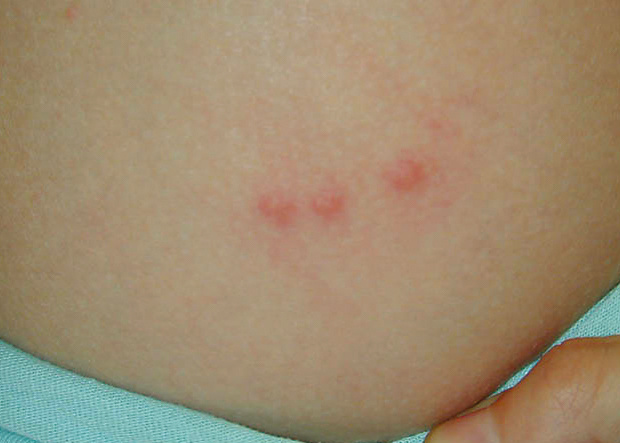
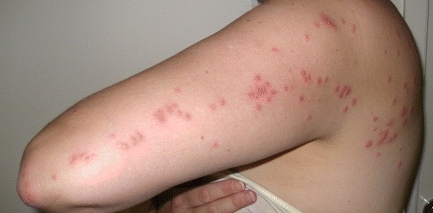
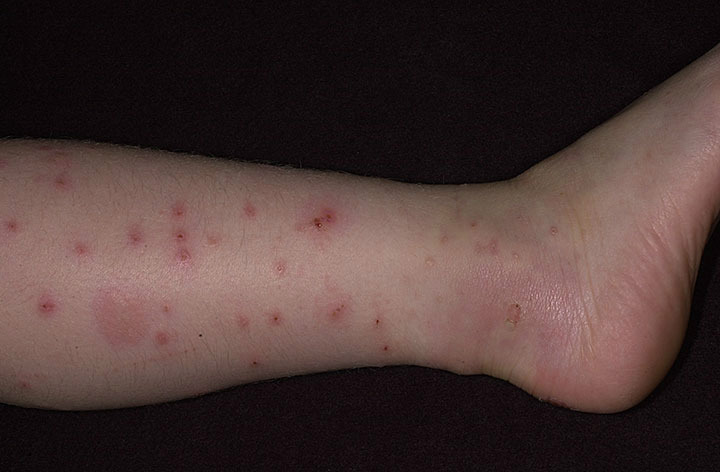
- Itchy lesions that tend to be grouped on exposed areas, although non-exposed sites can be affected
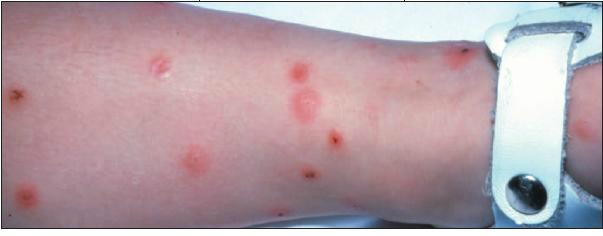
- Dog and cat flea bites occur predominantly on the legs, below the knees, but they can also occur on the forearms
- Bed bug bites occur predominantly on the face and neck, hands and arms, but occasionally are more generalised
Morphology
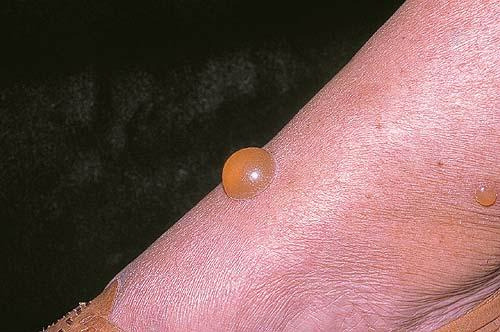
- Crops of papules and papulovesicles, which may run in a curve or line, especially if caused by beds bugs or fleas
- Occasionally blisters
- In some lesions a central haemorrhagic punctum will be evident
- Scratching may produce erosions and secondary infection
- Lesions persist for a few days to a few weeks
- Post-inflammatory hyperpigmentation may occur, and can persist for several weeks after resolution of the lesions. Occasionally scaring is seen if the lesions have been vigorously scratched
Examination of the environment
- Fleas and mites
- Look for fleas in pets, their bedding and soft furnishings
- Mites are only visible under a microscope
- Bed bugs
-
Have the appearance of a collection of apple seeds
-
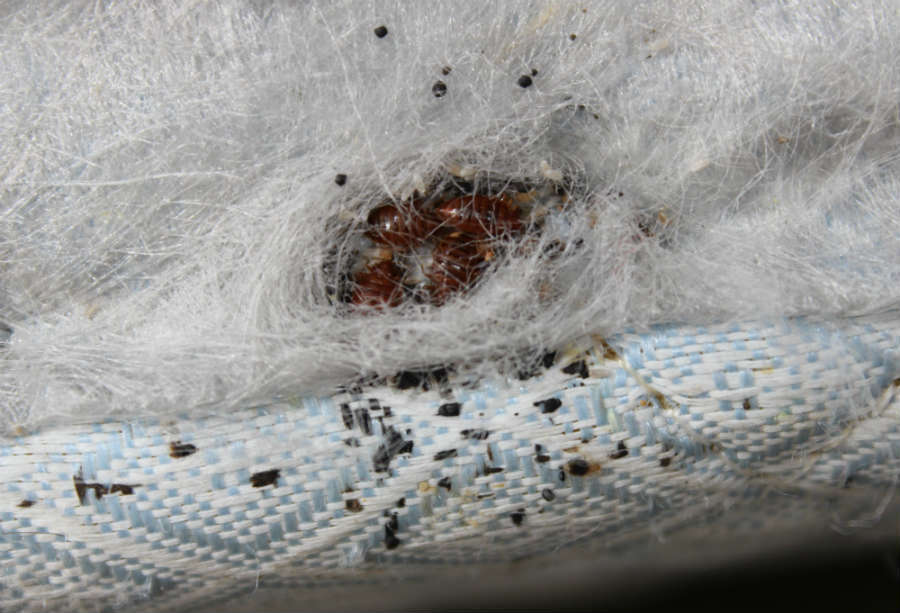
During the day they hide in dark places. Because their bodies are flat, bedbugs can squeeze into the smallest crevice or crack making them very difficult to spot
-
They tend to prefer fabric or wood over plastic and metal, and often hide near to where individuals sleep such as a mattress seam, the joints of a bed frame, and behind loose or peeling wallpaper. However, they are willing to travel several feet if necessary to reach their host, so they can also be found away from the bed in other furniture, along the edges of carpets and even behind mirrors or inside smoke alarms. In fact, they can be found in almost any place in the bedroom where they will not be disturbed. It is also worth checking suitcases if recent travel has occurred
Clinical Images
Please refer to notes on image rights at bottom of the page with regards to individual image
ownership.
Management
-
Try and identify and then eradicate the cause
-
Fleas and mites - examine dogs and cats, and their bedding. Fleas tend to be readily visible but mites are too small to see. Treatment should be directed at the pet as well as household carpets and soft furnishings
-
Bed bugs - it can be extremely difficult to get rid of a bedbug infestation from your home, so it is wise to contact your local council or a pest control firm. Make sure any pest control company you contact is a member of the British Pest Control Association or National Pest Technicians Association
-
Papular urticaria is self-limiting
-
In many patients it may not be possible to identify what a patient is reacting to, however, patients eventually outgrow this condition, probably through desensitization after multiple arthropod exposures
-
Treatment of the patient
-
Pruritus - moderately potent topical steroids. The periodic use of sedating antihistamines can be used, mainly at night, for more severe spells of itch
-
If secondary infection is present, topical / systemic antibiotics may be needed
Disclaimer - the author PCDS cannot accept responsibility for any misleading or incorrect statements, and the management of individual patients remains the direct responsibility of the individual doctor. We do however hope that visitors to this site can contact us regarding comments that are considered misleading or incorrect so that we can continue to improve the site.
Image Rights - The PCDS would like to thank Dermatoweb, DermQuest (Galderma), and others who have contributed images. All named individuals and organisations maintain copyright for the relevant images.