Peripheral neuroectodermal tumours
LAST UPDATED: Jan 20, 2021
Introduction
There are a large number of different tumours that fall in to this category, the vast majority are benign, and malignant transformation is uncommon. Many of the tumours are rare and beyond the scope of this website.
This chapter provides an overview of the more common and / or interesting tumours in this group, and is set out as follows:
History
-
The history depends on the type of lesion (refer to clinical findings)
-
Malignant change should be suspected in patients who report persistent pain for more than one month (especially if pain is present at rest), change in texture from soft to hard, a rapid increase in size or a new neurological deficit
Clinical findings
Common peripheral neuroectodermal tumours include:
Amputation stump neuroma
- This is a benign response of nerve tissue to injury
- Clinically it presents as a small, tender nodule at the scar site
- Surgical excision is usually required
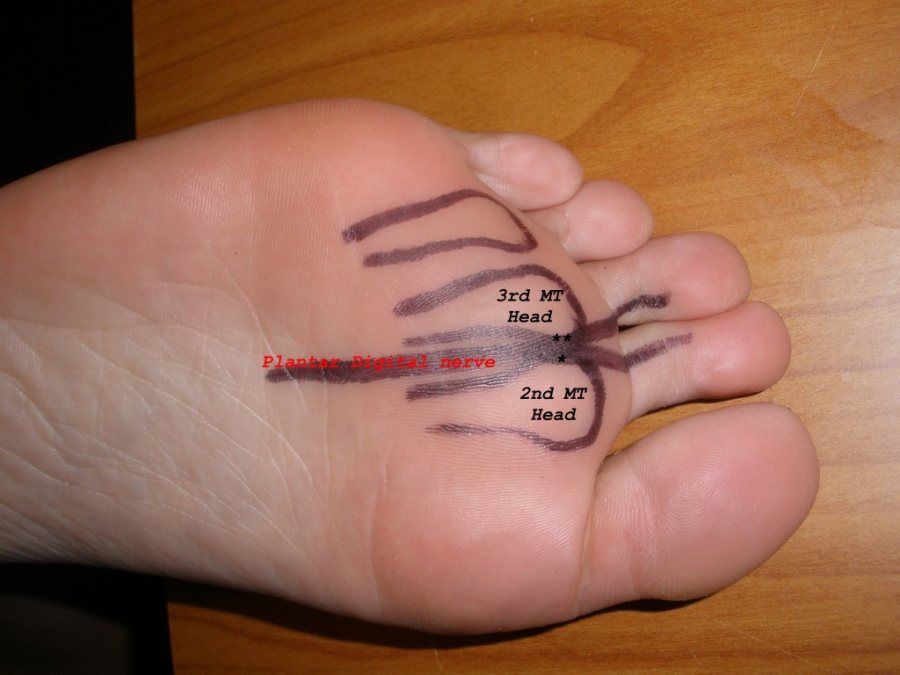
Morton's neuroma
- Is the result of damage to the plantar digital nerve, followed by fibrosis
- It is more common in women, and is associated with high-heeled footwear
- Pain, which can be marked, usually arises between the third and fourth metatarsals, especially when walking
- The condition usually presents to a podiatrist or orthopaedic surgeon. Excision is the recommended treatment
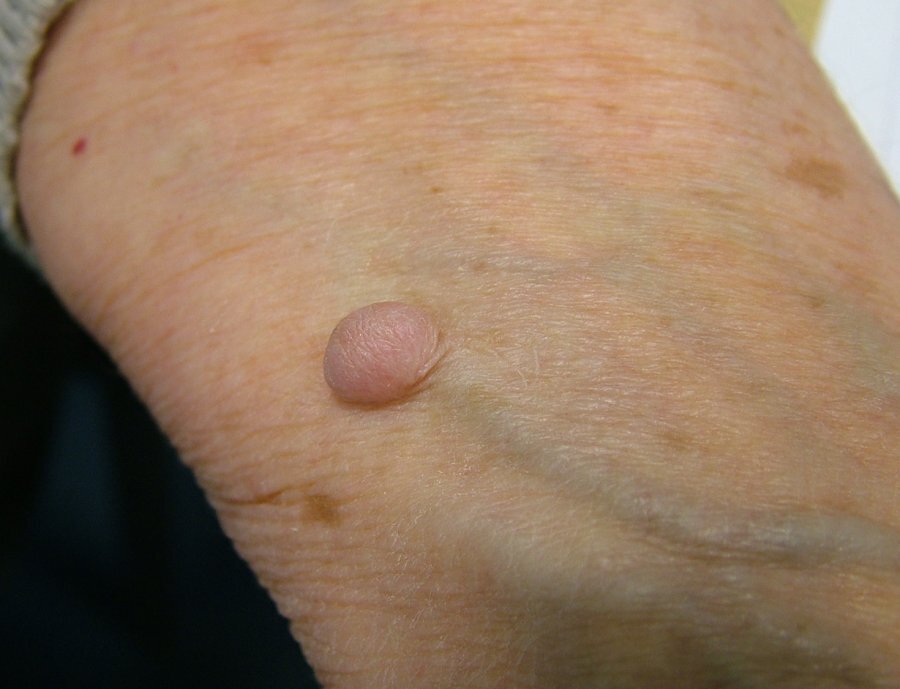
Schwannoma (syn. neurilemmoma)
- Is a tumour of nerve sheaths composed of Schwann cells. There are several types of schwannomas
- It is relatively rare in the skin. It most frequently arises from the acoustic nerve
- Most patients have solitary lesions, although they can be multiple - multiple cutaneous plexiform schwannomas can be found in neurofibromatosis type 2, with bilateral acoustic nerve involvement
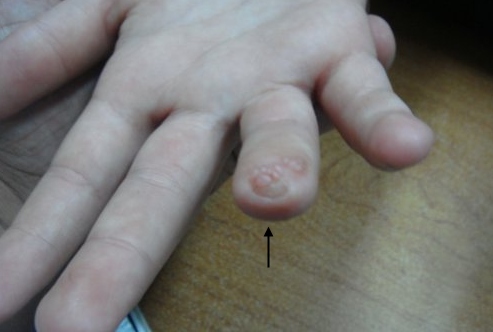
- The brachial plexus and the ulnar nerve are the most commonly affected sites. Other sites include the digital nerves in the hands and feet, the knee, and on the head and neck
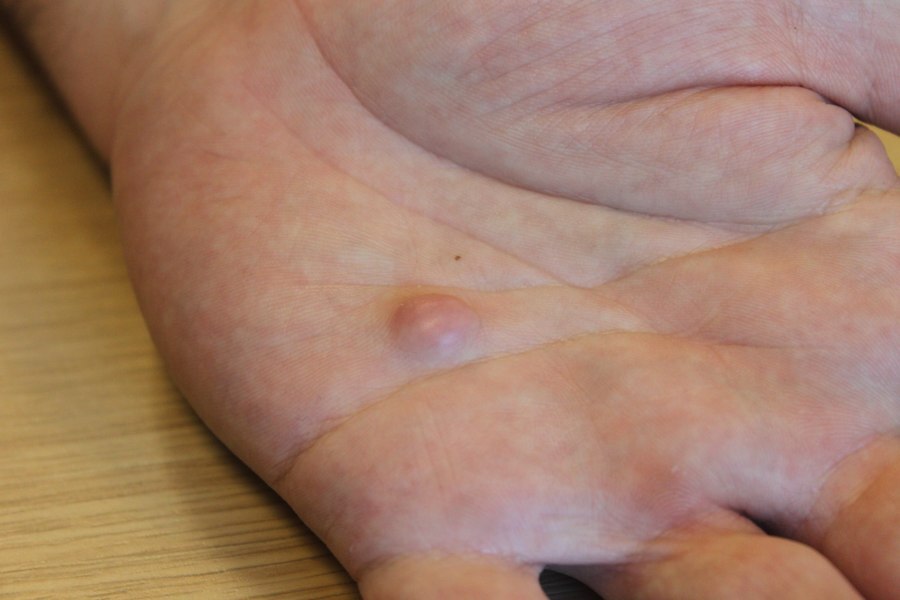
- Lesions vary in size from 1-5 cm and are usually firm, deep-seated, rounded or ovoid nodules. Lesions can occasionally be small and intradermal
- Schwannomas are usually asymptomatic, although a few patients complain of pain or dysaesthesia
- Treatment is by surgical excision
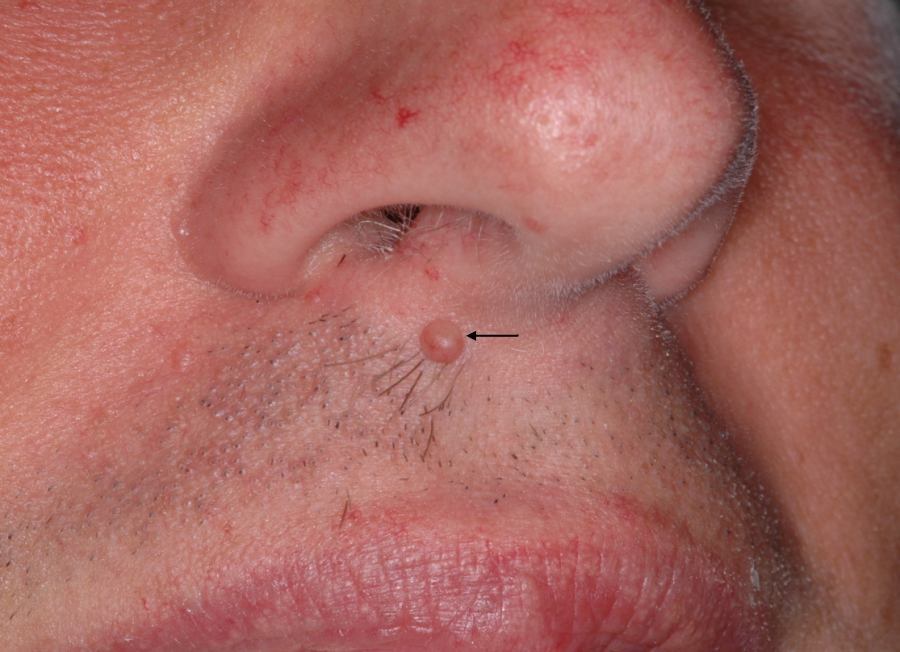
Nasal glioma (syn. glial heterotopic nodules)
-
A nasal glioma is a rare congenital lesion composed of dysplastic glial cells
-
They are congenital lesions, and occur sporadically with no familial tendency or sexual predilection
-
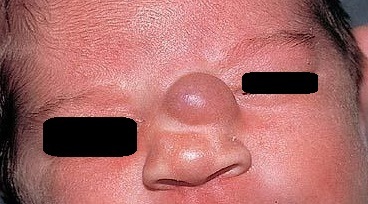
Nasal gliomas occur near the root of the nose (where the cranial portion of the nose joins the forehead). Extra-nasal gliomas are usually seen in a paramedian location at the bridge of the nose external to the nasal passage, whereas intranasal lesions are usually located within the nasal passage medial to the middle turbinate bone
-
Extranasal gliomas clinically present in early infancy or childhood as a firm, red to bluish skin-covered mass. These masses will not exhibit pulsations or increase in size with the valsalva manoeuvre or compression of the ipsilateral jugular vein (Furstenberg sign). They are typically slow growing; however, they may grow more or less rapidly than the adjacent soft tissue
-
Once the diagnosis of a nasal glioma is established, early surgical resection is advocated to prevent local recurrence, nasal deformity, and secondary visual involvement. Surgical resection is often curative
Clinical Images
Please refer to notes on image rights at bottom of the page with regards to individual image
ownership.
Disclaimer - the author PCDS cannot accept responsibility for any misleading or incorrect statements, and the management of individual patients remains the direct responsibility of the individual doctor. We do however hope that visitors to this site can contact us regarding comments that are considered misleading or incorrect so that we can continue to improve the site.
Image Rights - The PCDS would like to thank Dermatoweb, DermQuest (Galderma), and others who have contributed images. All named individuals and organisations maintain copyright for the relevant images.