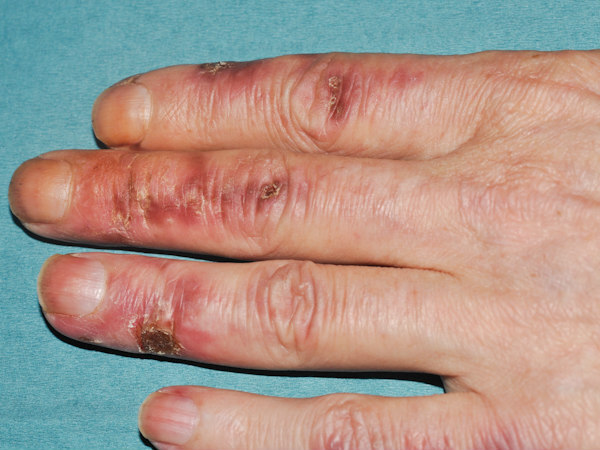
Perniosis (syn. chilblains)

LAST UPDATED: Nov 18, 2021
Introduction

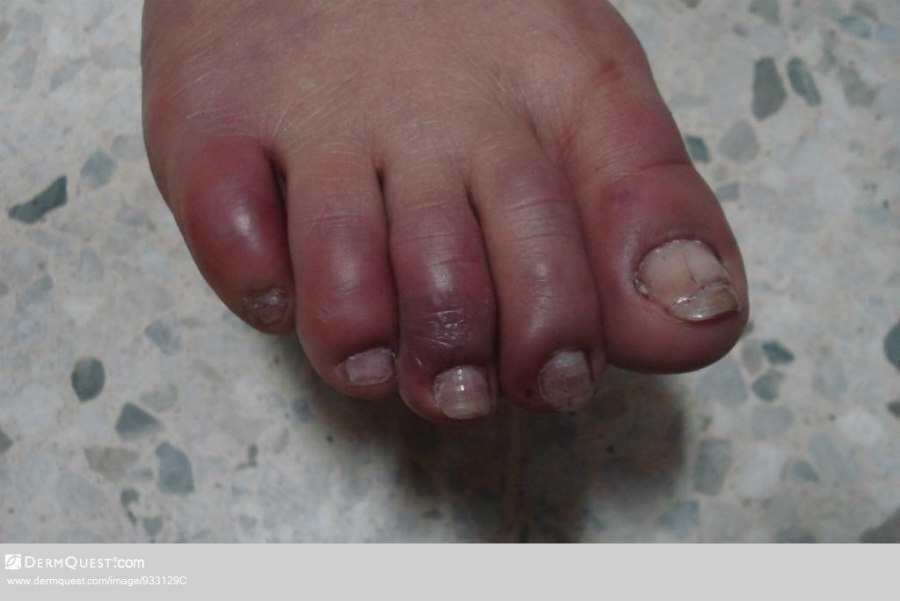
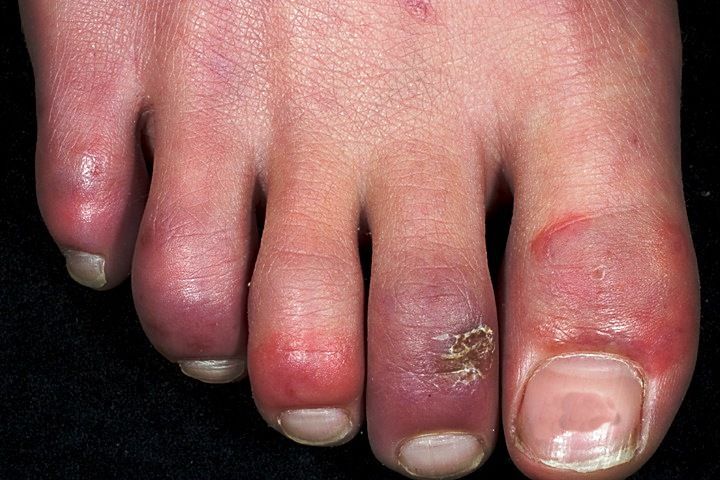
Chilblains are itchy and/or tender red-purple, acral, nodules that occur as a reaction to cold. They are often idiopathic, but can be secondary to an underlying condition.

This chapter is set out as follows:


Aetiology

  • Chilblains are caused by the vasoconstriction of the deep cutaneous arterioles along with concomitant dilatation of the smaller, superficial vessels. Most cases are primary (idiopathic), however, some cases are secondary to an underlying condition
  • Contributory factors
    • Familial tendency
    • Peripheral vascular disease
    • Low body weight eg anorexia nervosa
    • Hormonal changes - chilblains can improve during pregnancy
  • Causes of secondary perniosis
    • Connective tissue disorders - particularly chilblain lupus erythematosus, or systemic sclerosis associated with Raynaud's phenomenon 
    • Haematological malignancy
    • Cryoglobulinaemia
    • The antiphospholipid syndrome

History

  • Women are affected more frequently than men
  • Chilblains are most frequent in young and middle-aged women, and children
  • Lesions, which arise several hours after exposure to the cold, can be itchy and/or have a burning pain

Clinical findings

Perniosis 

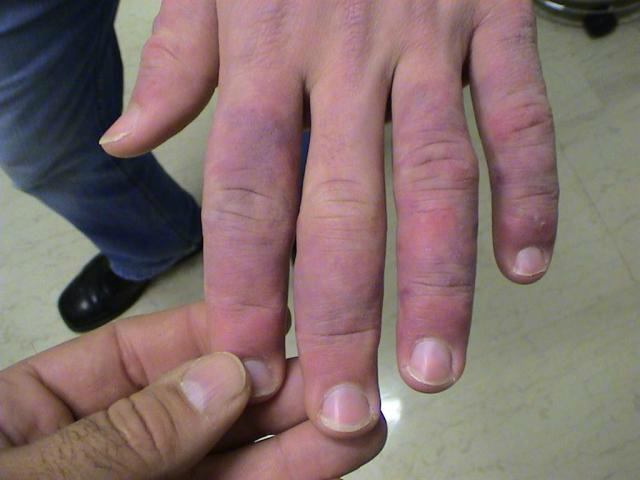
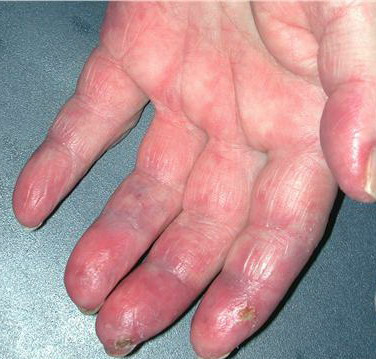
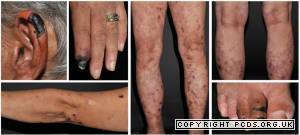
  • The most common sites are the fingers and toes
  • Other sites include the nose, ears, and lower legs
  • Red-violaceous macules, papules, nodules, or plaques, which may form vesicles or ulcerate
  • Most lesions last for 2-3 weeks, but some can be much more persistent over the winter

Chilblain lupus

  • Persistent, violaceous plaques are prominent over dorsal interphalangeal joints of the fingers and toes
  • Patient often have positive antinuclear antibody (ANA) or rheumatoid factor (RF)
  • Histologic and immunofluorescent evidence of lupus is present in the skin lesions
  • Chilblain lupus may be accompanied by other cutaneous features such as discoid lupus erythematosus, and upto 20% of patients develop systemic lupus erythematosus

Clinical Images

Please refer to notes on image rights at bottom of the page with regards to individual image ownership.
Investigations

  • When an underlying cause is suspected (eg more severe and persistent symptoms, ulceration and necrosis, other significant skin changes) it is important to investigate for possible haematological malignancy, connective tissue disorders or cryoglobulinaemia - in such cases refer to the relevant investigations

Management

Prevention

  • Reduce exposure to cold, damp conditions and other triggers
  • Wear warm gloves and socks - hand and foot warmers may help
  • Avoid medicines that might constrict blood vessels including caffeine and decongestants
  • Stop smoking, if appropriate

Treatment

  • Nifedipine is effective in the treatment and prevention of chilblains

Disclaimer - the author PCDS cannot accept responsibility for any misleading or incorrect statements, and the management of individual patients remains the direct responsibility of the individual doctor. We do however hope that visitors to this site can contact us regarding comments that are considered misleading or incorrect so that we can continue to improve the site.

Image Rights - The PCDS would like to thank Dermatoweb, DermQuest (Galderma), and others who have contributed images. All named individuals and organisations maintain copyright for the relevant images.

Quick Links

The following pharmaceutical companies have had no involvement in the content of this website or in our conference programmes


Almirall
Galderma
Glenmark
Johnson & Johnson
La Roche-Posay
LEO Pharma
Pierre Fabre
Schuco