Pseudoxanthoma elasticum (syn. Gronblad-Strandberg syndrome)
LAST UPDATED: Jul 29, 2021
Introduction
Pseudoxanthoma elasticum (PXE) is a rare, inherited, multisystem disorder characterised by generalised fragmentation and progressive calcification of elastic tissue predominantly in the dermis, blood vessels and Bruch membrane of the eye. Pseudoxanthoma elasticum is associated with considerable morbidity and occasional mortality.
This chapter is set out as follows:
Aetiology
-
PXE occurs in approximately 1/50 000 people
-
Causative mutations occur in the ABCC6 gene located on chromosome 16p13.1.
-
There are a number of subtypes of PXE, each with a slightly different clinical presentation and pattern of inheritance. Two are inherited as an autosomal dominant characteristic, three are autosomal recessive
History
-
PXE is slightly more prevalent in women, with no racial predilection
-
The first manifestation is usually cutaneous, which is normally noticed around the teenage years but can appear earlier
-
There are rare reports of late onset 'acquired' PXE associated with a number of factors including patients with beta-thalassaemia, and following liver transplantation
Clinical findings
Cutaneous
-
Distribution
-
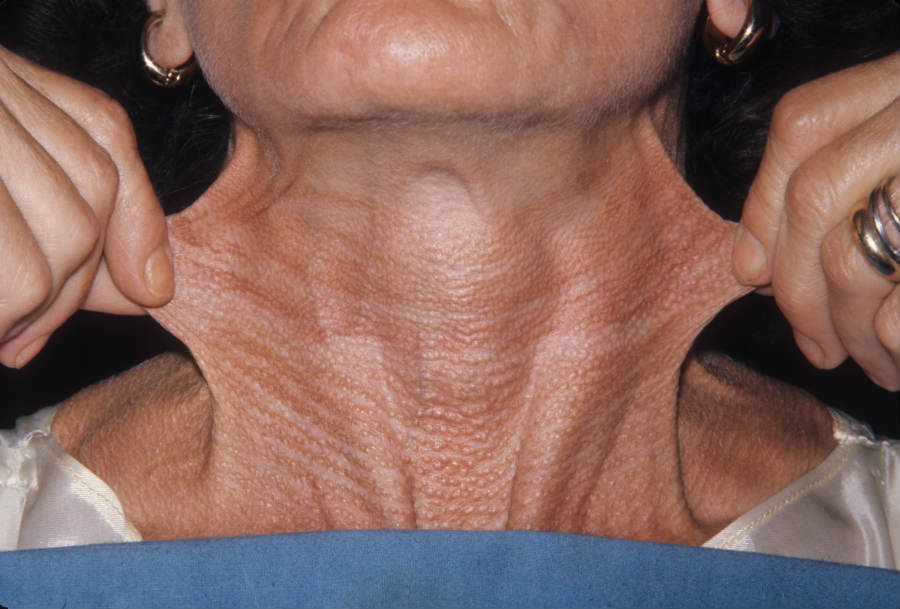
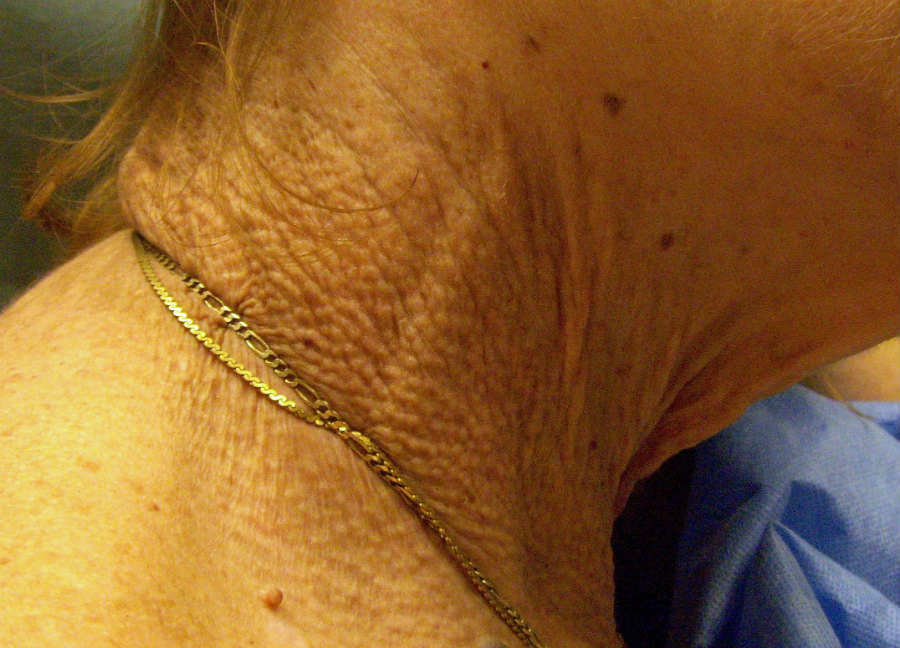
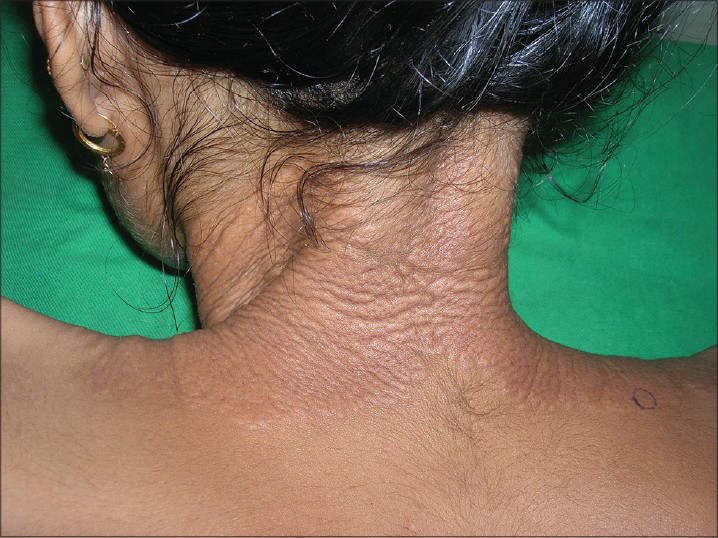
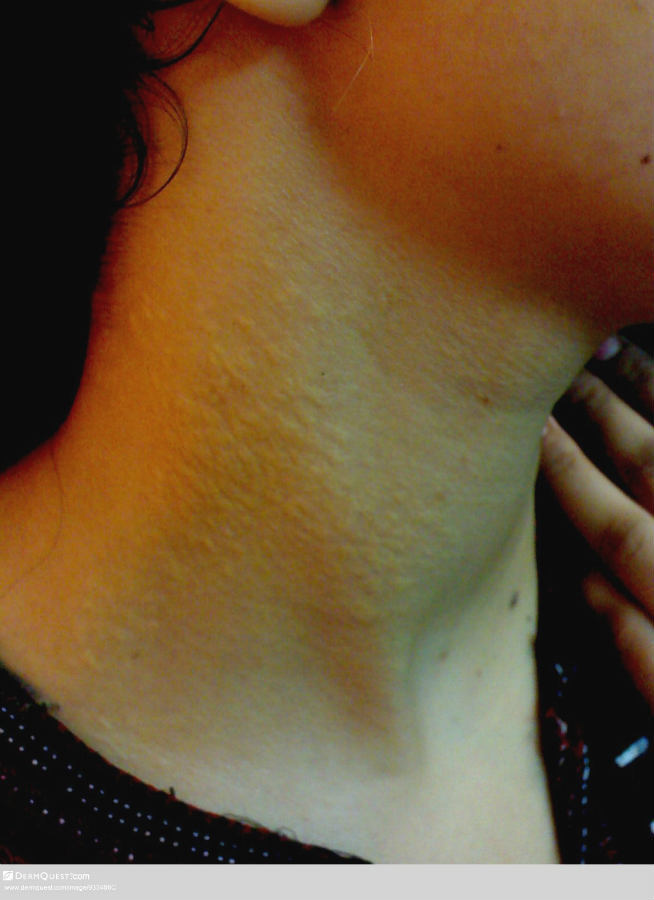
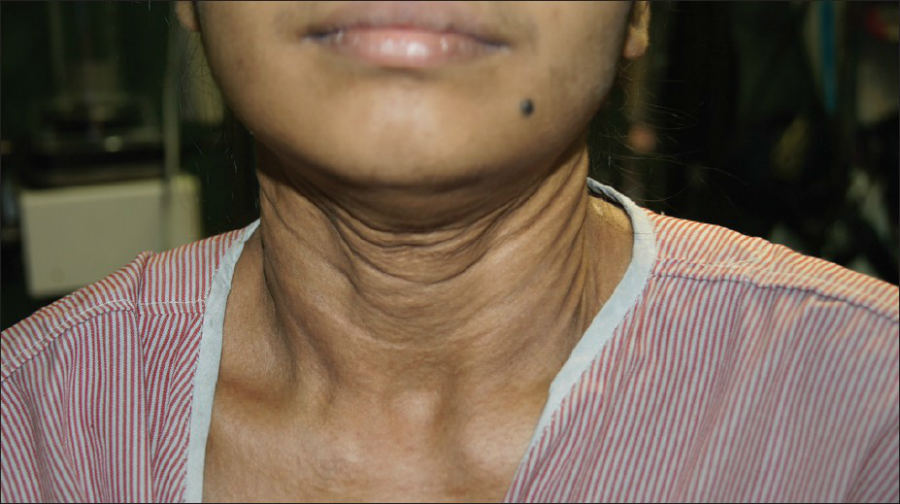
The sites of predilection are the sides of the neck, below the clavicles, the axillae, abdomen, groins, perineum and thighs
-
Although usually limited, the eruption may occasionally involve most of the body
-
Morphology
-
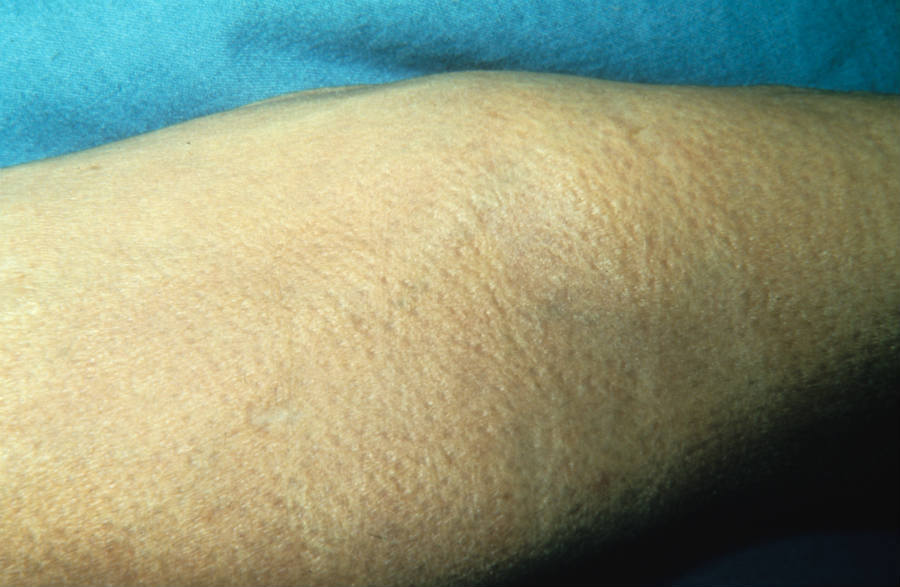
The characteristic skin lesions consist of small (1–3 mm), yellowish papules in a linear or reticular pattern, which tend to coalesce into confluent plaques
-
The skin is soft, lax and slightly wrinkled, and may hang in folds, especially in older people
-
There may be a slightly pebbly surface, which has been described as a cobblestoned appearance
-
Occasionally there may be spontaneous perforating lesions, with transepidermal elimination of the fragmented elastic fibres
-
The presence of an exaggerated chin crease has recently been shown to be a sensitive and highly specific finding in patients under the age of 30 years
-
Once they appear, the skin changes usually persist
Vascular
-
Arterial involvement does not usually clinically manifest until adult life
-
Vascular involvement can be generalised but may involve predominantly the larger arteries, the mesenteric and visceral arteries, or those of the extremities
-
Clinically there may be intermittent claudication or hypertension
-
Rarely, death may result from cerebral haemorrhage, coronary occlusion or massive haemorrhage in to the gut
Ocular
-
The ocular changes are variable
-
Vascular lesions known as angioid streaks affect the retina of most patients with PXE. They usually appear between 20 and 40 years of age. Angioid streaks may lead to progressive visual failure and occasionally blindness
Gastrointestinal
-
The most common problem is upper gastrointestinal bleeding, particularly the stomach - approximately 10% develop bleeding complications
Pregnancy
-
PXE probably has no adverse effects on foetal outcome
-
Approximately 12% of pregnancies are associated with worsening of cutaneous manifestations
Clinical Images
Please refer to notes on image rights at bottom of the page with regards to individual image
ownership.
Investigations
-
Histology
-
In the fully developed skin lesions, the elastic fibres in the mid‐dermis are clumped, degenerate, fragmented and swollen, and the abnormal fibres stain positively for calcium
-
Blood tests
-
In most cases, the serum calcium and phosphate levels are normal, but in a few patients the phosphate levels are increased, with mild hypercalcaemia and abnormalities of vitamin D metabolism
Management
-
There is no specific treatment
-
The main aim aspects of management are prevention and reduction of complications - annual ophthalmology and cardiovascular assessments are often recommended
-
The cosmetic appearance of the skin lesions, particularly secondary cutis laxa (loose hanging skin), can be improved by plastic surgery
-
Patients and their families should receive genetic counselling
Other resources
-
Patient support group - PIXIE
Disclaimer - the author PCDS cannot accept responsibility for any misleading or incorrect statements, and the management of individual patients remains the direct responsibility of the individual doctor. We do however hope that visitors to this site can contact us regarding comments that are considered misleading or incorrect so that we can continue to improve the site.
Image Rights - The PCDS would like to thank Dermatoweb, DermQuest (Galderma), and others who have contributed images. All named individuals and organisations maintain copyright for the relevant images.