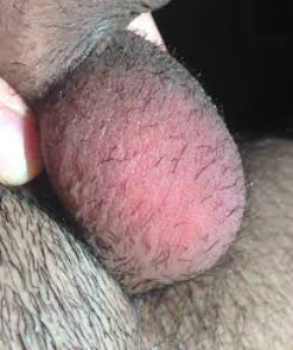
Red Scrotum syndrome
LAST UPDATED: Jul 18, 2025
Introduction
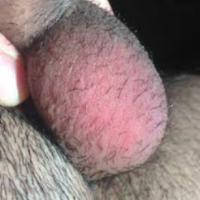
The Red scrotum syndrome (RSS) is a chronic condition characterised by persistent scrotal erythema associated with itching and/or a burning sensation and hyperalgesia. It always involves the anterior half of the scrotum, and may extend to its posterior part, and even to the base of the penis.
This chapter is set out as follows:
Aetiology
-
The aetiopathogenesis of RSS is unknown
- The redness is considered to be due to vasodilatory effects of nitric oxide synthesized by the vascular endothelium
-
As most reported cases have prolonged application of topical steroids before the diagnosis and some were relieved after stopping the use of topical steroids, or had severe rebound after withdrawal of the steroids, these suggest that topical steroids, at least partially, might be responsible for the mechanism of action in some patients, and some RSS might be due to steroid addiction. However, not all reported cases have prior topical steroid use
-
In some cases there may be a neuropathic element
History
-
Patients have an itching and/or burning sensation and hyperalgesia (an increased sensitivity to pain) - in some patients symptoms can be severe
Clinical findings
-
Well-demarcated erythema limited mainly to the anterior part of the scrotum, although it may extend to its posterior part, and even to the base of the penis
-
There may be telangiectases
-
The skin is often tender
-
Absence of scaling
Clinical Images
Please refer to notes on image rights at bottom of the page with regards to individual image
ownership.
1
Investigations
-
In most cases investigations are not required
-
If the symptoms/signs are atypical then investigations may be required, which can include:
-
A skin swab for MC&S
-
If scale is present skin scrapings should be sent for mycology to look for fungal infection
-
Referral for patch tests if contact allergic dermatitis is suspected
-
Very occasionally a skin biopsy
Management
Step 1: general measures
- Wear loose-fitting, cool underwear
- Stop using irritants such as soap, and any topical applications that patient may have purchased
- Stop topical corticosteroid creams, explaining that this could cause a temporary worsening of symptoms
- Start an emollient cream - patient preference is important ie use whichever is most soothing
Step 2: doxycycline
- Doxycycline 50-100mg OD is beneficial in some but not all patients
- It should be used for at least 6-12 weeks. If it helps it can be used for longer if needed. If it does not help it should be discontinued
Step 3: other treatment options
- Gabapentin or amitriptyline can reduce levels of discomfort, and should be prescribed at the same dose used to treat neuropathic pain
- Pimecrolimus cream (Elidel ®) OD-BD can also be used as it is anti-inflammatory and non-steroidal
Disclaimer - the author PCDS cannot accept responsibility for any misleading or incorrect statements, and the management of individual patients remains the direct responsibility of the individual doctor. We do however hope that visitors to this site can contact us regarding comments that are considered misleading or incorrect so that we can continue to improve the site.
Image Rights - The PCDS would like to thank Dermatoweb, DermQuest (Galderma), and others who have contributed images. All named individuals and organisations maintain copyright for the relevant images.