Rheumatoid arthritis and Still’s disease

LAST UPDATED: Jul 30, 2021
Introduction

Rheumatoid arthritis (RA) is a connective tissue disorder resulting in an inflammatory arthritis. While it is unusual for RA to present with skin problems, cutaneous features are not uncommon. Still's disease, also known as juvenile rheumatoid arthritis, is characterised by intermittent high fevers associated with a salmon-coloured rash, and arthritis.

This chapter, as set out below, provides a brief overview of the cutaneous manifestations of RA and Still's disease. 


Clinical findings

RA - cutaneous features

  • The skin becomes atrophic and bruises easily
  • The nails may become brittle and split length-wise
  • Palmar erythema
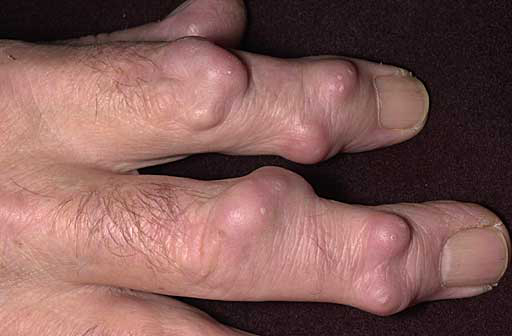
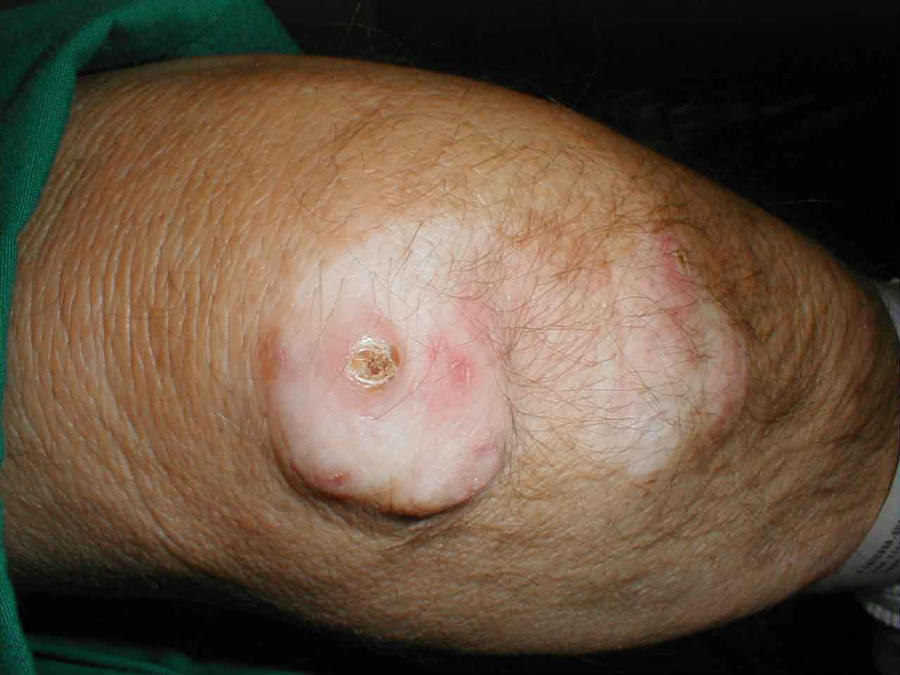
  • Rheumatoid nodules
    • Firm, skin-coloured, non-tender, mobile nodules within the subcutaneous tissue. Most nodules are found on bony prominences, adjacent to joints and other extensor surfaces
    • Refer to the related chapter Rheumatoid nodules for more information 
  • Vascular lesions
    • ​Raynaud's phenomenon 
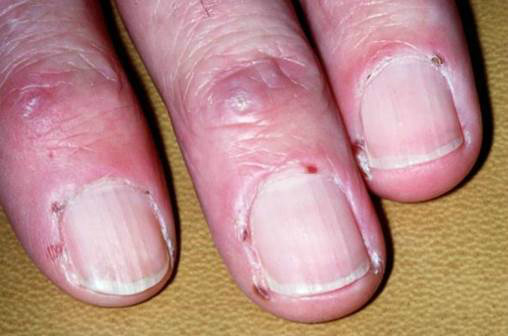
    • Nailfold infarcts 
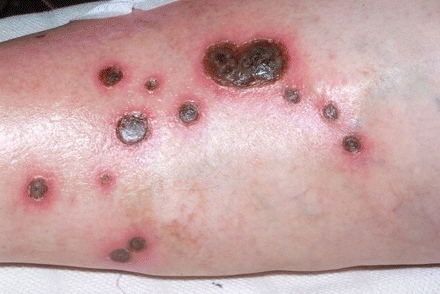
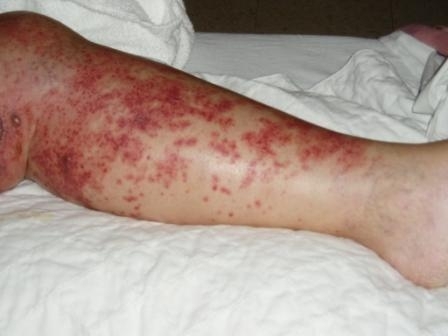
    • Small vessel vasculitis resulting in purpura, and occasionally tissue necrosis 
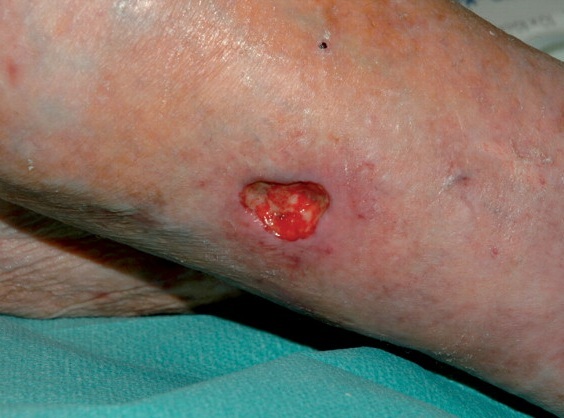
    • Leg ulcers - often have a mixed aetiology and are difficult to treat 
  • Interstitial granulomatous dermatitis - firm, non-tender linear or arciform bands of affected skin, typically extending from the anterior and posterior part of the axillae to the flank. A papular variant has been described
  • RA has also been associated with Sweet's syndrome and  pyoderma gangrenosum 

Still's disease

  • Usually affects children, but occasionally adults 
  • Fatigue is common
  • Fever - an intermittent high fever occurs in all patients, and tends to spike at a similar time every day
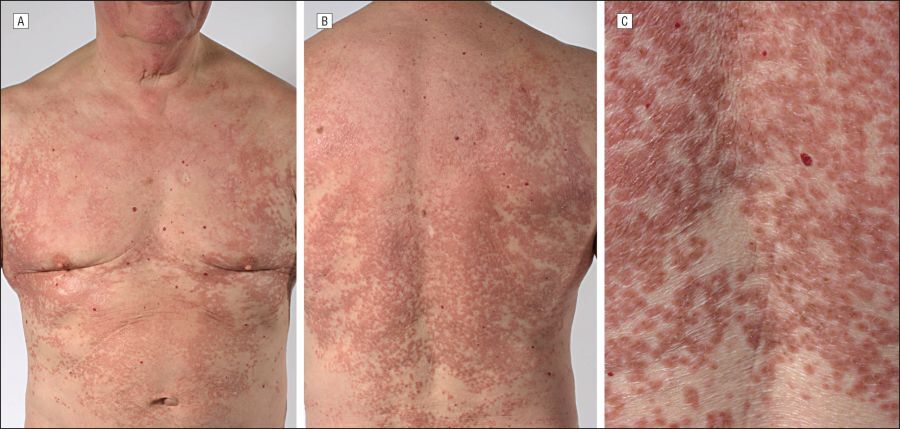
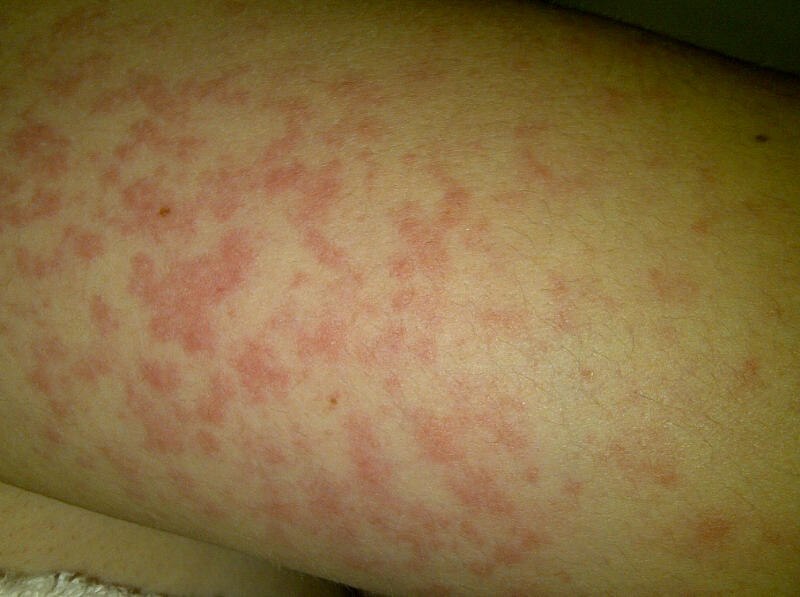
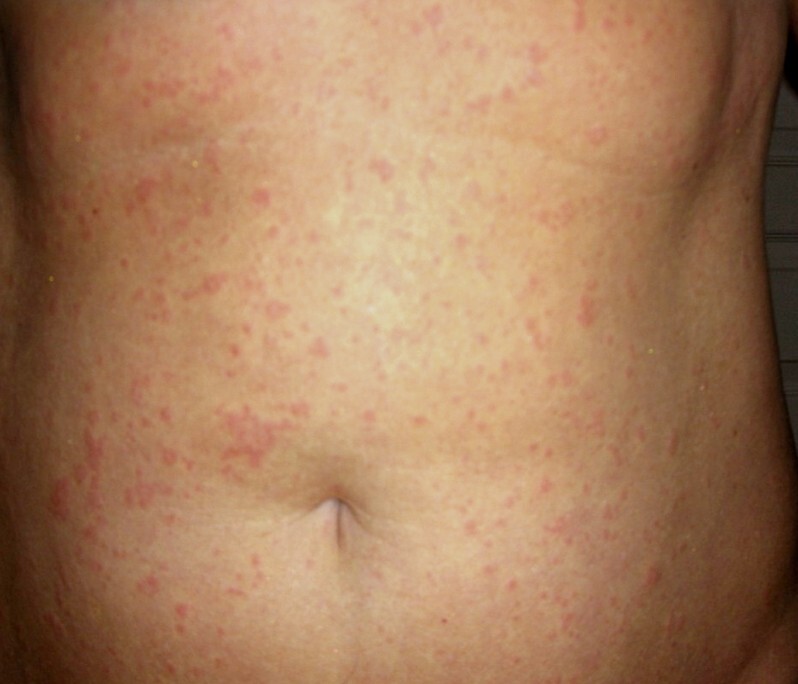
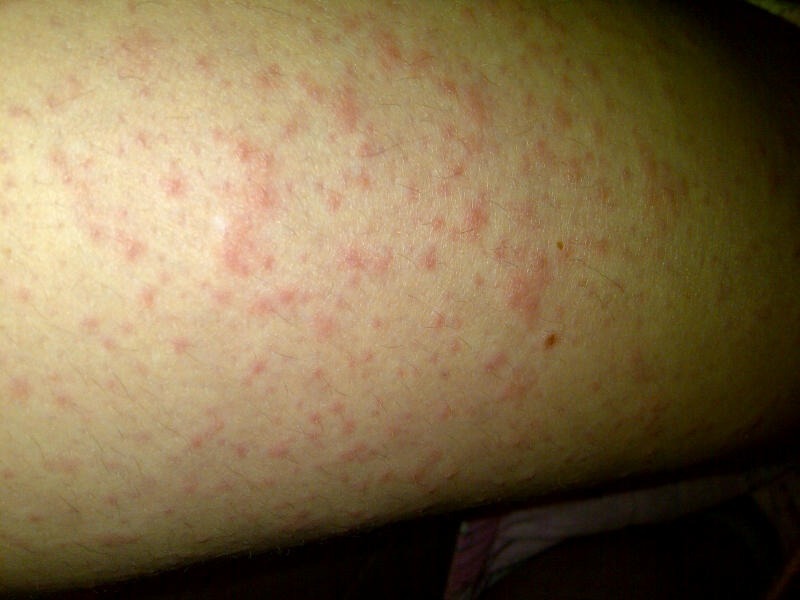
  • A rash coinciding with the fever affects many patients. Characteristics of the rash are:
    • Distribution - usually arises on the limbs and trunk, but may occur on the face or neck
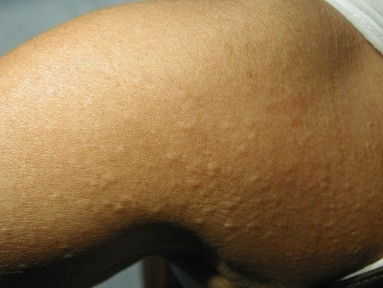
    • Morphology - small, non-pruritic macules or papules, and occasionally large patches up to five cm in diameter. Salmon-pink coloured, and often surrounded by a zone of pallor 
  • Other systemic features include:
    • Lymphadenopathy and hepatosplenomegaly 
    • Haematological changes - leucocytosis, anaemia, raised inflammatory markers, high levels of AST and ALT, negative Rheumatoid factor and ANA
    • Pleuritis and / or pericarditis
  • In many cases the rash and fever may occur intermittently for months or even years before joint symptoms develop 
  • All patients with Still's disease eventually develop chronic arthritis 

Clinical Images

Please refer to notes on image rights at bottom of the page with regards to individual image ownership.
Management

  • Patients with RA or suspected Still's disease are generally managed by Rheumatologists 

Disclaimer - the author PCDS cannot accept responsibility for any misleading or incorrect statements, and the management of individual patients remains the direct responsibility of the individual doctor. We do however hope that visitors to this site can contact us regarding comments that are considered misleading or incorrect so that we can continue to improve the site.

Image Rights - The PCDS would like to thank Dermatoweb, DermQuest (Galderma), and others who have contributed images. All named individuals and organisations maintain copyright for the relevant images.

Quick Links

The following pharmaceutical companies have had no involvement in the content of this website or in our conference programmes


Almirall
Galderma
Glenmark
Johnson & Johnson
La Roche-Posay
LEO Pharma
Pierre Fabre
Schuco