Tinea capitis (scalp)
LAST UPDATED: Sept 22, 2022
Introduction
This chapter discusses tinea capitis and is set out as follows:
Aetiology
-
It is clear that the pattern of tinea capitis in the UK has changed in the past ten years with a significant rise in the incidence and prevalence of cases of infection due to Trichophyton tonsurans. The main focus of this epidemic has been cities where there are either long-standing or more recently established Afro-Caribbean communities, although it is clear that infection can occur in any child irrespective of their ethnic origin. Another common organism causing tinea capitis is Microsporum canis
History
-
Although it is most common in young children it can affect any age
Clinical findings
There are a number of clinical presentations:
-
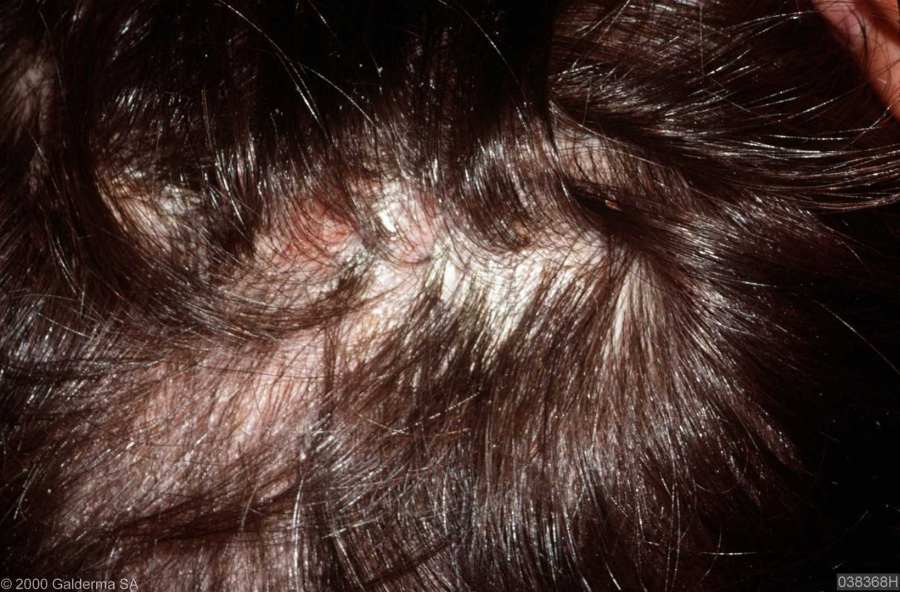
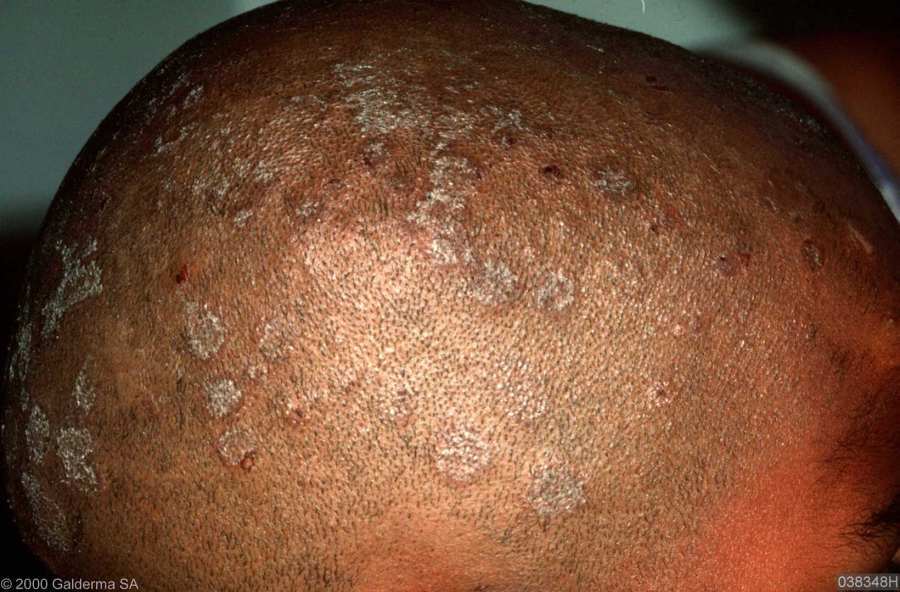
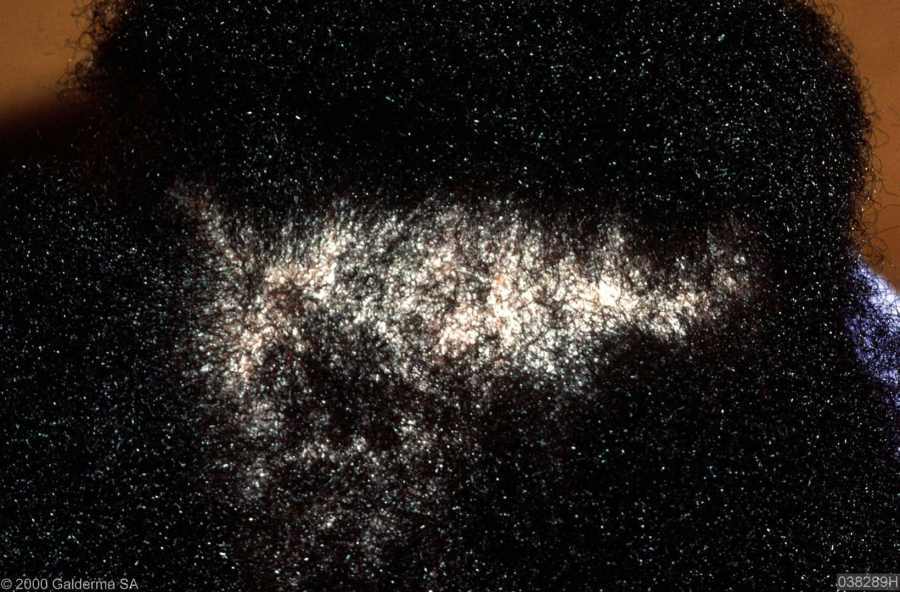
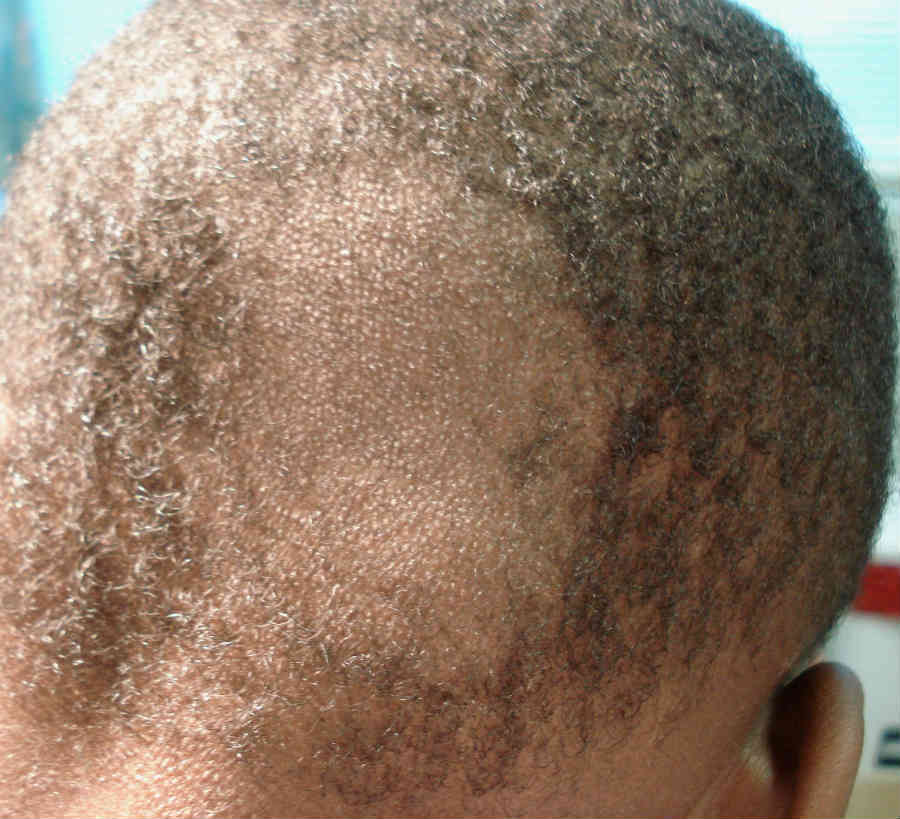
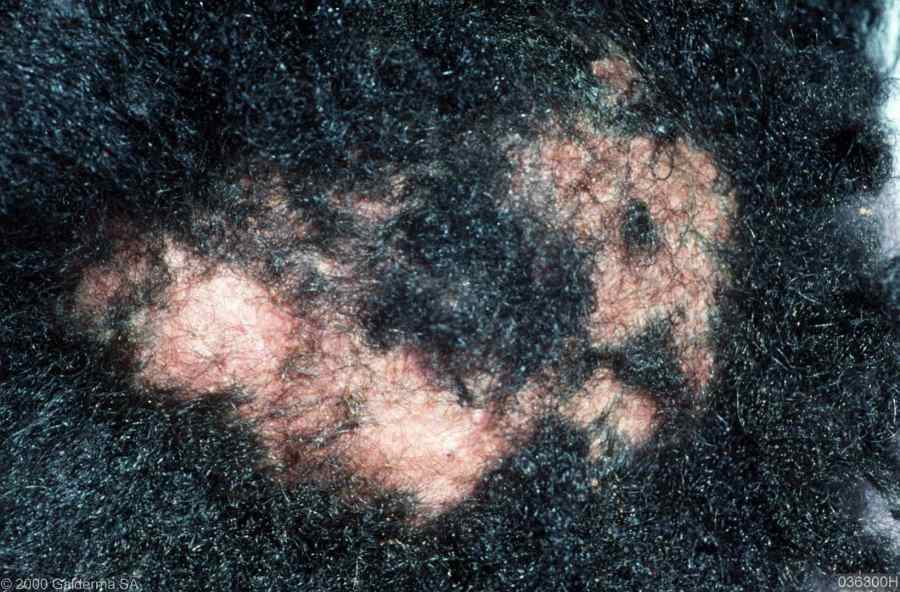
The main clinical characteristic of tinea capitis is hair loss, which is often accompanied by scaling. In addition there may be symptoms such as itching and, more rarely, pain. Expression of both is highly variable and often infections are asymptomatic. Hair loss may develop in single or multiple patches, but in addition individual hairs or small hair clusters may be involved. Hairs may be broken either above or at scalp level; where swollen broken hair stubs are prominent the pattern is known as black dot ringworm
-
Scaling may occur either in the presence or absence of hair loss and signs of inflammation such as erythema or pustule formation are variably expressed
-
Dermoscopic features - scale, broken hairs with black dots, comma-shaped hairs, and 'Morse code' loss of pigment in affected hair follicles (i.e. variable loss of pigment along a hair follicle)
-
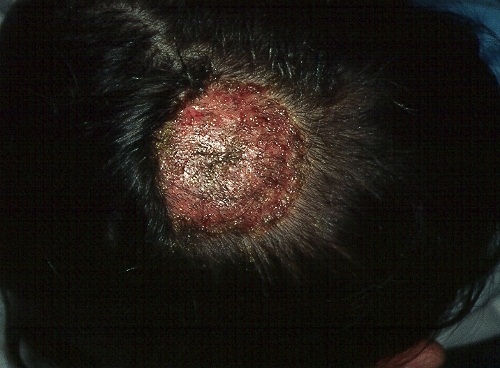
A kerion is a highly inflamed lesion of tinea capitis, lesions occur unpredictably and, although commoner with zoophilic infections (animal host), they also occur with anthropophilic ringworm (human host). Kerions are large boggy masses of inflammatory tissue with pustules and sometimes overlying crust. If no crust is present pus obtained directly from pustules of a kerion seldom contains bacteria. However, secondary infection with Staph. aureus may be isolated from beneath crusts and removing the surface debris is an important aspect of management
Clinical Images
Please refer to notes on image rights at bottom of the page with regards to individual image
ownership.
Investigations
-
Both skin scrapings and plucked hair follicles should be sent for mycology - the scrapings should be taken with the back of a scalpel blade and sent to microbiology either in a commercial sample pack or in folded black paper held by a paper clip. Adhesive tape (eg sellotape) stripping can be useful if scale is limited
-
Obtaining samples in younger children can be difficult (some children may not tolerate the plucking) and the second-line approach is to use sterile brushes such as disposable toothbrushes
Management
General measures
Affected individuals
-
Due to the risk of scaring alopecia treatment is usually with a with systemic agents, normally terbinafine (Lamisil ®) for two to four weeks as follows:
-
Weight > 40 kg - 250 mg OD
-
Weight 20-40 kg - 125 mg OD
-
Weight up to 20 kg - 62.5 mg OD
-
Other systemic options include:
-
Adults - itraconazole (Sporanox ®), although this is not as effective as terbinafine
-
Children - griseofulvin, which although is not as effective as terbinafine against Trichophyton species, can be more effective against M. canis
-
The additional use of a topical treatment eg ketoconazole (Nizoral ®) shampoo is recommended at least twice weekly during the first two weeks of therapy
-
Children on treatment should not be kept off school unless their clinical condition warrants it, eg severe kerion
Family members
-
Treat all family members with ketoconazole shampoo at least twice weekly for two weeks
Treatment of a kerion
-
Treat with a systemic treatment eg with terbinafine (Lamisil ®), which may be needed for 12-16 weeks
-
Surgical excision should be avoided
Disclaimer - the author PCDS cannot accept responsibility for any misleading or incorrect statements, and the management of individual patients remains the direct responsibility of the individual doctor. We do however hope that visitors to this site can contact us regarding comments that are considered misleading or incorrect so that we can continue to improve the site.
Image Rights - The PCDS would like to thank Dermatoweb, DermQuest (Galderma), and others who have contributed images. All named individuals and organisations maintain copyright for the relevant images.