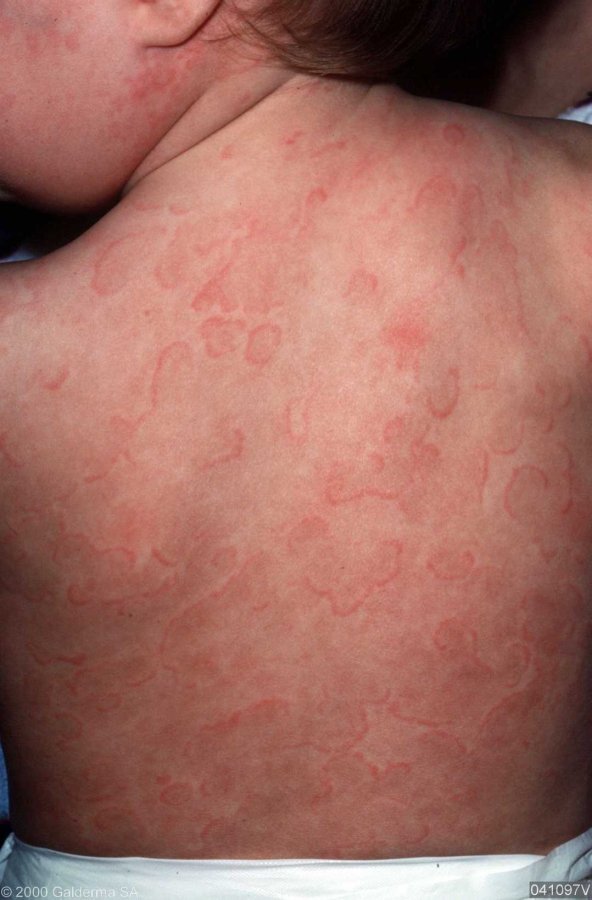
Urticaria: acute urticaria
LAST UPDATED: Dec 06, 2025
Acknowledgements: This chapter has been updated with the kind support of Dr Kash Bhatti
Introduction
Acute episodes of urticaria are common. Most reactions are mild. Urticaria does not lead to anaphylaxis; however, urticaria can accompany or be a feature of anaphylaxis and anaphylactoid reaction.
This schapter is set out as follows:
Aetiology
- Spontaneous (‘acute spontaneous urticaria’)
- The commonest cause of acute urticaria (~50% cases)
- Previously known as acute ‘idiopathic’ urticaria
- Drugs
- Antibiotics such as penicillin
- Aspirin and other NSAID
- ACEI can cause both urticaria and also angioedema without urticaria
- Many other drugs have been implicated
- Food
- The majority of food allergies causing urticaria are caused by nuts (especially peanuts and tree nuts), white fish (eg cod), shellfish (eg prawns), hen eggs, milk and some fruits (especially strawberries, kiwis and citrus fruits)
- Many other foods can be responsible
- Bee and wasp stings
- Rarely - exercise (with associated food allergy as a co-existent trigger; individually, exercise does not cause urticaria nor does the food consumption, but the combination of food trigger followed by exercise after may cause an acute urticaria and/or anaphylaxis)
History
- Itchy lesions lasting 30 minutes to 4 hours
- New lesions can come and go over one or more days (“here today, gone tomorrow”)
- 8% of patients with acute spontaneous urticaria will progress to chronic spontaneous urticaria
Clinical findings
Distribution
Morphology
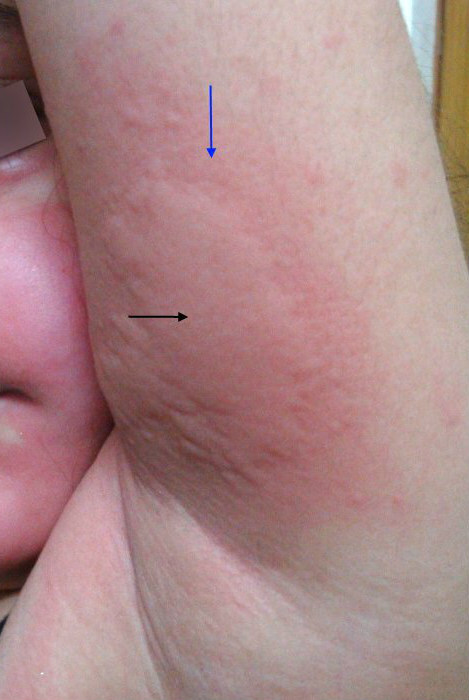
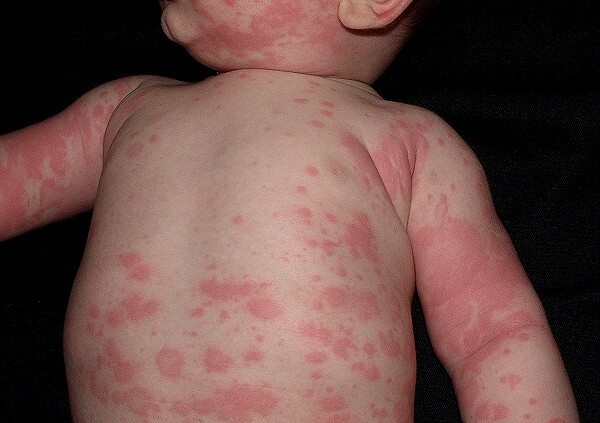
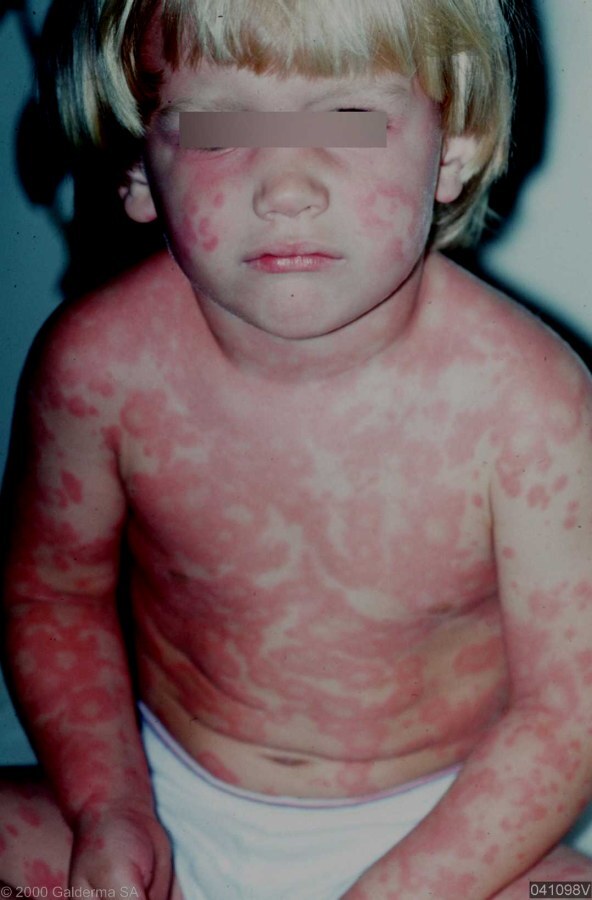
- Central, oedematous plaques without scale (a wheal) and surrounding redness (a flare)
- Sometimes plaques can be surrounded by a pale (avascular) halo
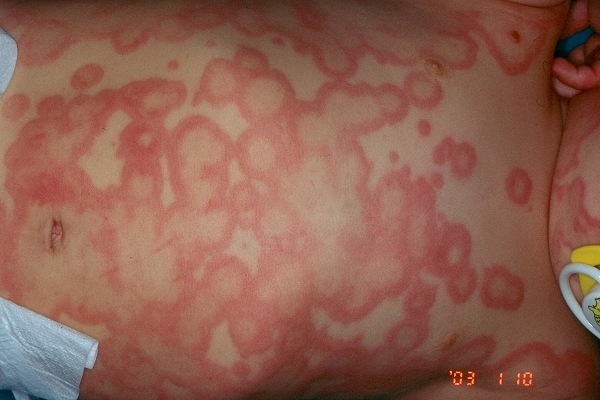
- Annular lesions result from central clearing
- Lesions vary in size, some can be very large
Acute urticaria can uncommonly be associated with anaphylaxis. Anaphylaxis is defined by a progressive reaction with rash, breathing difficulties and cardiovascular compromise. The most common causes of anaphylactic reactions are in the following order:
- Food allergy
- Drugs
- Stings / bites
Clinical Images
Please refer to notes on image rights at bottom of the page with regards to individual image
ownership.
Investigations
-
Most of the time the patient will be able to identify the cause - if a food is suspected refer to the related chapter Food allergy
- Acute urticaria is a type I allergic reaction and so patch tests are of no value
Management
- The mainstay of treatment are second-generation antihistamines, and avoiding triggers
- Antihistamines can be used PRN, but if episodes are persistent for a few days, use antihistamines regularly, at up to 4 times maximum daily dosing, e.g. fexofenadine 180mg QDS (this is off-license but supported by national and international guidelines)
- Antihistamines generally take up to four hours for maximal histamine receptor blockade; by this time, most wheals will self-resolve. Therefore, regular use may have more benefit than on-demand use to reduce wheal frequency and intensity
- Warn antihistamines may cause drowsiness. Fexofenadine is the least likely to cause drowsiness, as it does not cross the blood brain barrier, but there are marked differences in response to antihistamines amongst individuals and as such, one antihistamine may cause drowsiness in one person, and not in another. Trial-and-error prescribing may be required unless the patient already knows what suits them
- Do not use first-generation antihistamines regularly, e.g. chlorphenamine or hydroxyzine, due to risks of drowsiness, daytime somnolence, reduce daytime concentration (e.g. at school or at work), CNS & cardiac toxicity, and cholinergic burden, and they are less effective than second-generation antihistamines. These risks are not seen with second-generation antihistamines
- There is no role for H2 receptor antagonists e.g. famotidine; H2 receptors are not implicated in urticaria
- Occasionally a short course of oral steroids (prednisolone) may be needed, eg in an adult 30mg once daily for 5 days, if there are contraindications and symptoms are severe
- Patients with anaphylaxis will often be diagnosed at an accident and emergency department. Such patients should be provided with two Epipens and relevant advice on how to manage an attack including how to use an Epipen
- Some patients will benefit from a referral to an immunologist / paediatrician, for example:
- Patients with moderate-severe reactions to eggs
- Patients with nut allergies, who often have multiple allergies and may require further investigations
- Other cases of life-threatening reactions
Disclaimer - the author PCDS cannot accept responsibility for any misleading or incorrect statements, and the management of individual patients remains the direct responsibility of the individual doctor. We do however hope that visitors to this site can contact us regarding comments that are considered misleading or incorrect so that we can continue to improve the site.
Image Rights - The PCDS would like to thank Dermatoweb, DermQuest (Galderma), and others who have contributed images. All named individuals and organisations maintain copyright for the relevant images.