Anthrax
LAST UPDATED: Nov 21, 2021
Introduction
Anthrax is a zoonotic infection caused by Bacillus anthracis. It is primarily an infection of herbivorous animals, and rarely infects humans in the Western World, although is more common in parts of Africa and Asia. Most anthrax is cutaneous (95%); the remaining cases are inhalational (5%) and gastrointestinal (< 1%). Anthrax caused by inhalation is usually fatal, and symptoms usually begin days after exposure.
This chapter is set out as follows:
Aetiology
-
Anthrax is primarily zoonotic, ie can be passed from animals to humans
-
It mainly infects sheep and cattle that ingest spores, which may have laid dormant in pasture for over 20 years
-
Human exposure may be through agriculture, or from related industry. Those at highest risk are shepherds, farmers, and workers in facilities that use animal products, especially previously contaminated goat hair, wool, or bone. Consumers may be exposed through contact with contaminated products such as hides
-
Human resistance to infection is normally high, when infection arises it normally does so by direct inoculation of the skin through a minor injury, and rarely through the lungs by inhalation (wool sorter's disease) or by ingestion
Clinical findings
Distribution
-
Cutaneous anthrax usually develops 2-5 days after exposure
- Lesions may be solitary or multiple
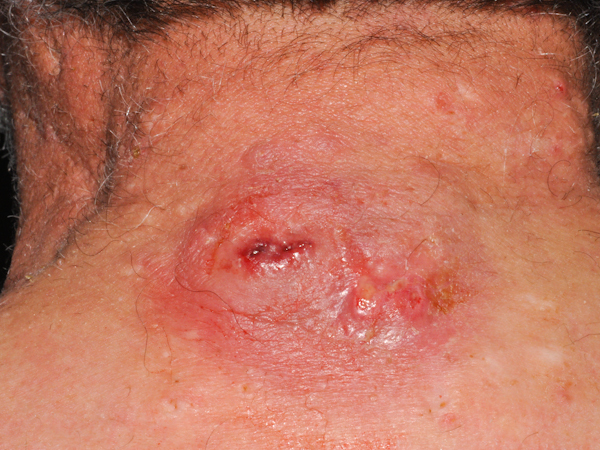
- The most commonly affected sites are exposed areas of skin, especially the hands and forearms, and to a lesser extent the head and neck
Morphology
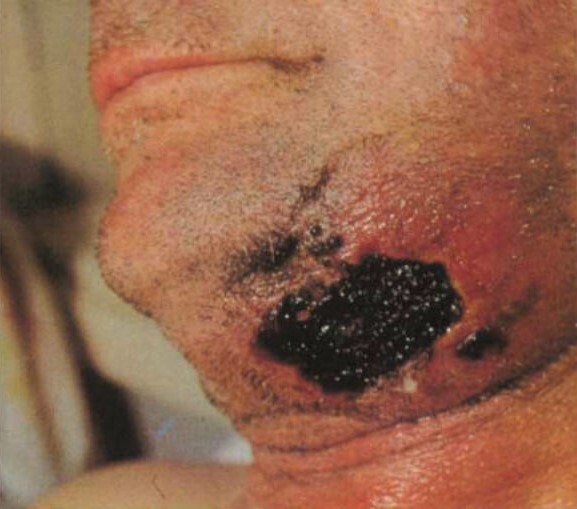
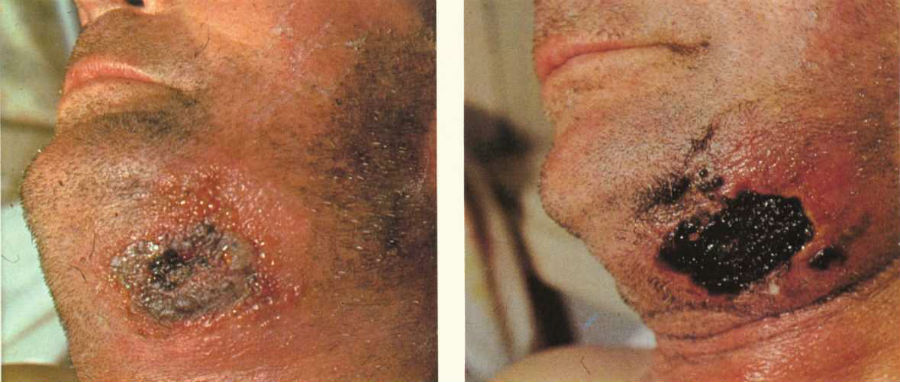
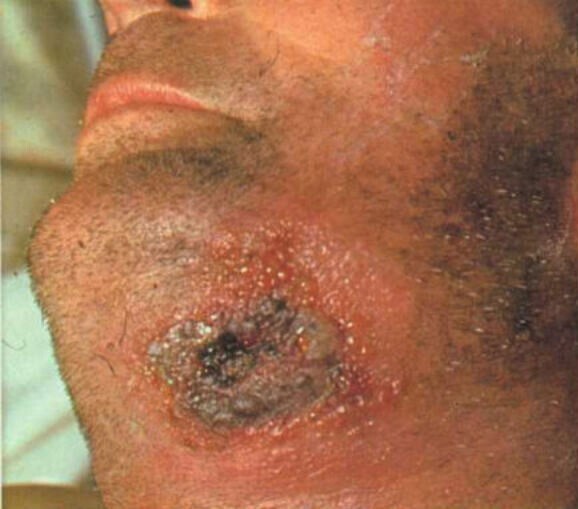
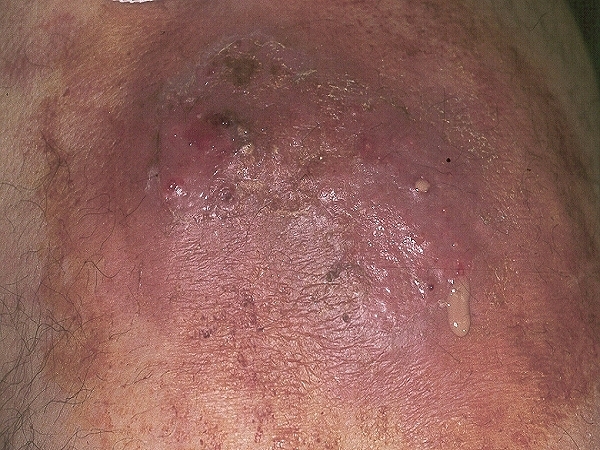
- The initial lesion is a small erythematous plaque or papule, which quickly evolves into a central ulcer and an outer rim of small bullae
- Within a few days the ulcer, which is usually painless, develops a black scab (a necrotic eschar), with surrounding non-pitting oedema
- Within a couple of weeks most lesions heal leaving a scar
Systemic features
-
Fever, malaise and regional lymphadenopathy are common
Clinical Images
Please refer to notes on image rights at bottom of the page with regards to individual image
ownership.
Investigations
-
Wound swab - the infection may be isolated from the vesicular lesions, with the characteristic Gram-positive Bacillus anthracis bacteria then being observed using microscopy
-
Serology - recent infection can be suggested by a rising antibody titre to capsular antigens, however, this may take several days to become apparent
-
Blood culture is usually positive in systemic disease
Management
-
Although anthrax is extremely rare in the Western World, any suspected cases must be discussed urgently with an appropriate specialist
-
Treatment of cutaneous anthrax is usually with oral doxycycline
- Haematogenous dissemination is uncommon, however, may occur, and the overall mortality of untreated cutaneous anthrax is between 5 and 20%
Disclaimer - the author PCDS cannot accept responsibility for any misleading or incorrect statements, and the management of individual patients remains the direct responsibility of the individual doctor. We do however hope that visitors to this site can contact us regarding comments that are considered misleading or incorrect so that we can continue to improve the site.
Image Rights - The PCDS would like to thank Dermatoweb, DermQuest (Galderma), and others who have contributed images. All named individuals and organisations maintain copyright for the relevant images.