Orf

LAST UPDATED: Nov 18, 2021
Introduction

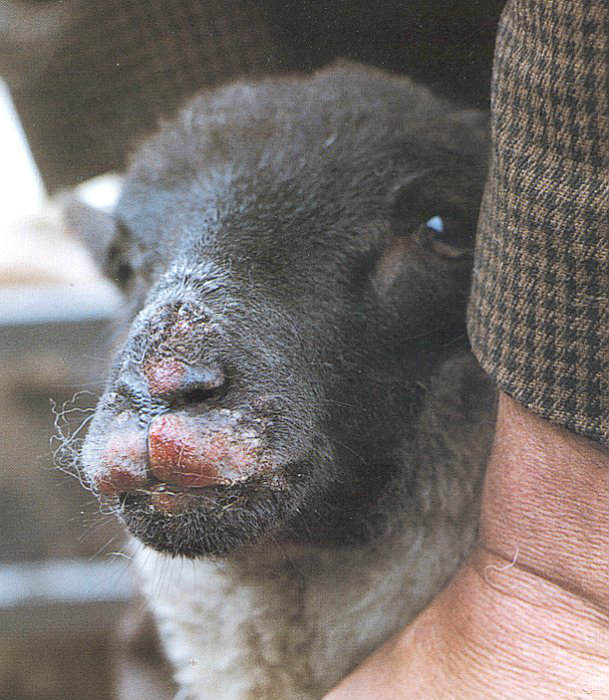
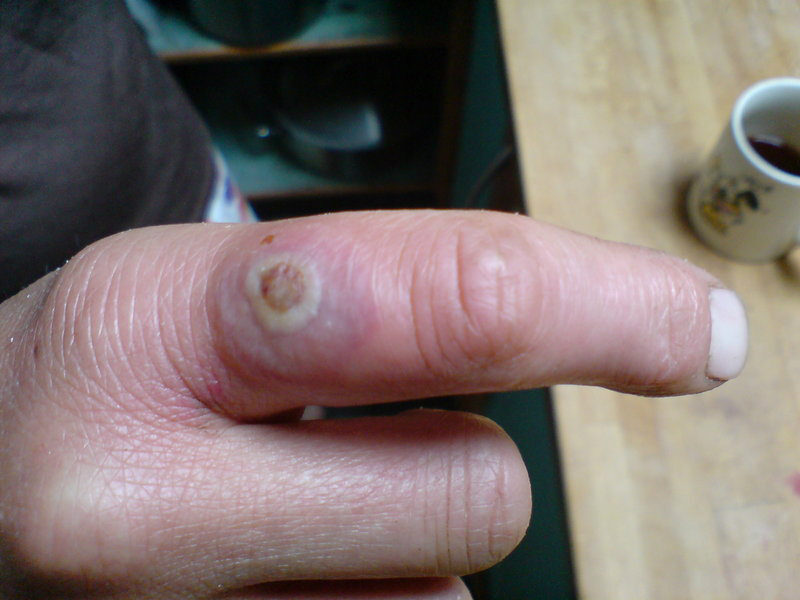
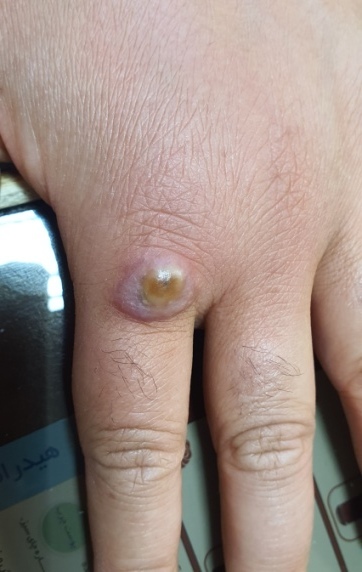
Orf is a parapox viral infection of the skin contracted from sheep, especially lambs, and goats. It can be transmitted to humans by direct inoculation from an infected animal or carcass. Orf presents most commonly as a red-blue weeping nodule on the dorsum of a finger. It is self-limiting and generally heals spontaneously within six weeks

This chapter is set out as follows:


Aetiology

  • Orf is a relatively common infection among sheep farmers, and others in contact with sheep, goats and infected carcasses
  • Orf is not transmitted to cattle or from one human to another 

History

  • There may be mild systemic upset
  • Lesions are often tender

Clinical findings

  • Distribution
    • Orf lesions are generally solitary or few in number
    • They occur most commonly on the fingers, especially the dorsum of the index finger; hands; or forearms but can appear on the face
  • Morphology
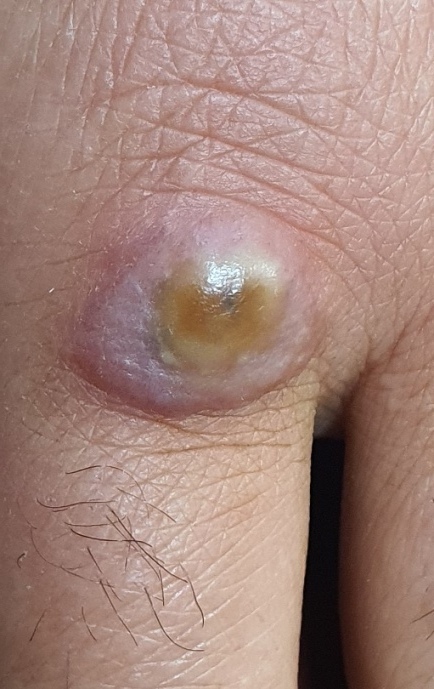
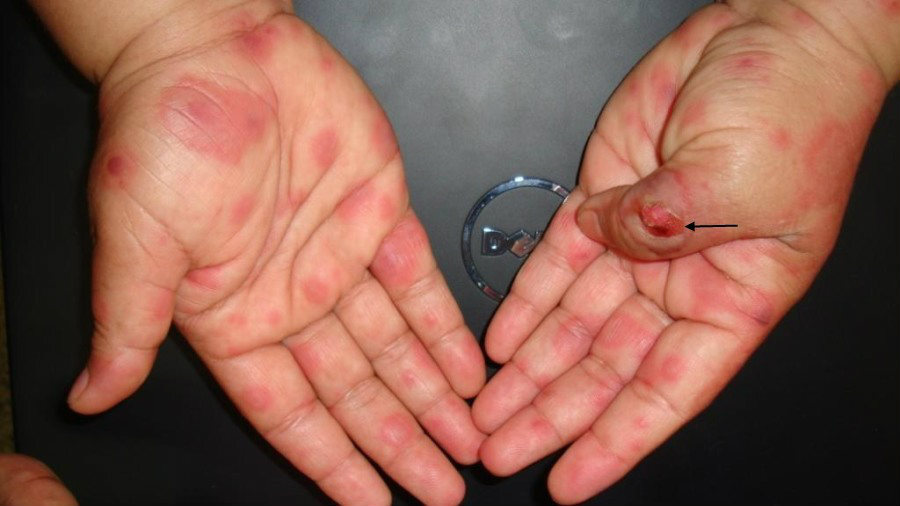
    • After an incubation period of 5 or 6 days a small, firm, red or red-blue papule enlarges to form a target-like nodule with a red centre, a white middle and a red periphery
    • The lesion then begins to weep and crust, which is followed by the development of black dots and small papilloma's on the surface. The crust becomes thickened and then falls off
    • The fully developed lesion is usually 2-3 cm in diameter but may be as large as 5 cm
    • Larger, persistent, fungating lesions are occasionally seen, mainly in immunosuppressed patients
  • Systemic features
    • There may be a mild fever and mild lymphangitis
  • Other cutaneous features
    • Secondary infection may occur
    • Erythema multiforme is occasionally associated, usually arising 10-14 days after the initial infection - refer to the related chapter
    • Rarely a widespread papulovesicular or bullous pemphigoid-like eruption occurs a few weeks after the initial infection, which usually resolves spontaneously

Clinical Images

Please refer to notes on image rights at bottom of the page with regards to individual image ownership.
Management

  • Orf is usually self-limiting and no specific treatment is necessary, other than occasionally for secondary infection 
  • Most cases of orf usually clear within six weeks, with lifelong immunity after the infection
  • Occasionally larger, and sometimes fungating lesions may be more recalcitrant to treatment, especially in immunosuppressed patients. Such lesions have been treated with cryotherapy, cidofovir cream, topical imiquimod, or curettage, however not all lesions respond and some may recur after surgery 

Disclaimer - the author PCDS cannot accept responsibility for any misleading or incorrect statements, and the management of individual patients remains the direct responsibility of the individual doctor. We do however hope that visitors to this site can contact us regarding comments that are considered misleading or incorrect so that we can continue to improve the site.

Image Rights - The PCDS would like to thank Dermatoweb, DermQuest (Galderma), and others who have contributed images. All named individuals and organisations maintain copyright for the relevant images.

Quick Links

The following pharmaceutical companies have had no involvement in the content of this website or in our conference programmes


Almirall
Galderma
Glenmark
Johnson & Johnson
La Roche-Posay
LEO Pharma
Pierre Fabre
Schuco