Dermal hypersensitivty reactions
LAST UPDATED: Aug 03, 2021
Introduction
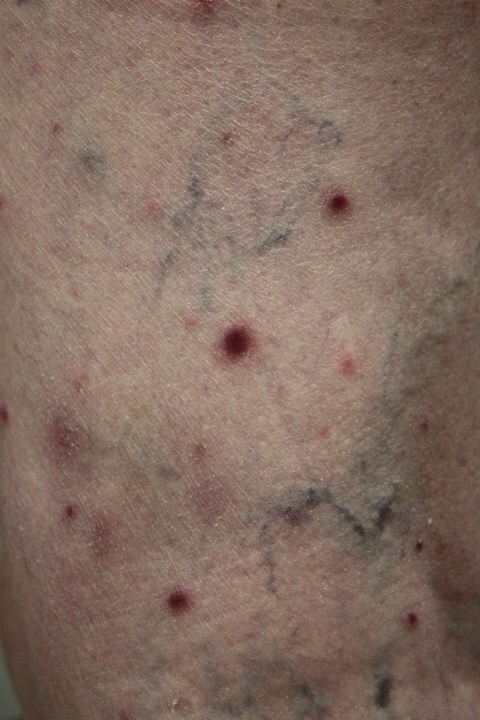
A dermal hypersensitivity reaction is a recognised histopathological finding that clinically is usually associated with very itchy scattered red papules. The condition is poorly understood and when no underlying cause is identified it is sometimes referred to as the red itchy bump disease. This chapter is set out as follows:
Aetiology
-
Many aetiological factors have been proposed including insect bites (papular urticaria), drugs, and vaccines. There have been occasional reports related to internal malignancies including lymphoma
History
-
Any age group can be affected
-
Lesions tend to be intensely itchy
-
Individual lesions tend to persist for several weeks, sometimes longer
-
A thorough history (including if any medications have recently been started) is needed to try and identify the exact underlying cause
Clinical findings
Distribution
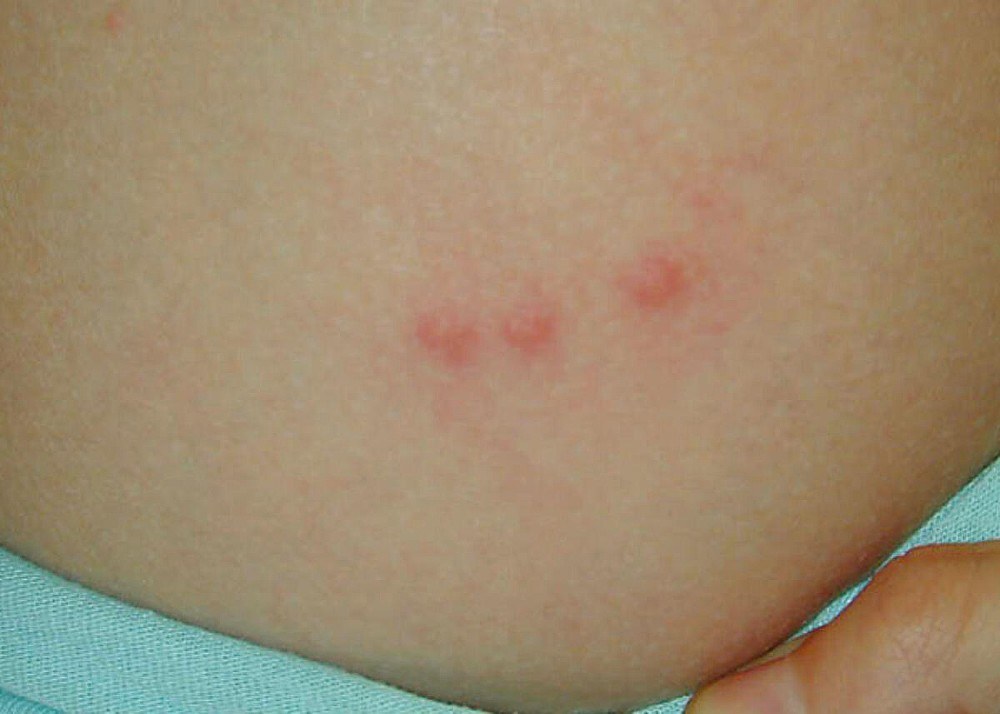
- Lesions related to insect bites (papular urticaria) tend to be grouped and are more common on exposed sites
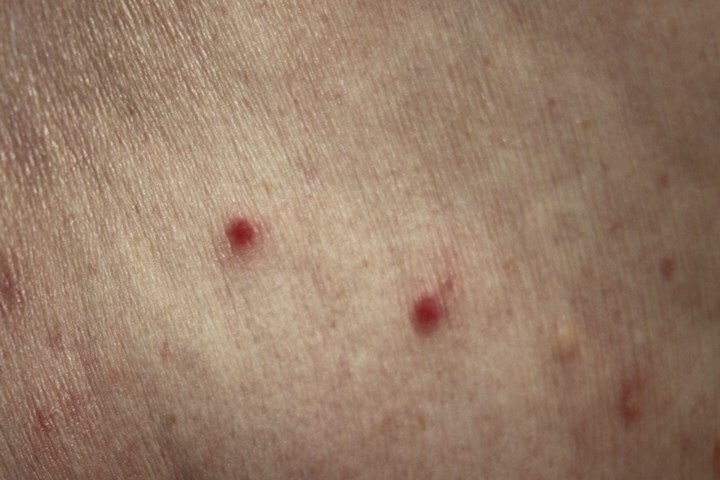
- In other cases lesions tend to more scattered
Morphology
- Firm red papules
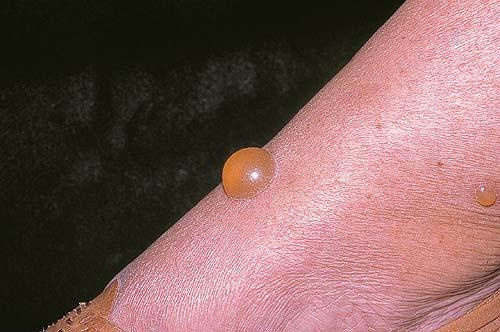
- In cases of insect bites some lesions may blister - refer to the chapter Papular urticaria for more information
Clinical Images
Please refer to notes on image rights at bottom of the page with regards to individual image
ownership.
Investigations
-
It is appropriate to undertake a thorough history (including systematic enquiry), examination and routine blood screen (haematology and biochemistry), and investigate further if anything untoward is picked up
- Except in cases of papular urticaria (and other cases where a cause can be identified) a biopsy of one of the lesions should be taken to make certain there is no alternative diagnosis as dermal hypersensitivity is a diagnosis of exclusion
-
Histology usually shows a mild superficial perivascular lymphocytic infiltrate with no or minimal deep dermal extension, associated with some perivascular and interstitial eosinophils and mild dermal oedema. Usually the epidermis is normal or only mildly spongiotic. Sometimes, lymphocytic vasculitis is associated (reference: Rook's Textbook of Dermatology)
Management
-
Refer to the relevant chapter for cases of papular urticaria
-
Where a cause cannot be identified the condition can be difficult to treat. Response to super-potent topical steroids, topical preparations containing menthol, and the periodic use of sedating antihistamines can be tried but response is often poor
-
Patients with persistent symptoms not responding to treatment should be referred for further evaluation and treatment, which in the first instance is likely to be a trial of phototherapy
Disclaimer - the author PCDS cannot accept responsibility for any misleading or incorrect statements, and the management of individual patients remains the direct responsibility of the individual doctor. We do however hope that visitors to this site can contact us regarding comments that are considered misleading or incorrect so that we can continue to improve the site.
Image Rights - The PCDS would like to thank Dermatoweb, DermQuest (Galderma), and others who have contributed images. All named individuals and organisations maintain copyright for the relevant images.