Dissecting cellulitis

LAST UPDATED: Nov 21, 2021
Introduction

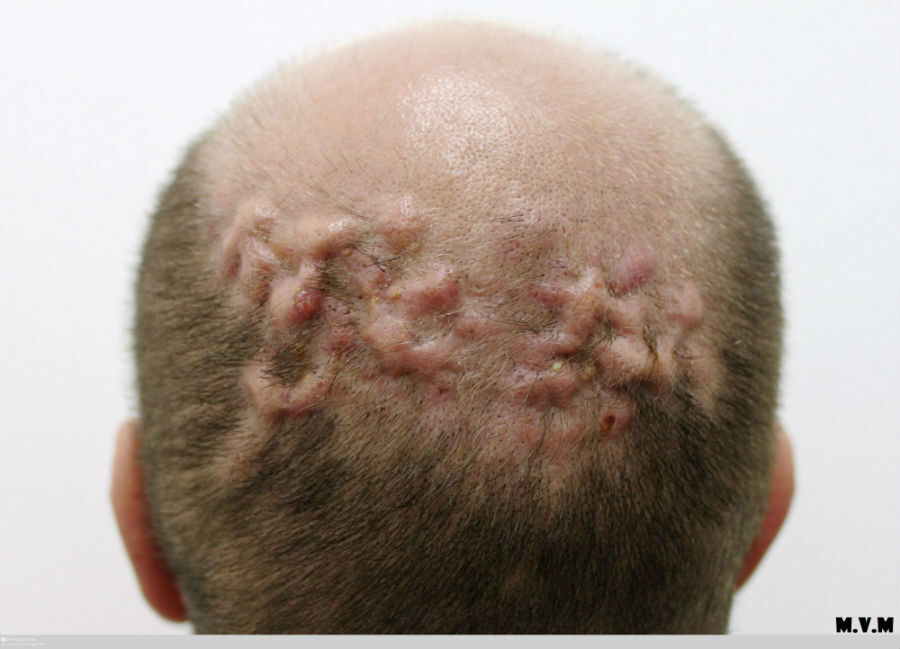
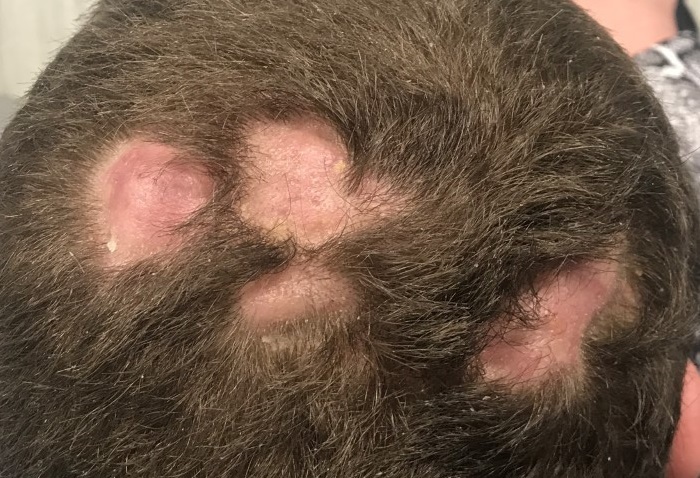
Dissecting cellulitis of the scalp (DCS) is a rare chronic inflammatory disease of scalp hair follicles manifesting as multiple painful nodules and abscesses that interconnect via sinus tracts. The condition tends to run a progressive course that eventually results in scarring alopecia.

This chapter is set out as follows:


Aetiology

  • Unknown, although it is thought that a blockage of hair follicles leads to inflammation and secondary infection

History

  • Predominantly in males aged between 18 and 40 years
  • More common in skin of colour 
  • Familial cases are exceptional, as is childhood onset

Clinical findings

Distribution

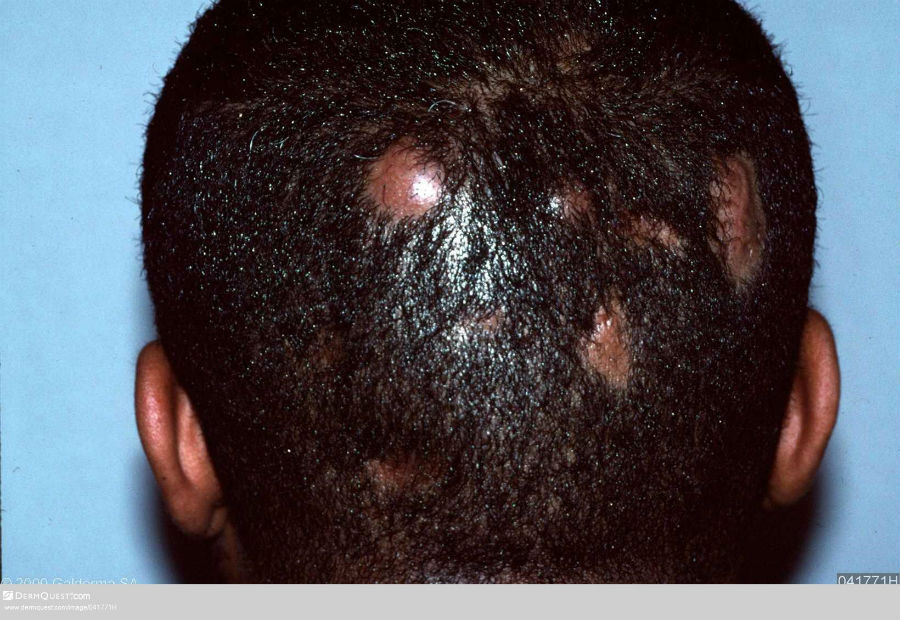
  • Most commonly the vertex and occiput, although the entire scalp may be involved

Morphology

  • The condition may start with pustules that may group together and form abscesses or nodules
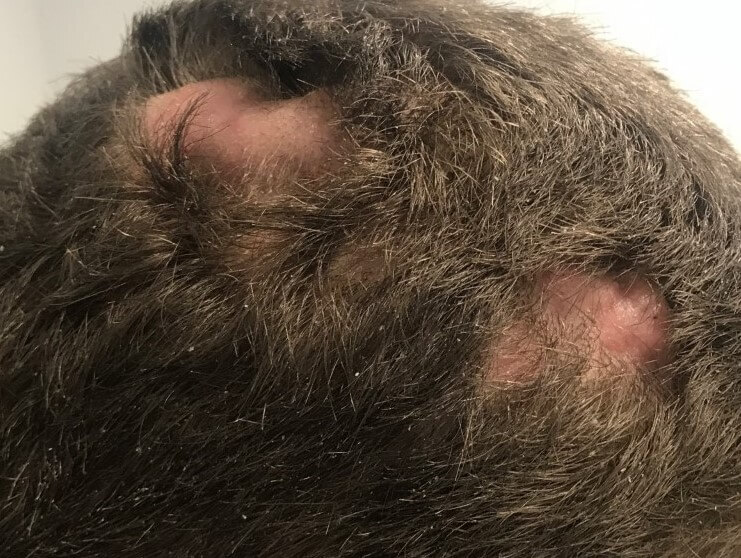
  • Painful, firm, skin‐coloured nodules 1-4 cm in diameter develop, later becoming softer and fluctuant
  • Confluent nodules form tubular ridges with an irregular cerebriform pattern
  • The nodules may develop sinuses with purulent, often foul-smelling discharge. Pressure on one pole will often express pus at a distal pole
  • Characteristically, hair is lost from the summit of the lesions and retained in the valleys
  • Significant cervical lymphadenopathy is often absent  
  • Late-stage lesions scar

Associations

  • In some cases - acne and hidradenitis suppurativa
  • An asymmetrical peripheral and axial arthritis occurs with sacroiliitis in 73%

Clinical Images

Please refer to notes on image rights at bottom of the page with regards to individual image ownership.
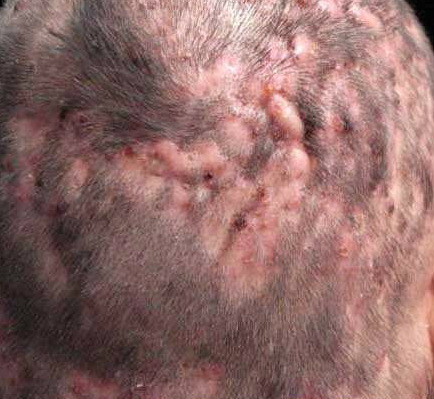
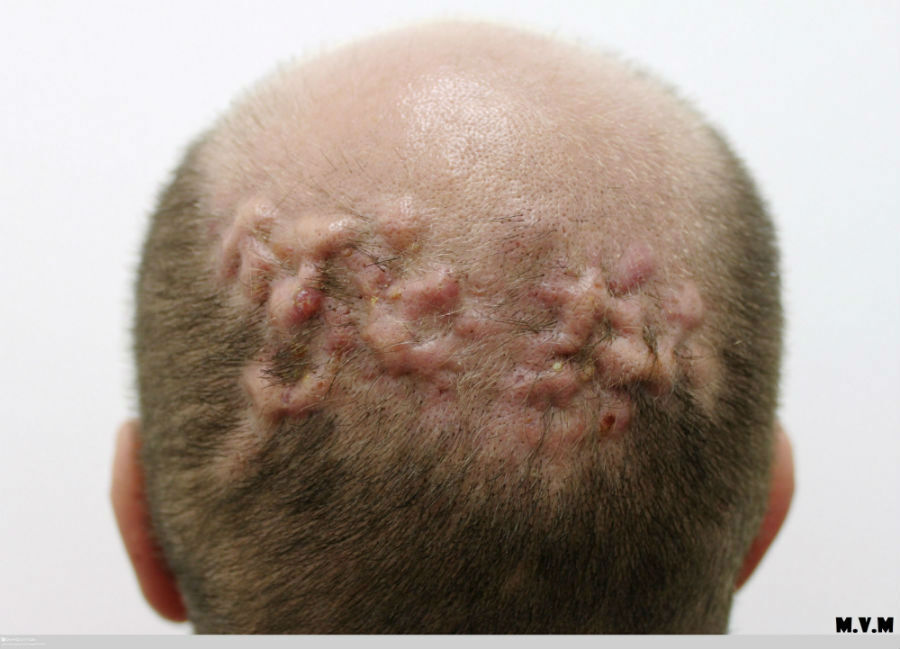
Investigations

  • Cultures of the pus and also hair follicles including the roots (or a vigorous surface rub using for example a disposable toothbrush) must always be done to rule out fungal infection
  • Skin biopsies are only needed if there is diagnostic uncertainty 

Management

  • Patients need to be referred urgently to Secondary Care. At the same time commence treatment with either lymecycline 408 mg BD or doxycycline 100 mg BD, along with a topical antiseptic wash such as chlorhexidine. Provide a patient information leaflet
  • The mainstay of treatment in Secondary Care is isotretinoin (1 mg kg daily), in combination with prednisolone (0.5–1 mg/kg daily) and erythromycin (500 mg four times daily) in order to try and induce a rapid remission and significant hair regrowth in areas not yet irreversibly damaged. The antibiotics can be stopped after 4 weeks and the prednisolone gradually tailed off and replaced by topical steroids. The isotretinoin should be continued for at least 6 months, and reintroduced if the condition relapses. In more localised cases intralesional corticosteroids can be considered instead of prednisolone. Other treatments reported as having some efficacy include dapsone 
  • In recalcitrant cases biologic therapy can be used, or widespread excision and grafting may be considered

Disclaimer - the author PCDS cannot accept responsibility for any misleading or incorrect statements, and the management of individual patients remains the direct responsibility of the individual doctor. We do however hope that visitors to this site can contact us regarding comments that are considered misleading or incorrect so that we can continue to improve the site.

Image Rights - The PCDS would like to thank Dermatoweb, DermQuest (Galderma), and others who have contributed images. All named individuals and organisations maintain copyright for the relevant images.

Quick Links

The following pharmaceutical companies have had no involvement in the content of this website or in our conference programmes


Almirall
Galderma
Glenmark
Johnson & Johnson
La Roche-Posay
LEO Pharma
Pierre Fabre
Schuco