Eczema: gravitational eczema (syn. varicose eczema or stasis dermatitis)
LAST UPDATED: Oct 12, 2023
Introduction
Gravitational eczema is a common form of eczema that occurs on the lower extremities in patients with chronic venous insufficiency. It may be a precursor to more problematic conditions, such as venous leg ulceration and lipodermatosclerosis.
This chapter is set out as follows:
History
-
Age - adults and older patients
-
Itch is common
Clinical findings
Distribution
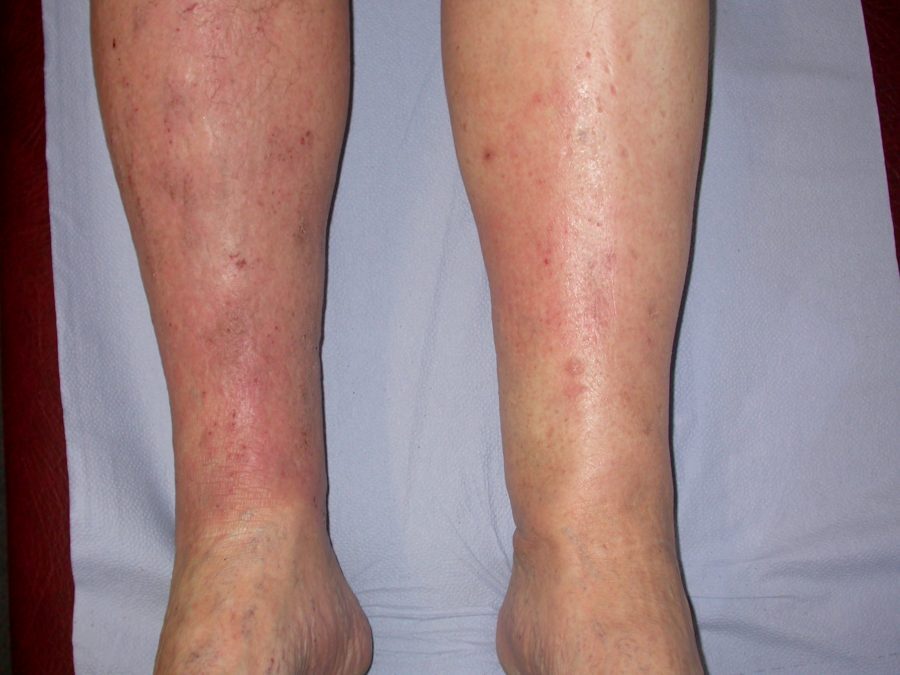
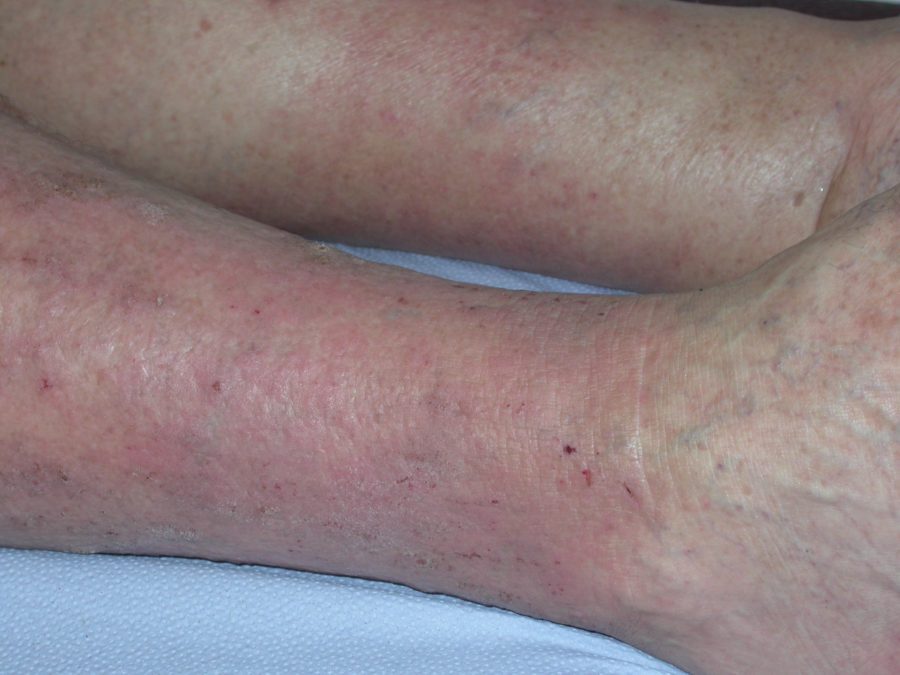
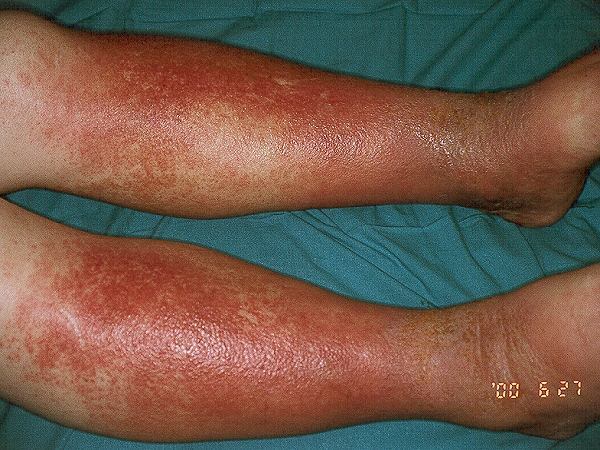
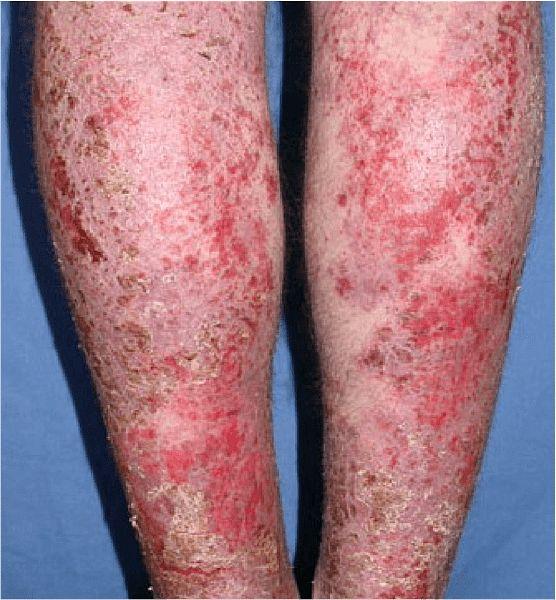
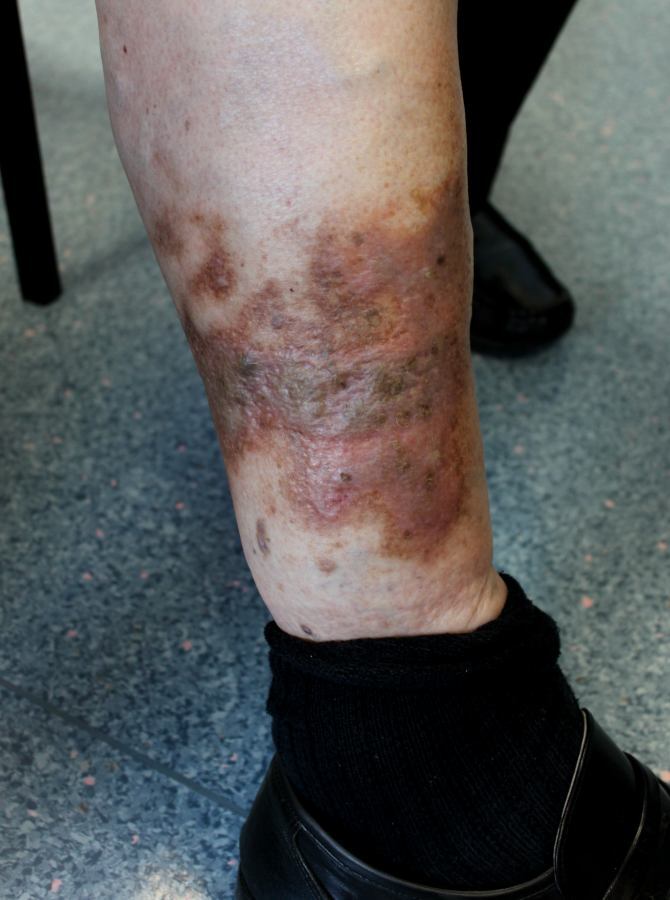
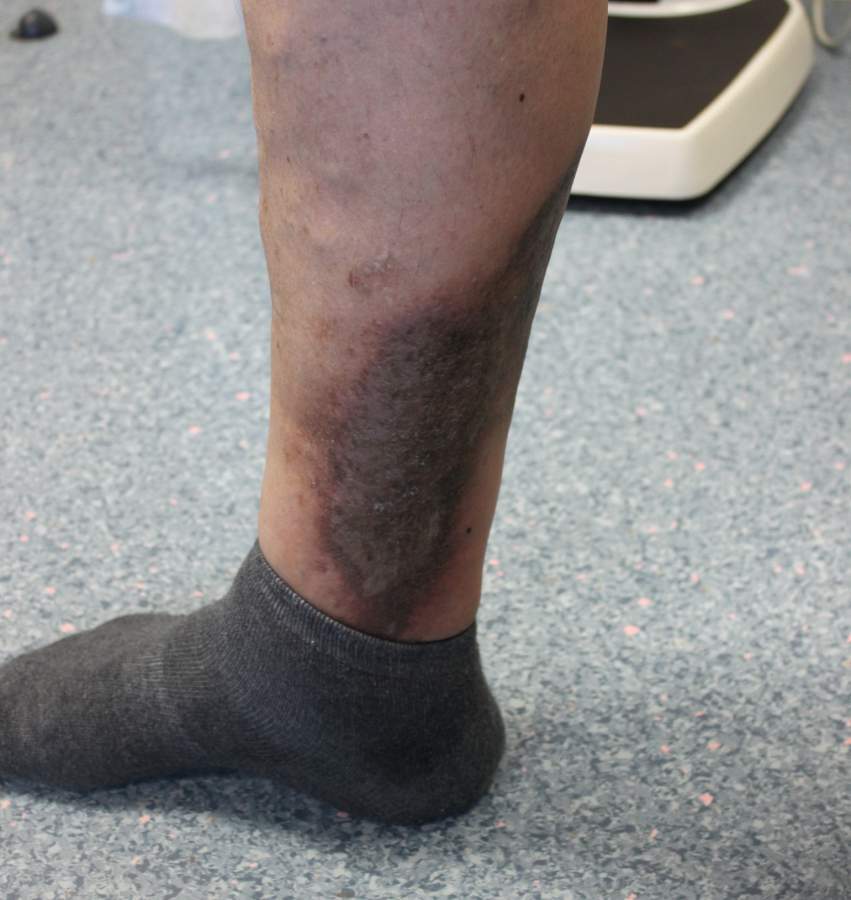
- Localised or diffuse involvement of the gaiter area
- Often bilateral
Morphology
- Erythema
- The skin may be dry and scaly, or weepy
- A brown discoloration of the skin is common and results from haemosiderin deposition
- Varicose veins may or may not be present
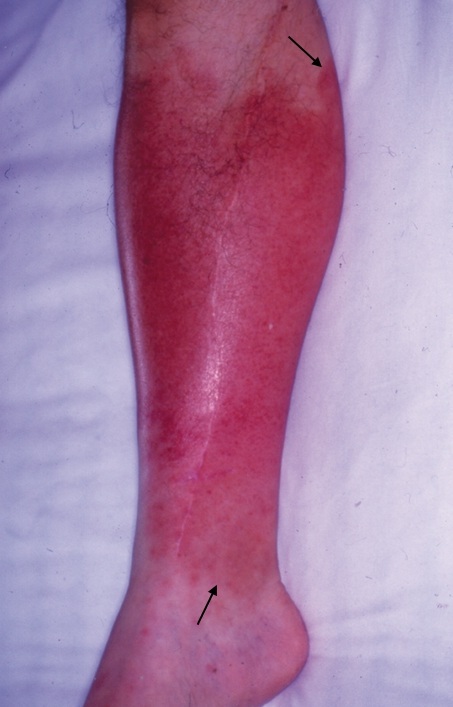
- Differential diagnosis - gravitational eczema is often misdiagnosed as cellulitis. Cellulitis is nearly always unilateral, tender and has a well demarcated edge
Clinical Images
Please refer to notes on image rights at bottom of the page with regards to individual image
ownership.
Management
Step 1: general
Step 2: infection
-
If the skin appears infected (asymmetrical erythema and tenderness, usually with pyrexia) treat empirically with an appropriate antibiotic eg flucloxacillin (with or without Penicillin V) or clarithromycin / erythromycin if penicillin allergy, for 10-14 days. DO NOT continue providing antibiotics to afebrile patients with erythematous lower legs, which almost certainly will be caused by the eczema
Step 3: topical steroids
-
Topical steroids may be needed for itch - use the least potent preparation that controls the symptoms, with steroid free periods in order to reduce the risk of skin atrophy. This link shows a video on how to apply topical steroids
Step 4: topical calcineurin inhibitors
-
If topical steroids are needed on a regular basis, once the eczema has settled change to a topical calcineurin inhibitor such as Protopic 0.1% ® ointment (Tacrolimus 0.1%)
- Use the Protopic ® once a day for 6-8 weeks, and if the eczema remains settled then reduce the Protopic ® to maintenance therapy of twice a week, increasing back to once a day if the eczema become more active
- For any significant flares a topical steroid can be re-introduced and used until the flare settles
- Adverse effects of topical calcineurin inhibitors include a burning sensation
- National guidance states that topical calcineurin inhibitors can be initiated by any health professional experienced in treating eczema - this of course includes General Practitioners
Step 5: persistent symptoms
-
For stubborn patches or those cases that are moderate-severe at onset, one of the most effective treatments is the use of a potent or super-potent topical steroid (eg Betnovate-C ® ointment) under medicated bandages eg ZIPZOC ® or Viscopaste ®. The bandages should be replaced once or twice a week and the treatment continued until things settle, which will often take six to eight weeks. Please click on the following link for demonstrations on how to apply these bandages/dressings
-
Consider the possibility of a contact allergic dermatitis to one of the treatments being used - this is more likely if there is eczematous spread to distant sites. Such patients will require patch tests
Step 6: long-term
-
Aim to promote treatment of underlying venous conditions by the use of leg exercises and compression hosiery
- Additional notes on hosiery:
- Ideally Class II below knee, open toe stockings - it is advisable for the practice nurse to check the ankle-brachial pressure index (ABPI) to make sure there is no significant arterial insufficiency that would exclude their use
- Ready to wear (RTW) hosiery is available in 5-7 sizes, depending on which company is used
- Custom Fit / Made to Measure (MTM) hosiery is available for legs that do not fit into the RTW range
- Measuring, selection, and ordering instructions are specific to the company and type of hosiery - all available online
- For more information refer to the chapter on hosiery
Disclaimer - the author PCDS cannot accept responsibility for any misleading or incorrect statements, and the management of individual patients remains the direct responsibility of the individual doctor. We do however hope that visitors to this site can contact us regarding comments that are considered misleading or incorrect so that we can continue to improve the site.
Image Rights - The PCDS would like to thank Dermatoweb, DermQuest (Galderma), and others who have contributed images. All named individuals and organisations maintain copyright for the relevant images.