Hailey-Hailey disease (syn. familial benign chronic pemphigus)
LAST UPDATED: Nov 18, 2021
Introduction
Hailey-Hailey disease is a rare, autosomal dominant, intraepidermal, blistering condition. The Hailey brothers first described it in 1939.
This chapter is set out as follows:
Aetiology
-
Hailey-Hailey disease is inherited as an autosomal dominant condition
-
Occasionally sporadic cases arise without a family history
History
-
It usually appears in the third or fourth decade, although can arise at any age
-
Heat, sweating and friction often exacerbate the condition, and most patients have more troublesome symptoms during the summer months
Clinical findings
Distribution
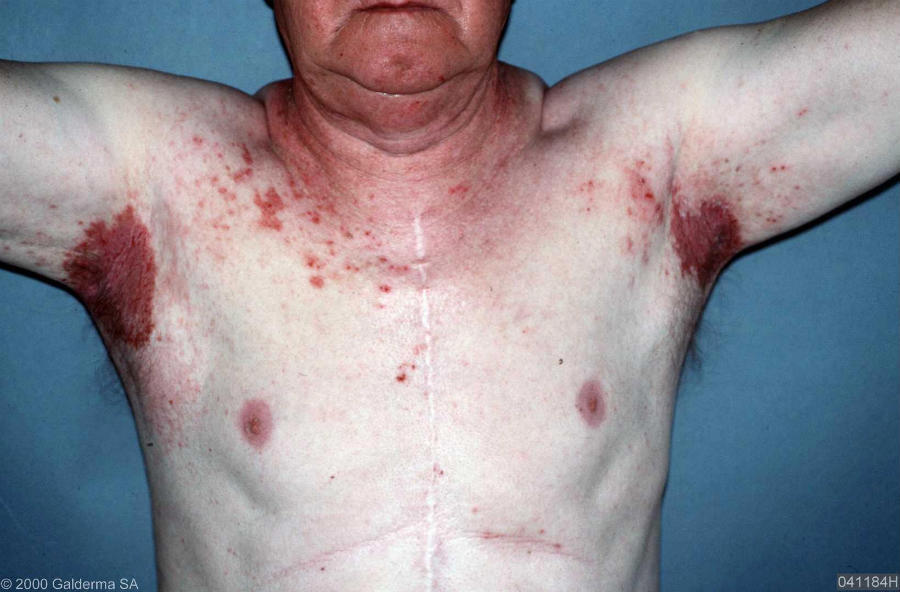
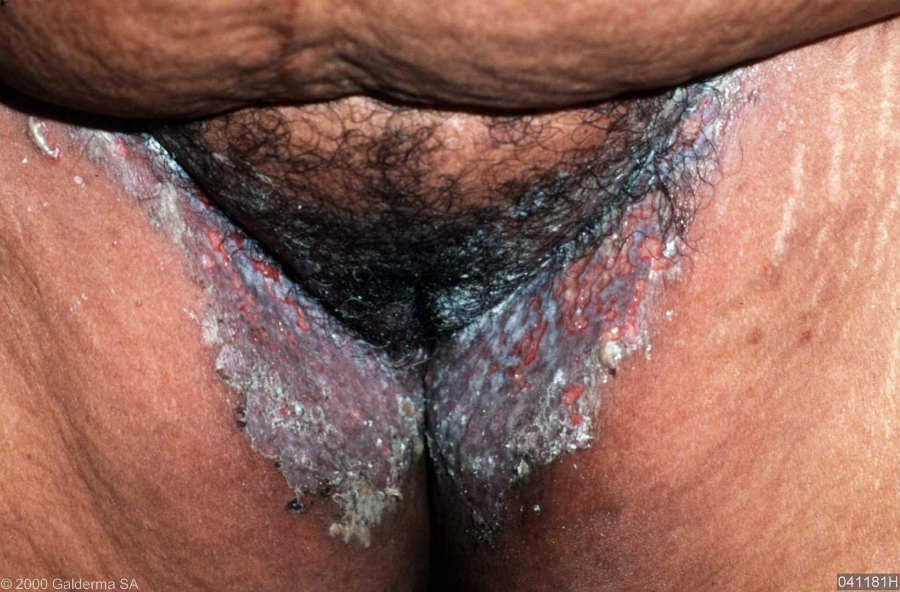
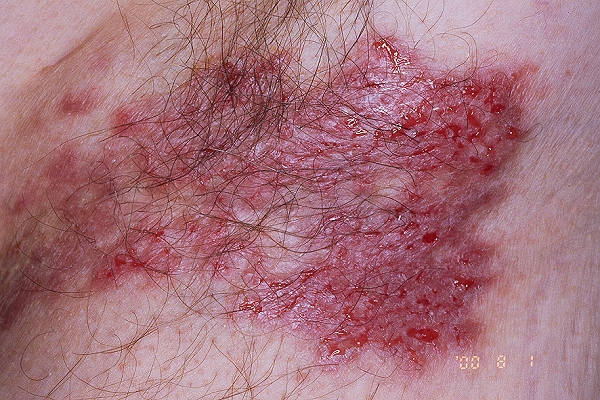
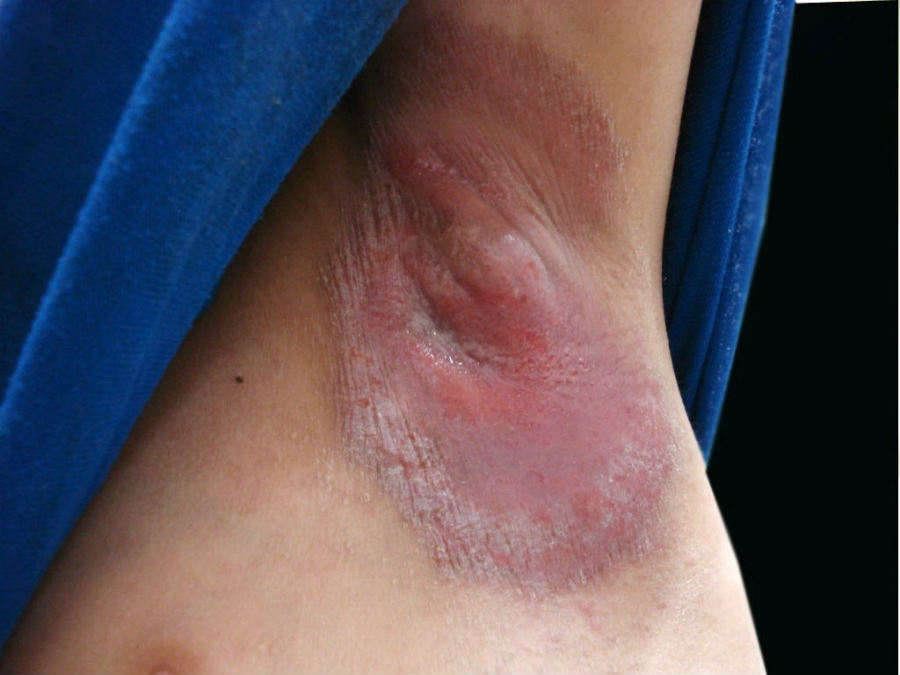
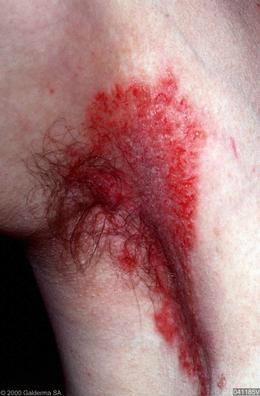
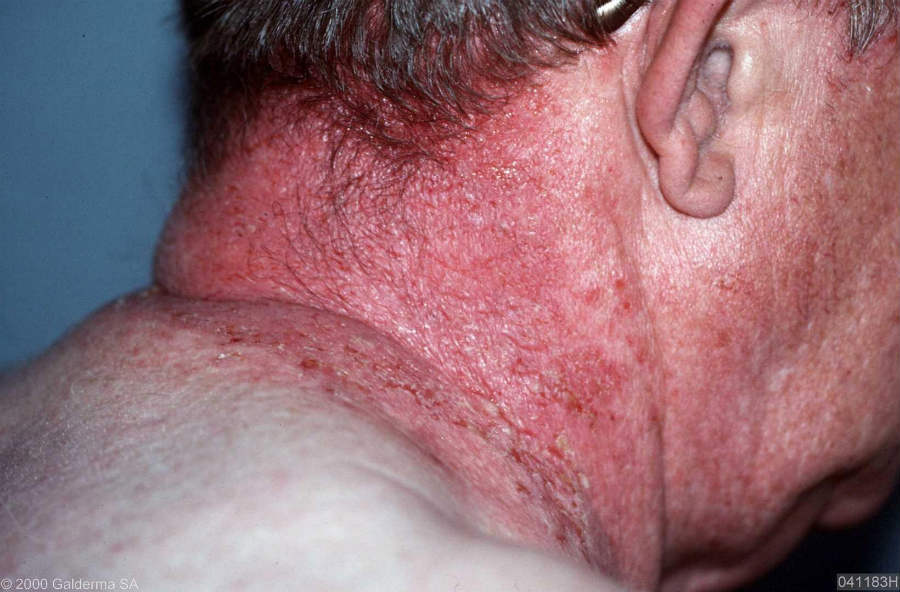
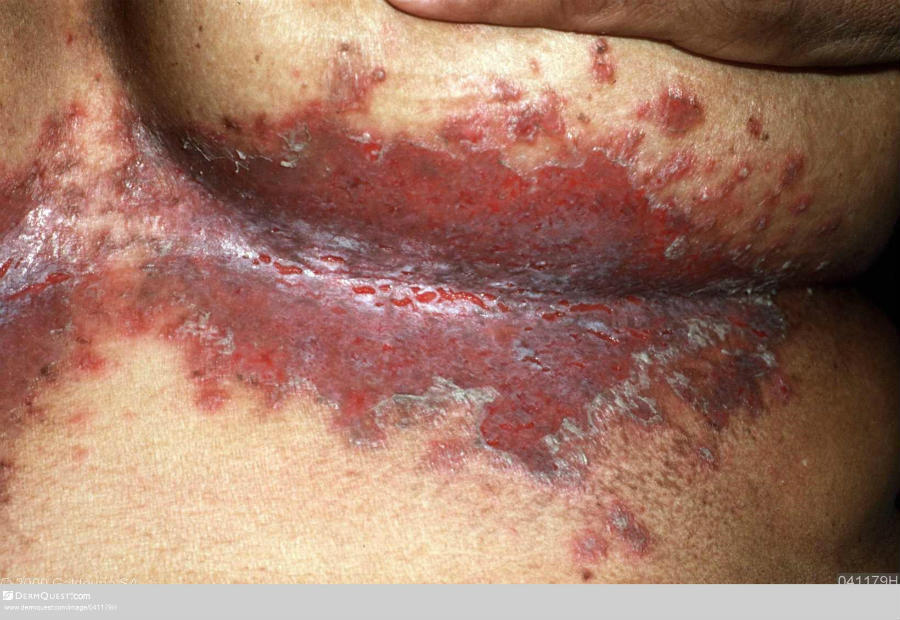
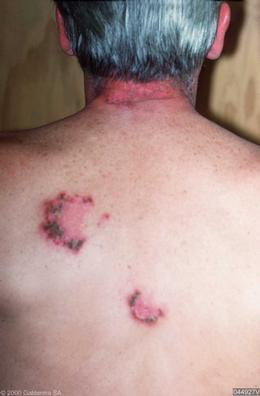
- Common sites are those exposed to friction such as the neck, axilla, under the breasts, the groins and inbetween the buttocks
Morphology
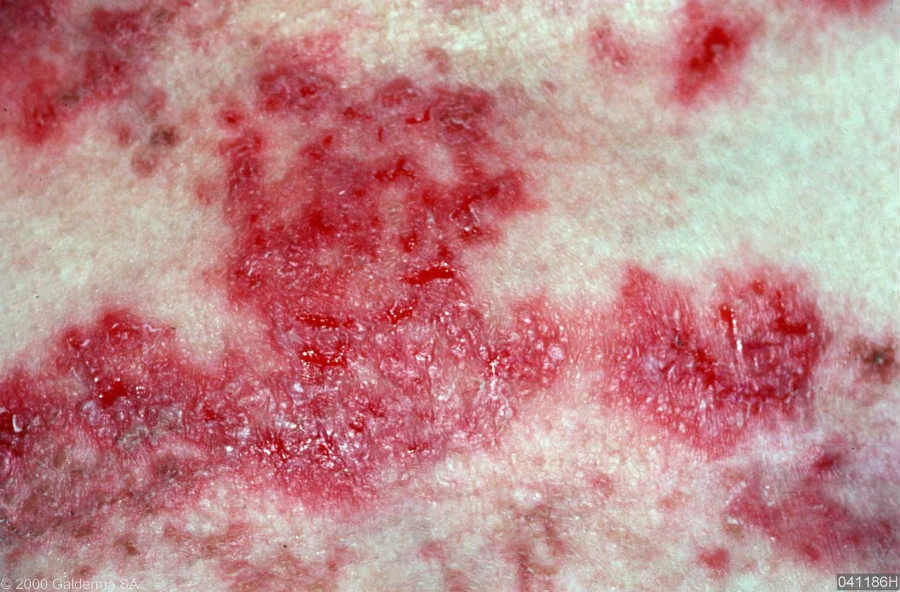
- Typically begins with painful erosions
- Lesions extend peripherally, healing in the centre without scarring
- If the lesions are present for some time they may become thickened and malodorous with soft vegetations and fissures
Other cutaneous features
- Longitudinal white bands on the fingernails, and pits on the palms are sometimes seen
- Secondary bacterial and viral infection are common, especially with herpes simplex
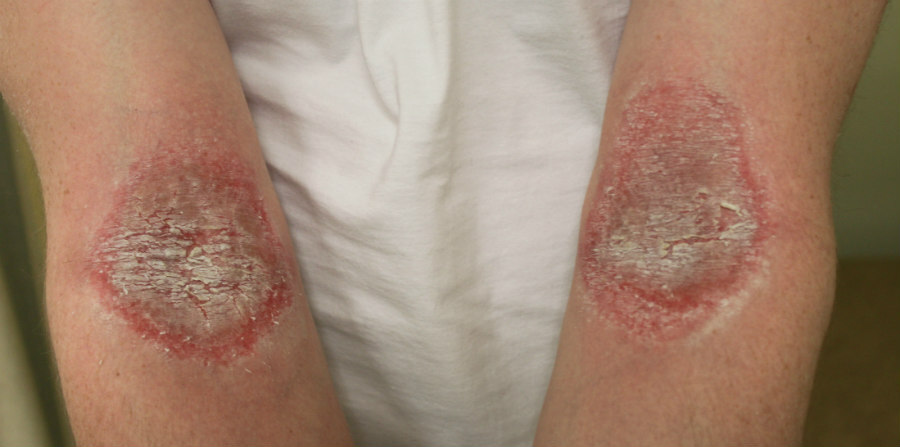
Clinical Images
Please refer to notes on image rights at bottom of the page with regards to individual image
ownership.
Investigations
-
Hailey-Hailey disease is usually diagnosed by its appearance and family history, although it is often mistaken for other skin conditions such as candida intertrigo or eczema
-
Histology of lesional skin from HHD demonstrates widespread partial loss of cohesion between suprabasal keratinocytes, or acantholysis, said to resemble a ‘dilapidated brick wall’. Acantholytic clefts and bullae form suprabasally, and may contain floating clusters of loosely coherent cells (reference: Rook's Textbook of Dermatology)
Management
Step 1: general measures
- Provide a patient information leaflet
- Unfortunately there is no cure for Hailey-Hailey disease, treatment is aimed at reducing symptoms and preventing flares
-
Avoid triggers such as sunburn, sweating and friction
-
Wear loose fitting cool clothing and wear absorbent pads
-
Weight loss, if appropriate, may help
-
Antiseptic washes, such as the Dermol ® range, may help reduce secondary infection
- If there is a significant exacerbation send swabs for bacteriology and virology (herpes simplex) and treat accordingly
Step 2: topical steroids
-
Combination treatments of corticosteroids with antibacterial and / or antifungal treatments may be effective eg Trimovate ® cream or Lotriderm ® cream
Step 3: systemic antibiotics
-
Tetracycline's (lymecycline 408 mg OD or doxycycline 100 mg OD) and erythromycin / clarithromycin have anti-inflammatory properties in the skin, and can be given for trial periods of three months. If beneficial they can be used in the longer-term
Step 4: treatments provided by specialists
- Naltrexone
- Recent studies have found Naltrexone to be effective
- The initial starting dose is 1.5 mg OD; gradually increasing by 1.5 mg every 1-2 weeks until 4.5 mg OD is reached depending on tolerance / response. Currently, there is no reliable evidence that doses higher than 4.5 mg OD are likely to be of additional benefit
- The time to assess effectiveness is 4-6 months, although some may see improvement within several weeks
- LFT need to be checked at baseline and then after 8-12 weeks. If there are no significant issues these do not need repeating
-
Other treatments
- There is very limited evidence for calcipotriol cream, tacrolimus ointment, oral retinoids and ciclosporin
- The evidence is equally uncertain for PUVA phototherapy, cryosurgery, laser, photodynamic therapy and surgical excision
- Botulinum toxin may help by reducing sweating
Prognosis
-
Many patients have long remissions and an improvement with age
Disclaimer - the author PCDS cannot accept responsibility for any misleading or incorrect statements, and the management of individual patients remains the direct responsibility of the individual doctor. We do however hope that visitors to this site can contact us regarding comments that are considered misleading or incorrect so that we can continue to improve the site.
Image Rights - The PCDS would like to thank Dermatoweb, DermQuest (Galderma), and others who have contributed images. All named individuals and organisations maintain copyright for the relevant images.