Kaposi’s sarcoma (syn. Kaposi’s haemorrhagic sarcoma)

LAST UPDATED: Aug 16, 2021
Introduction

Kaposi's sarcoma is a malignant, cutaneous, vascular proliferation arising in several different clinical contexts.

This chapter is set out as follows:


Aetiology

There are four subgroups of Kaposi's sarcoma:

  • The most frequent occurrence is in patients with HIV, which is associated with a poor prognosis
  • Non-HIV immunosuppression eg transplant patients. It can regress if immunosuppression ceases, but it can be aggressive and associated with a poor prognosis
  • Sporadic - mainly found in middle-aged and elderly males of Mediterranean or Ashkenazi Jewish descent. Ashkenazi Jews are descended from Jewish communities that lived in central and eastern Europe. Most Jewish people in the UK are of Ashkenazi Jews ancestry. Lesions begin insidiously around the ankle and slowly spread upwards. Lesions are rarely fatal
  • Endemic - Zaire, Uganda and Rwanda. There is a relatively benign nodular group, and a fulminant lymphadenopathic variety seen in children

Clinical findings

Distribution

  • Depends on the cause
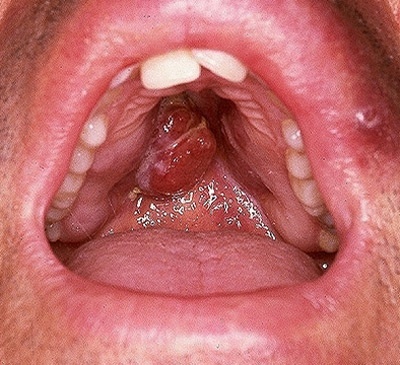
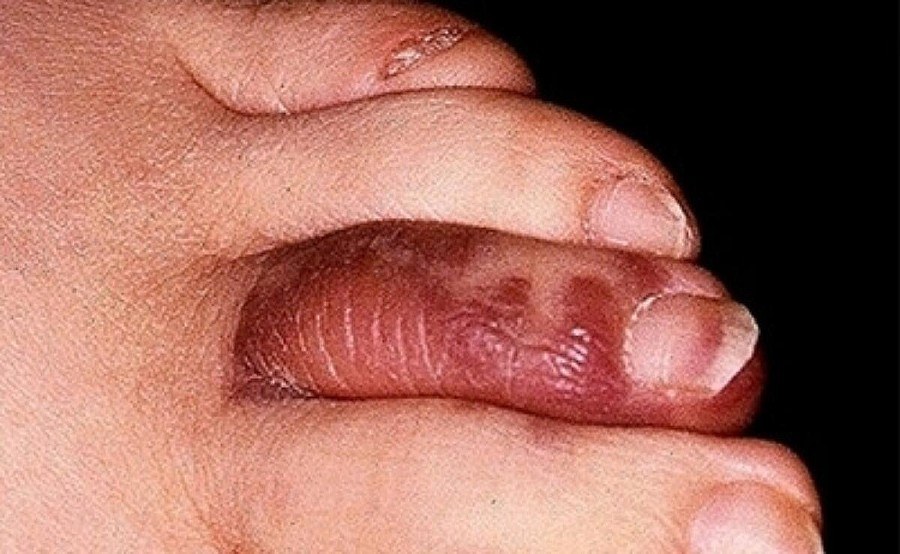
  • The face and extremities are the most common sites, although any site can be affected including the mouth and other mucosal areas 

Morphology

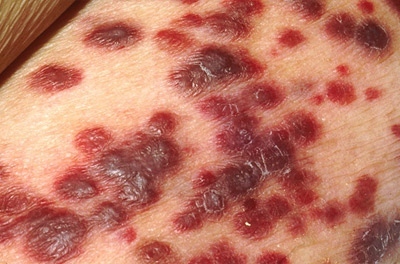
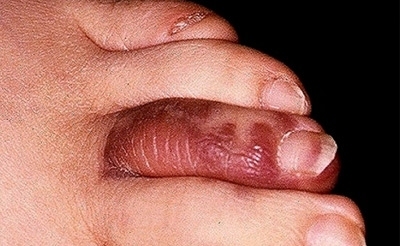
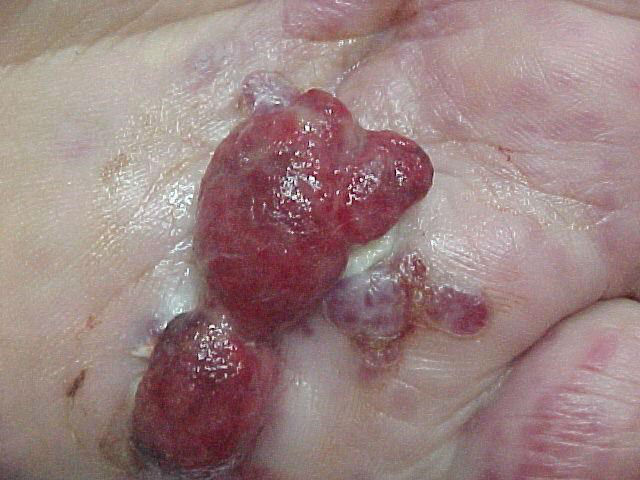
  • Dark blue / purple colour 
  • Lesions start off flat, then become raised and tumid growing up to 3 cm in diameter 
  • Tend to be multifocal and adjacent areas may fuse to form large plaques
  • Can become ulcerated 
  • Some involute to leave pigmented scars

Clinical Images

Please refer to notes on image rights at bottom of the page with regards to individual image ownership.
Investigations

  • Routine bloods and an HIV test 

Management

  • Suspected cases should be referred urgently to Secondary Care (two-week wait) 
  • A multi-disciplinary team approach may be required 

Disclaimer - the author PCDS cannot accept responsibility for any misleading or incorrect statements, and the management of individual patients remains the direct responsibility of the individual doctor. We do however hope that visitors to this site can contact us regarding comments that are considered misleading or incorrect so that we can continue to improve the site.

Image Rights - The PCDS would like to thank Dermatoweb, DermQuest (Galderma), and others who have contributed images. All named individuals and organisations maintain copyright for the relevant images.

Quick Links

The following pharmaceutical companies have had no involvement in the content of this website or in our conference programmes


Almirall
Galderma
Glenmark
Johnson & Johnson
La Roche-Posay
LEO Pharma
Pierre Fabre
Schuco