Paraneoplastic pemphigus
LAST UPDATED: Aug 09, 2021
Introduction
The pemphigus family is a rare group of immunobullous conditions affecting skin and/or mucous membranes. Paraneoplastic pemphigus (PNP) occurs in association with malignancy, and is characterised by painful blisters and denuded areas of the mouth, lips, oesophagus and skin. It is the least common but most serious form of pemphigus, particularly considering the presence of the underlying malignancy.
This chapter is set out as follows:
Aetiology
-
Almost all patients with PNP have an associated malignancy
-
PNP has been described most commonly in association with B-cell lymphoproliferative disorders, but also thymoma, sarcoma and various other carcinomas
Clinical findings
-
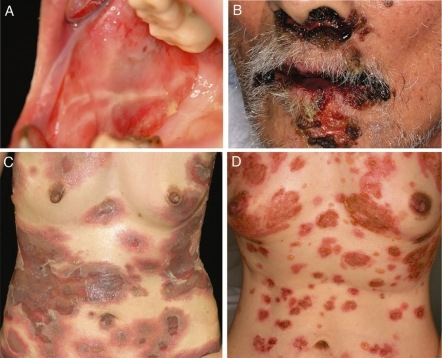
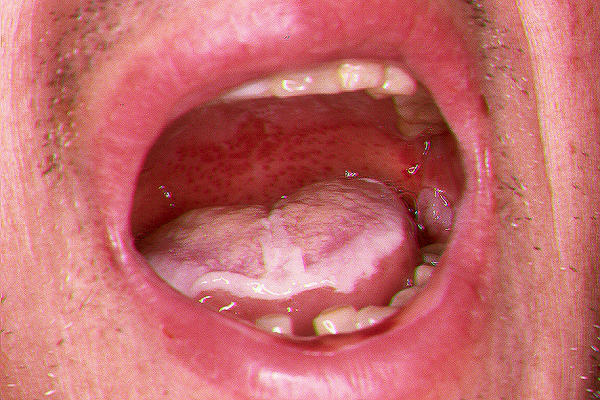
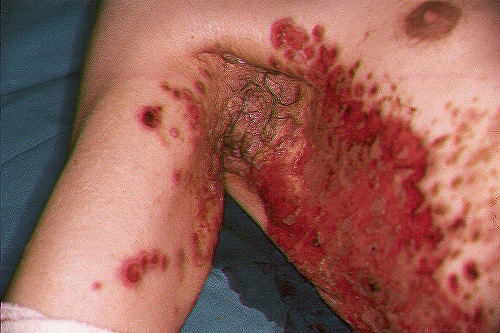
Patients present with painful oral erosions, often accompanied by a generalised cutaneous eruption
-
Oral erosions typically are severe, often involving the lateral tongue and vermilion. Erosions and subsequent crusting on the vermilion of the lips is similar to that seen in patients with Stevens-Johnson syndrome. Other mucosal surfaces such as the genitalia, and sometimes inside the nose, can also be affected
-
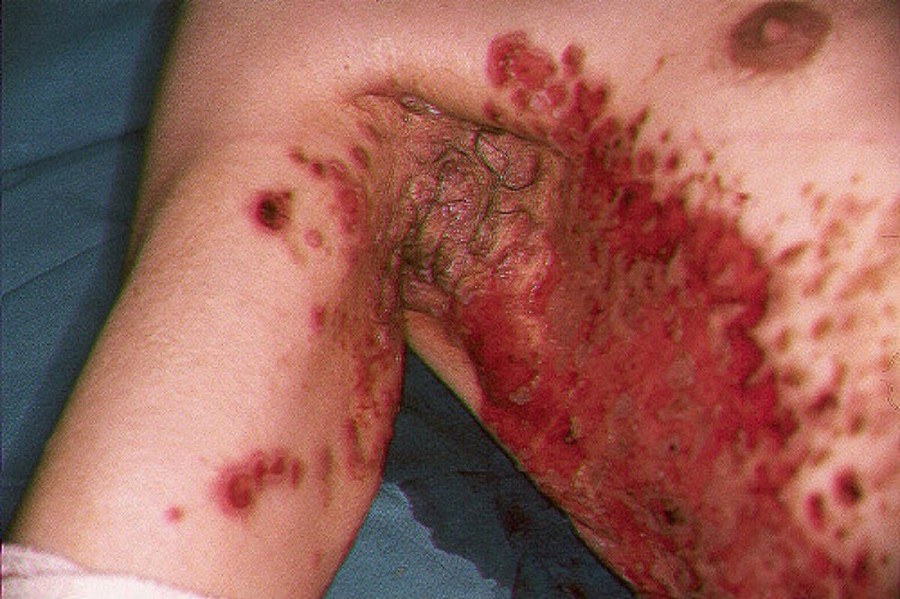
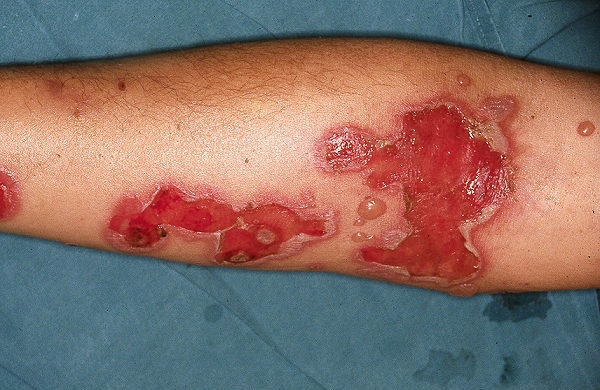
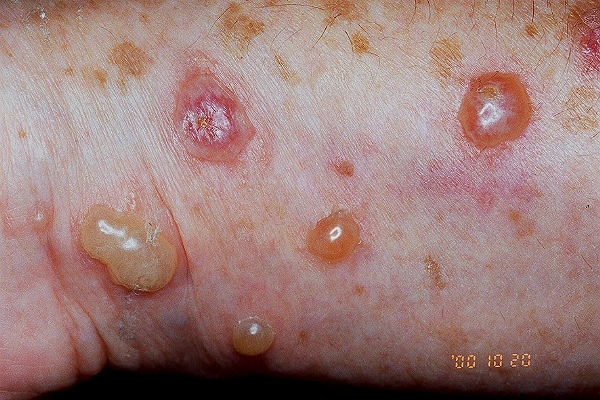
The cutaneous eruption is highly variable and PNP may be confused with several other blistering conditions including pemphigus vulgaris, bullous pemphigoid, erythema multiforme, and bullous lichen planus. Features include diffuse erythema, papules, vesicles / bullae, erosions, scaly plaques and erythroderma. Palmoplantar target lesions are another feature
-
Respiratory and gastrointestinal tract complications significantly increases the risk of mortality
Clinical Images
Please refer to notes on image rights at bottom of the page with regards to individual image
ownership.
Investigations
Bloods tests - indirect immunofluorescence
-
A request for skin antibodies covers both pemphigoid (skin basement membrane) and pemphigus (skin desmosome) antibodies. In paraneoplastic pemphigus the predominant finding is the presence of IgG antibodies
Skin biopsies - histology and direct immunofluorescence
-
Two skin biopsies are required:
-
An intact blister should be excised and sent for histology
-
A second biopsy, of peri-lesional skin (within 2 cm of the blister), is also required for direct immunofluorescence (DIF). The sample must be put on top of a piece of plain gauze, which has been soaked in a small amount of normal saline, and placed into a dry pot, the specimen must be examined the same day. If the sample cannot be examined the same day it must be placed in a suitable transport media eg Michel's solution, in order to preserve the sample. The result of DIF can sometimes be false negative, and if needed a further biopsy sample can be taken from unaffected skin of the buttocks or thighs
-
Histology reveals acantholytic cells within blisters, dead keratinocyte cells and an inflammatory reaction
-
DIF shows IgG antibodies targeted at the plakin family of proteins, which form part of the desmosome complex
Management
-
The diagnosis and management of PNP will take place in Secondary Care
-
It is important to try and identify an underlying malignancy - the condition may remit if the cause can be treated
-
Management is otherwise difficult and largely supportive, aimed at dressing the affected skin, pain relief and managing secondary infections
- Prognosis - 75-80% of patients die from paraneoplastic pemphigus or from the underlying malignancy
Disclaimer - the author PCDS cannot accept responsibility for any misleading or incorrect statements, and the management of individual patients remains the direct responsibility of the individual doctor. We do however hope that visitors to this site can contact us regarding comments that are considered misleading or incorrect so that we can continue to improve the site.
Image Rights - The PCDS would like to thank Dermatoweb, DermQuest (Galderma), and others who have contributed images. All named individuals and organisations maintain copyright for the relevant images.