Head lice (syn. pediculosis capitis)
LAST UPDATED: Aug 08, 2021
Introduction
Head lice infestation (pediculosis capitis) is caused by the parasitic insect Pediculus humanus capitis, which lives on and among the hair of the scalp and neck of humans. The adult louse feeds on blood. It has a worldwide distribution and is common both in developed and developing countries. There is no evidence that head lice have a preference for either clean or dirty hair.
This chapter is set out as follows:
Aetiology
-
Head lice are endemic in the UK. They are most common in children aged 4-11 with a peak age of 7-8 years
-
Risk factors include age less than 12 years, female gender, families with four or more children, lower socio-economic status and long hair
-
It is thought that the majority of head louse infestations are acquired by direct head-to-head contact
History
-
Although many individuals are asymptomatic, scalp pruritus is the characteristic manifestation of head louse infestation. Itch is not normally bad enough to effect sleep
Clinical findings
-
Nits alone are not sufficient to diagnose active head lice infestation because it is difficult to distinguish between dead and live eggs with the naked eye
-
A diagnosis of active head lice infestation can only be made if a live head louse is found. Detection combing (systematic combing of wet or dry hair with a detection comb) should be used to confirm the presence of lice:
-
Wet combing takes 5-15 minutes per head; lice are immobilised by hair conditioner, so are easy to see on the comb
-
Dry combing takes 3-5 minutes per head. Using a comb on dry hair may produce static electricity; when a louse is spotted on the comb, placing a thumb on it before drawing the comb out of the hair prevents the louse being flicked off the comb by the static electricity in the hair
-
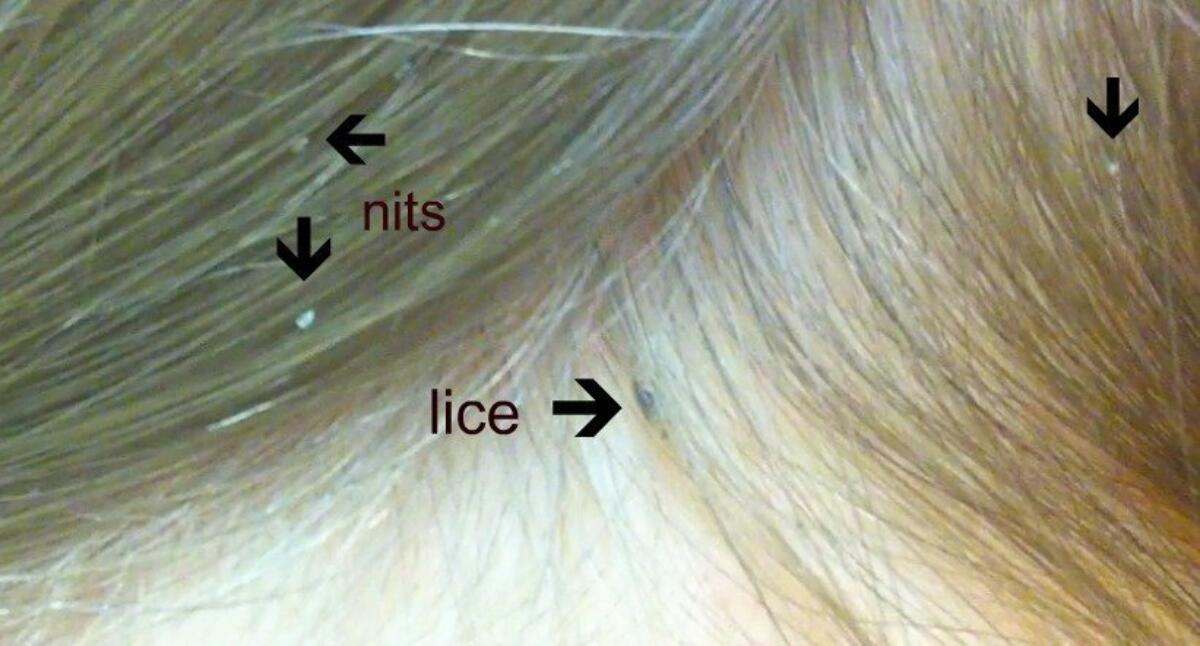
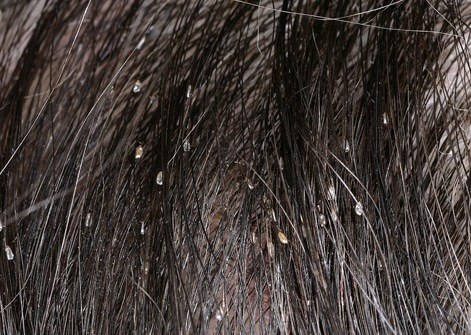
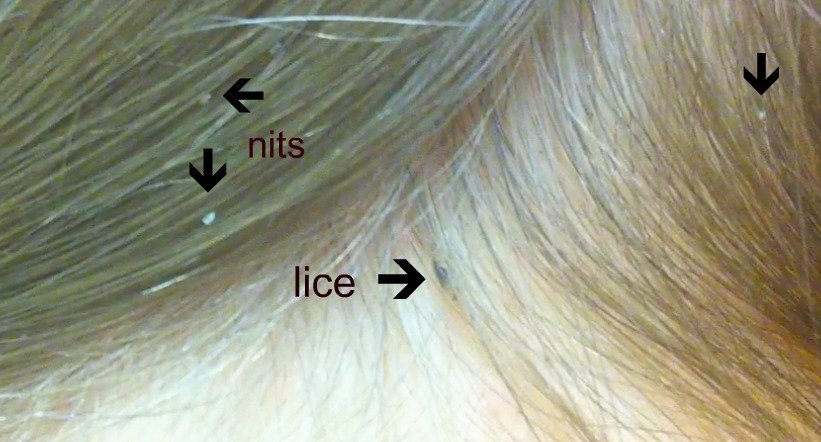
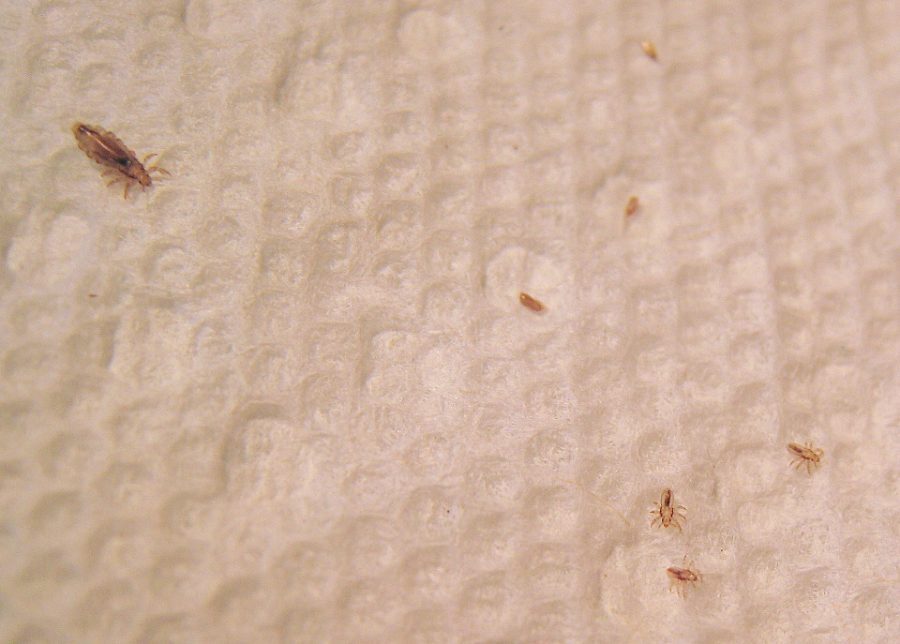
Louse eggs (ova or nits) are small, oval, yellow-white and are attached to the hair shafts. They occur in greatest density on the parietal and occipital regions. They usually take 7-10 days to hatch
-
Immature lice (nymphs) take 6-10 days to mature into adults
-
Adult lice, which are up to 3 mm long, have six legs (which have hook-like claws to hold on to the hair) and are grey-white to black in colour
-
Secondary bacterial infection may occur as a result of scratching, and concomitant head louse infestation must always be considered in cases of scalp impetigo
-
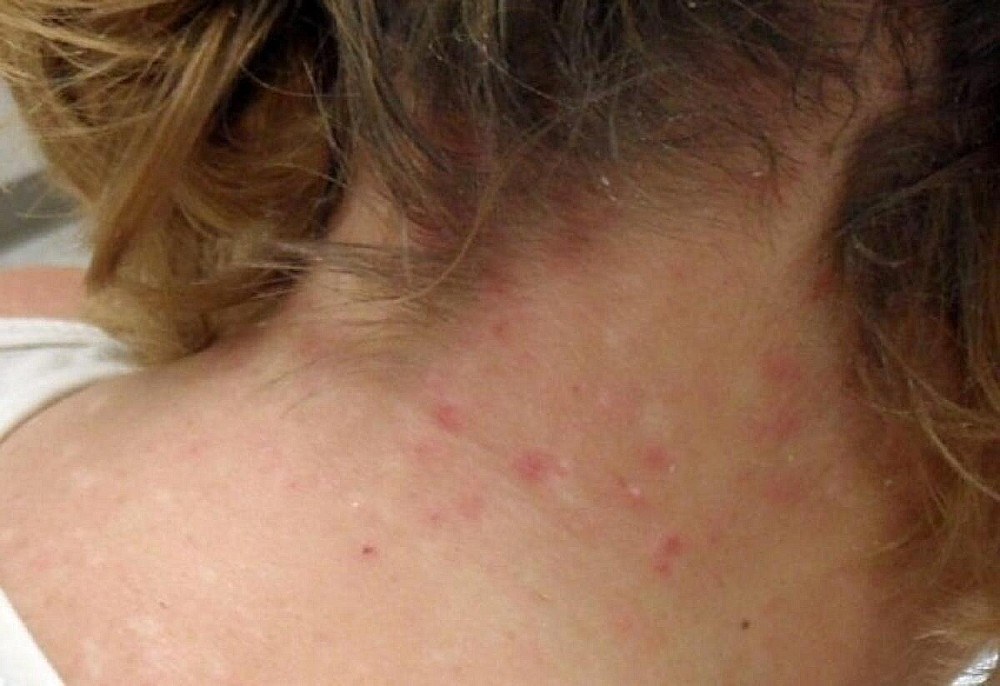
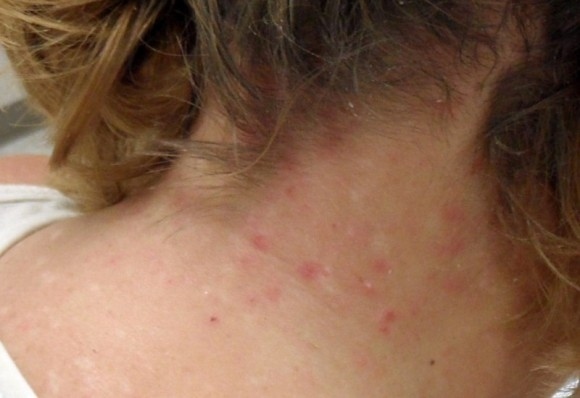
Itchy papular lesions may occur on the nape of the neck and behind the ears, due to a hypersensitivity reaction to louse faeces. Occasionally this can become more generalised
-
In severe, neglected cases, matting of the hair may occur
Clinical Images
Please refer to notes on image rights at bottom of the page with regards to individual image
ownership.
Management
Step 1: prevention
-
It is very difficult to control the spread of head lice in children, due to the close contact that children normally have with each other, and there is no evidence for any benefit of head lice repellents, or using head lice treatments prophylactically
-
If a head lice infestation is noted in a school, vigilance amongst the parents and treatment of affected children will help to prevent a cycle of re-infestation. The school nurse can play an effective role in teaching families the correct method of detection combing
-
Tying back long hair and regular (every 3-4 days) methodical combing with a fine-toothed comb may help to prevent infestation
Step 2: general management principles
-
Provide a patient information leaflet
-
Treat the person only if a live head louse is found. Treat all affected household members simultaneously
-
There is no need to wash clothing or bedding that has been in contact with lice
-
Children who are being treated for head lice can still attend school
Step 3: insecticide treatment
There is evidence of widespread malathion and pyrethroid resistance, as well as the emergence of carbaryl resistance in the UK, hence choice of treatment will depend on patterns of regional resistance. Please refer to local guidelines.
-
Dimeticone 4% lotion (Hedrin ® lotion)
-
Should be applied twice, with seven days between applications. Dimeticone is left on the hair and scalp for eight hours, or overnight and then washed out using shampoo
-
Isopropyl myristate and cyclomethicone (Full Marks solution ®)
-
Is not suitable for children younger than two years of age or for people with skin conditions
-
Should be applied twice, with seven days between applications
-
Is left in place for ten minutes and the hair is then systematically combed with a fine-toothed comb to remove lice and then washed using shampoo to remove the solution
-
Coconut, anise, and ylang ylang spray (Lyclear Spray Away ®)
-
Is not suitable for children younger than two years of age, people with skin conditions, or those with asthma
-
Should be applied twice, with seven days between applications. The spray is left in place for 15 minutes. The hair is then washed using shampoo to remove the spray, and then systematically combed with a fine-toothed comb to remove lice
-
Malathion 0.5% aqueous liquid
-
It should be applied twice, with seven days between applications
-
It is applied to the hair from the roots to the tips, left on the hair and scalp for 12 hours or overnight and then washed out using shampoo
Step 4: wet combing using the Bug Buster ® comb and method
-
Is an alternative to the use of chemical agents
-
Involves methodically combing wet hair with the fine-toothed Bug Buster ® comb to remove lice. This is undertaken for four sessions over two weeks
-
The hair should be washed in the normal way using an ordinary shampoo. After rising, a large amount of conditioner should be applied
-
A normal comb should be used to remove tangles followed by use of a detection comb
-
After the whole head has been combed, it should be rinsed again
-
Wet combing should be continued until no full-grown lice have been seen for three consecutive sessions
-
Current evidence suggests that wet combing is much less effective than the use of an insecticide
Step 5: checking to ensure treatment has been successful
-
Insecticide treatment:
-
Advise people to check whether treatment was successful by detection combing two to three days after completing a course of treatment and again after an interval of seven days
-
Wet combing using the Bug Buster ® comb and method:
-
This method has been successful if no lice are found on day 17. If lice are found on day 17, continue use of the Bug Buster ® comb until no full-grown lice have been found on three consecutive sessions
-
Management of confirmed unsuccessful treatment:
-
Household members, close family and close friends (both adults and children) should be assessed using detection combing to identify possible sources of re-infestation
-
Check whether the treatment was used correctly
-
Repeat the same treatment or switch to a different treatment
-
Ensure that all affected household contacts are again treated simultaneously
-
Advice should be sought from local laboratories if resistance appears to be a problem
Management in pregnancy
- Women who are pregnant or breast-feeding can be treated with wet combing or dimeticone lotion. Malathion is recommended if a traditional insecticide is thought to be necessary during pregnancy
Disclaimer - the author PCDS cannot accept responsibility for any misleading or incorrect statements, and the management of individual patients remains the direct responsibility of the individual doctor. We do however hope that visitors to this site can contact us regarding comments that are considered misleading or incorrect so that we can continue to improve the site.
Image Rights - The PCDS would like to thank Dermatoweb, DermQuest (Galderma), and others who have contributed images. All named individuals and organisations maintain copyright for the relevant images.