Polymorphic eruption of pregnancy (syn. pruritic urticarial papules and plaques of pregnancy)
LAST UPDATED: Mar 23, 2025
Introduction
Polymorphic eruption of pregnancy is also known as PUPPP, which is short for Pruritic Urticarial Papules and Plaques of Pregnancy. It is an itchy rash that starts in the stretch marks of the abdomen in the last three months of pregnancy and then clears with delivery. The newborn is unaffected.
The chapter is set out as follows:
Aetiology
-
Polymorphic eruption of pregnancy affects approximately 1:160 pregnancies
-
The cause is unknown, although it has been suggested that it may be related to stretching of the skin on the abdomen
History
-
Polymorphic eruption of pregnancy usually occurs in the first pregnancy
-
Most cases begin in the last three months of pregnancy, especially the last five weeks, when the stretching is greatest. It can rarely begin after pregnancy
-
The itching tends to be intense
-
Symptoms continue until delivery then usually resolves within a few weeks. Rarely, it may persist for longer. In some cases, this relates to retained placental products
Clinical findings
- Distribution
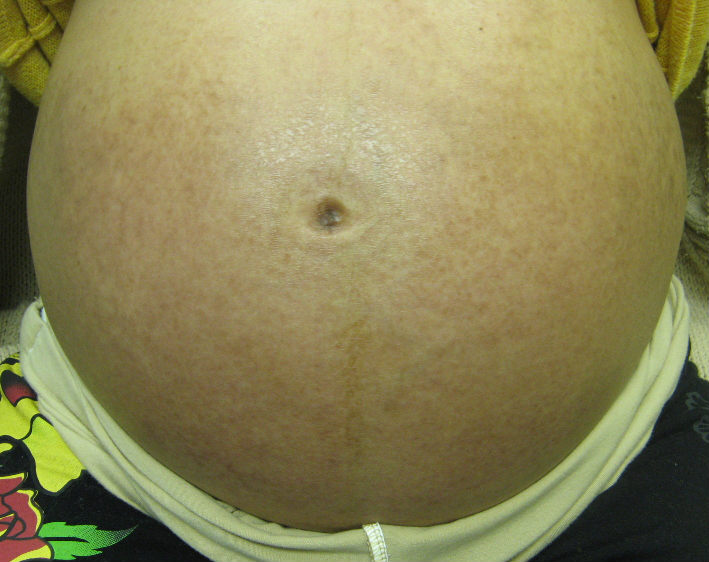
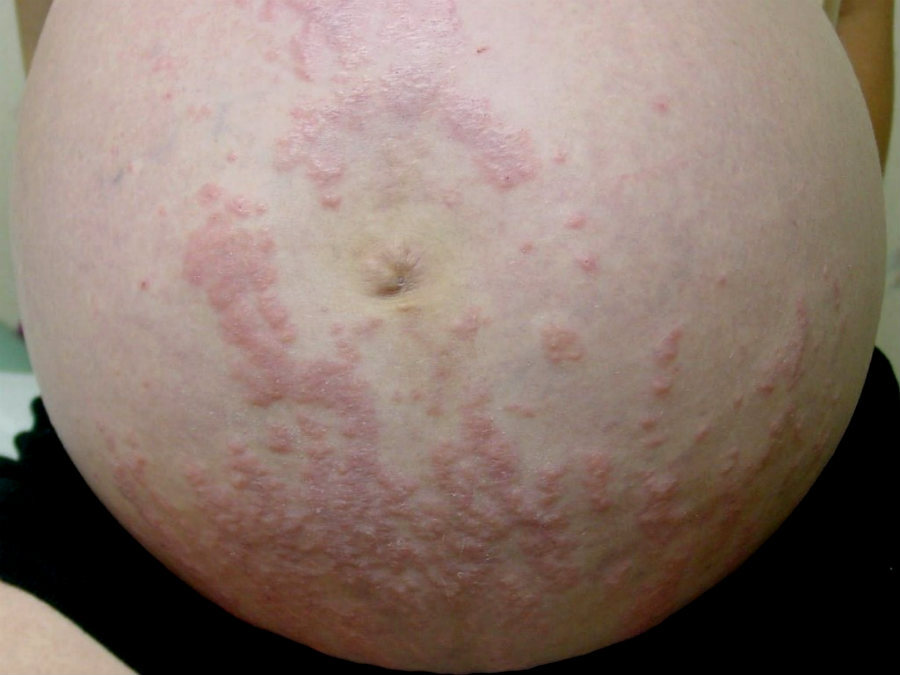
- Lesions arise in the stretch marks around the umbilicus. The umbilicus itself is frequently spared
- The rash spreads to involve the buttocks and thighs, and sometimes the arms and legs. Lesions on or above the breasts are rare
- Morphology
- Urticated papules and plaques
- Less commonly vesicles, target lesions and polycyclic erythematous patches
- Compared to pemphigoid gestationis
- Both have urticated papules
- Vesicles - 50% polymorphic eruption of pregnancy, 95% pemphigoid gestationis
- Peri-umbilical lesions - 10% polymorphic eruption of pregnancy, 90% pemphigoid gestationis
- Lesions in striae - 80% polymorphic eruption of pregnancy, 3% pemphigoid gestationis
Clinical Images
Please refer to notes on image rights at bottom of the page with regards to individual image
ownership.
Management
- Treatment is conservative with emollients, topical steroids, and antihistamines - the maximum recommended total dose of topical steroids in pregnancy is 300 g. Both loratadine and cetirizine are believed to be safe in pregnancy and while breast feeding
- Recurrence in subsequent pregnancies is very uncommon. If it does recur symptoms tend to be milder
Disclaimer - the author PCDS cannot accept responsibility for any misleading or incorrect statements, and the management of individual patients remains the direct responsibility of the individual doctor. We do however hope that visitors to this site can contact us regarding comments that are considered misleading or incorrect so that we can continue to improve the site.
Image Rights - The PCDS would like to thank Dermatoweb, DermQuest (Galderma), and others who have contributed images. All named individuals and organisations maintain copyright for the relevant images.