Psoriasis: hyperkeratotic hand / foot psoriasis

LAST UPDATED: May 28, 2022
Introduction

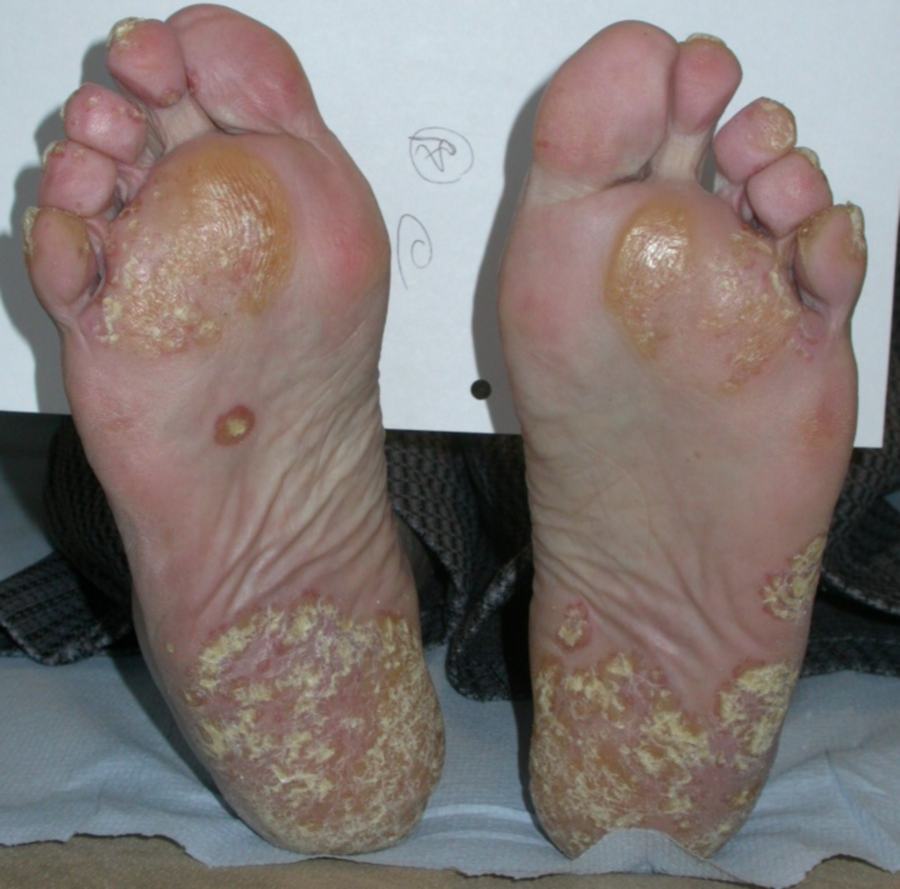
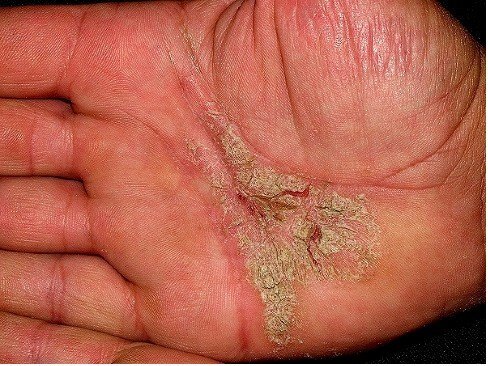
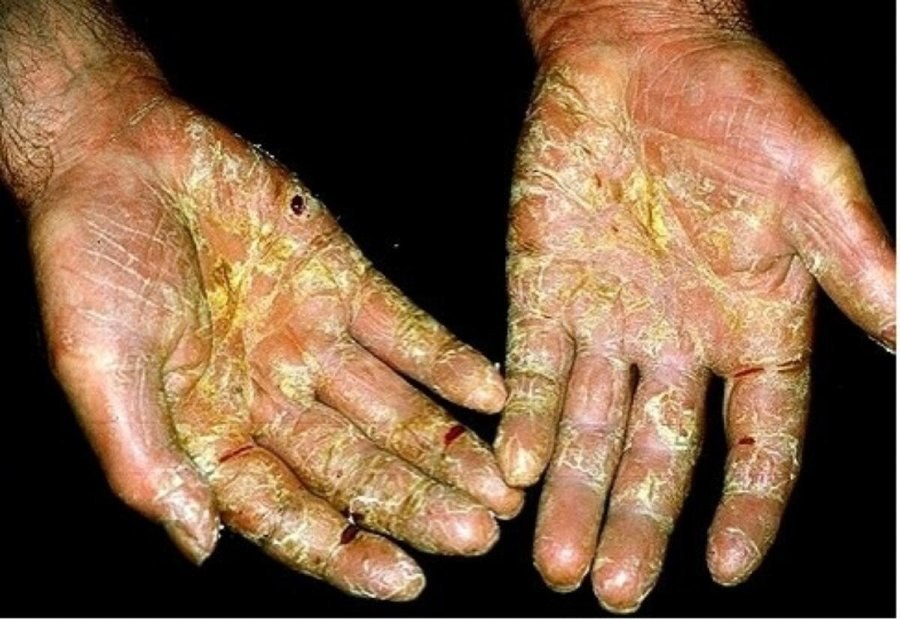
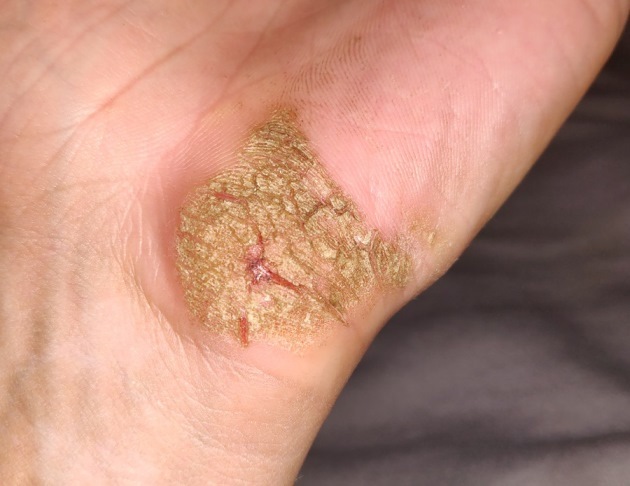
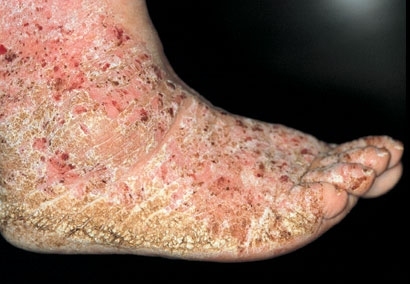
Hyperkeratotic hand/foot psoriasis refers to thick areas of scale affecting the palms and/or soles. 

This chapter is set out as follows:


Clinical findings

Lesions are usually well-demarcated, although, in the absence of other signs of psoriasis it can be difficult to differentiate from:


Clinical Images

Please refer to notes on image rights at bottom of the page with regards to individual image ownership.
Investigations

  • Scrapings can be sent for mycology if tinea is part of the differential 

Management

  • It is worth providing a patient information leaflet on hand dermatitis (this can be found on the top right of this page) - although this is not the primary diagnosis, many patients will have a degree of irritant contact dermatitis and anything that can be done to make the skin more comfortable is of value
  • Emollients containing urea 
  • Diprosalic ® ointment is effective for erythema with scale. It is most effective if used at night under occlusion eg cotton gloves for the hands and socks for the feet (see below)
  • Very thick scale on the feet can be treated by higher strengths of urea (eg Flexitol 25% ® Urea Heel Balm; various 20% urea products can be purchased online) should be applied to the skin under a damp sock with a dry sock on top, starting 3 nights a week. In Secondary Care 10-20% preparations of salicylic acid in yellow soft paraffin can be used, however, these are often made up as a 'special' and can be costly 
  • For patients failing to respond to treatment and/or where diagnostic uncertainty exists eg contact allergic dermatitis, patients should be referred to a specialist for consideration of further investigations such as patch tests and/or systemic treatments. One of the most effective systemic treatments are the retinoids (eg acitretin - Neotigason ®), which can lead to substantial improvements, although are teratogenic 

Disclaimer - the author PCDS cannot accept responsibility for any misleading or incorrect statements, and the management of individual patients remains the direct responsibility of the individual doctor. We do however hope that visitors to this site can contact us regarding comments that are considered misleading or incorrect so that we can continue to improve the site.

Image Rights - The PCDS would like to thank Dermatoweb, DermQuest (Galderma), and others who have contributed images. All named individuals and organisations maintain copyright for the relevant images.

Quick Links

The following pharmaceutical companies have had no involvement in the content of this website or in our conference programmes


Almirall
Galderma
Glenmark
Johnson & Johnson
La Roche-Posay
LEO Pharma
Pierre Fabre
Schuco