Psoriasis: psoriatic arthritis
LAST UPDATED: Jun 27, 2023
Introduction
Recent studies suggest that the prevalence of psoriatic arthritis in patients with psoriasis may be up to 30%. There is a strong link with nail disease.
This chapter is set out as follows:
Clinical findings
Psoriatic arthritis is divided in to five subtypes:
-
Distal interphalangeal
-
Symmetric polyarthritis (resembles RA)
-
Asymmetric oligoarthritis - large joint
-
Spondylitis
-
Arthritis mutilans - a severe destructive form affecting fingers and toes
Assessment of possible psoriatic arthropathy can be done in two ways:
-
The PEST score (Psoriasis Epidemiology Screening Tool)
-
The Classification Criteria for Psoriatic Arthritis (CASPAR) consists of:
-
Clinical evidence of inflammation in a joint, the spine, or entheses (inflammatory musculoskeletal disease may include pain associated with erythema, warmth, and swelling, as well as prominent morning and rest stiffness), plus at least three points from the following:
-
Current psoriasis (2 points)
-
A personal or family history of psoriasis (in the absence of current psoriasis) (1 point)
-
Dactylitis (swelling of digits) (1 point)
-
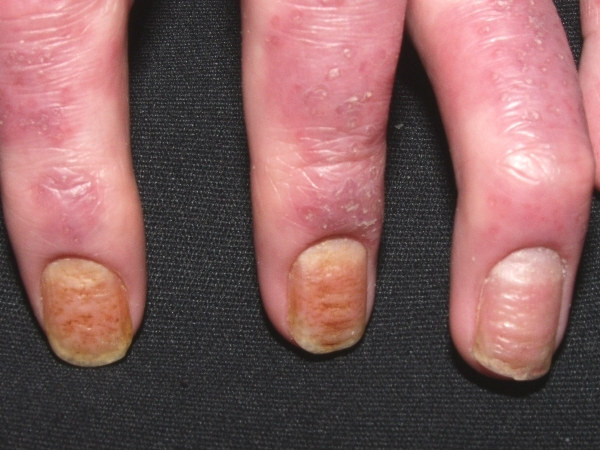
Nail dystrophy (pitting, onycholysis and hyperkeratosis of nails) (1 point)
-
Negative rheumatoid factor (1 point)
-
Radiographic evidence of new bone formation (1 point)
- Suspicion of psoriatic arthritis should mainly be based on clinical features, only 40% of cases have raised inflammatory markers. With regards to other causes of inflammatory arthritis, the anti-CCP blood test (anti-cyclic citrullinated peptide antibody) is much more specific than older tests for diagnosing rheumatoid arthritis
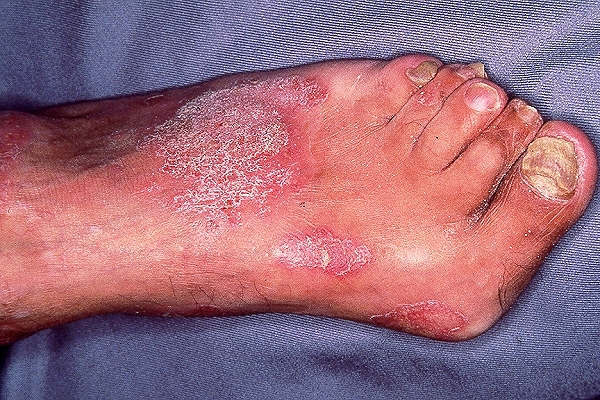
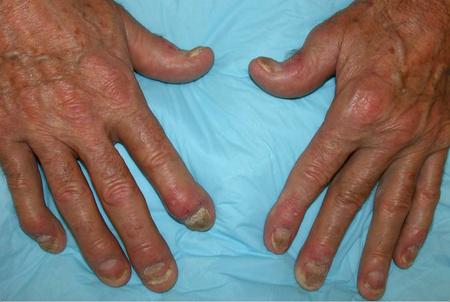
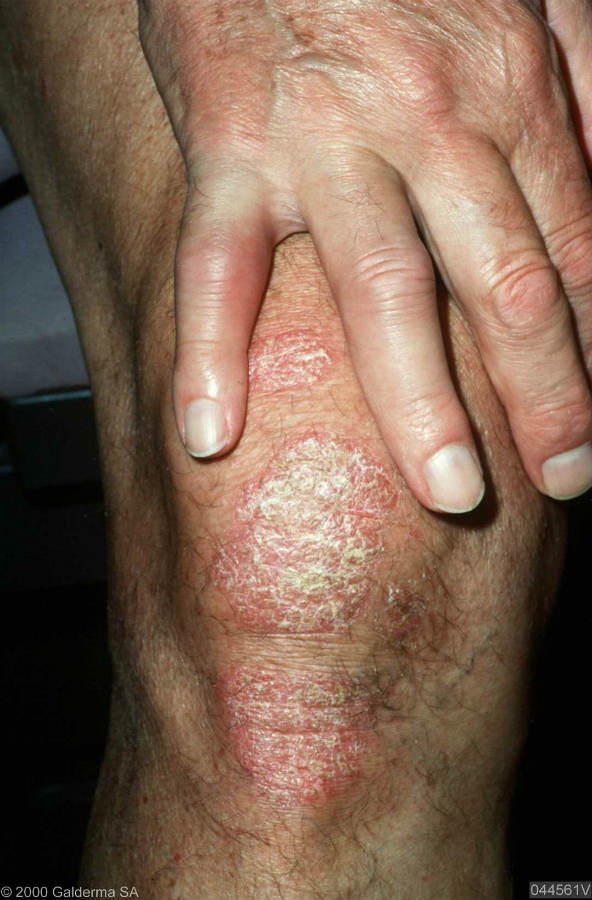
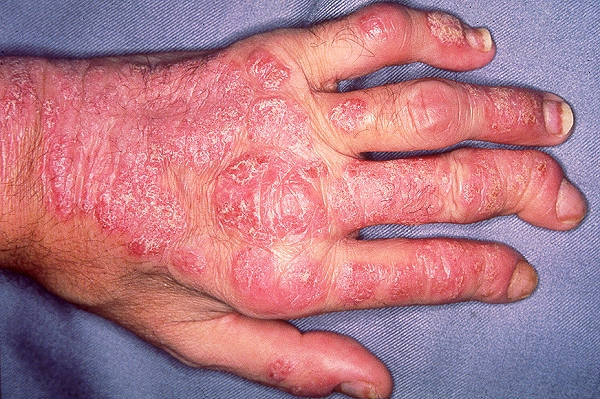
Clinical Images
Please refer to notes on image rights at bottom of the page with regards to individual image
ownership.
Management
-
All patients with psoriasis should be asked about joint symptoms
-
Patients with suspected psoriatic arthritis should be referred promptly to rheumatology - early treatment can help reduce the long-term complications of joint destruction
- Patients with psoriatic arthritis are also at an increased risk of CVD - it is important that healthcare professionals working with psoriasis patients target modifiable risk factors and have a lower threshold for investigating cardiovascular symptoms
Disclaimer - the author PCDS cannot accept responsibility for any misleading or incorrect statements, and the management of individual patients remains the direct responsibility of the individual doctor. We do however hope that visitors to this site can contact us regarding comments that are considered misleading or incorrect so that we can continue to improve the site.
Image Rights - The PCDS would like to thank Dermatoweb, DermQuest (Galderma), and others who have contributed images. All named individuals and organisations maintain copyright for the relevant images.