Pubic lice (syn. pediculosis pubis)

LAST UPDATED: Jul 29, 2021
Introduction

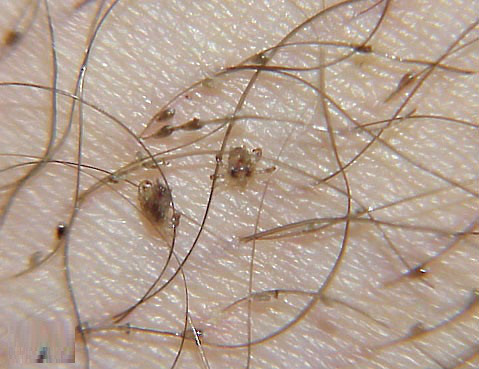
Pubic lice are caused by the parasitic insect Phthirus pubis. Phthirus pubis is 'crab'-shaped, grey-brown in colour, and about 2 mm in length. The female lays eggs (smaller than a pinhead) on the hair shaft, near to the body. The eggs hatch after about six to ten days. The empty nit eggshells are tightly attached to the hair. The female louse lives for one to three months. 

This chapter is set out as follows: 


Aetiology

  • Pubic lice are contracted by close contact and are easily transmitted sexually
  • Pubic lice have become much less common in developed countries since shaving of pubic hair has become popular

History

  • Itching, especially at night, is the most common presentation - symptoms take one to three weeks to develop after the first infestation 

Clinical findings

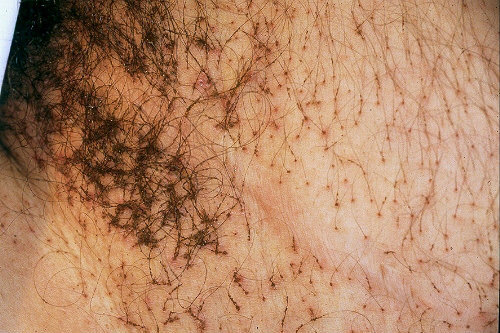
  • The diagnosis is based on finding adult lice or eggs. Pubic lice live on coarse hair, especially in the pubic and perianal areas:
    • The lice are 'crab'-shaped, grey-brown in colour, and about 2 mm in length - a fine-toothed comb may be useful for detection 
    • Eggs are smaller than a pinhead
  • Louse faeces are often visible as rust-coloured speckles on the skin, hair and underwear 
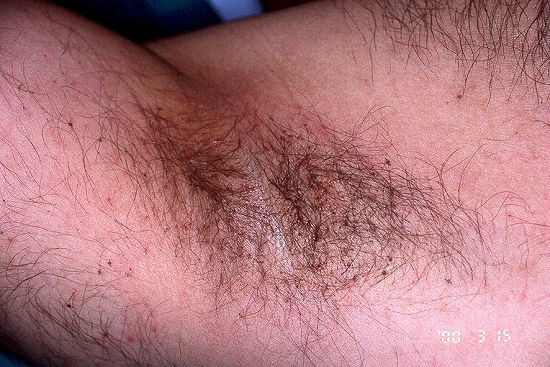
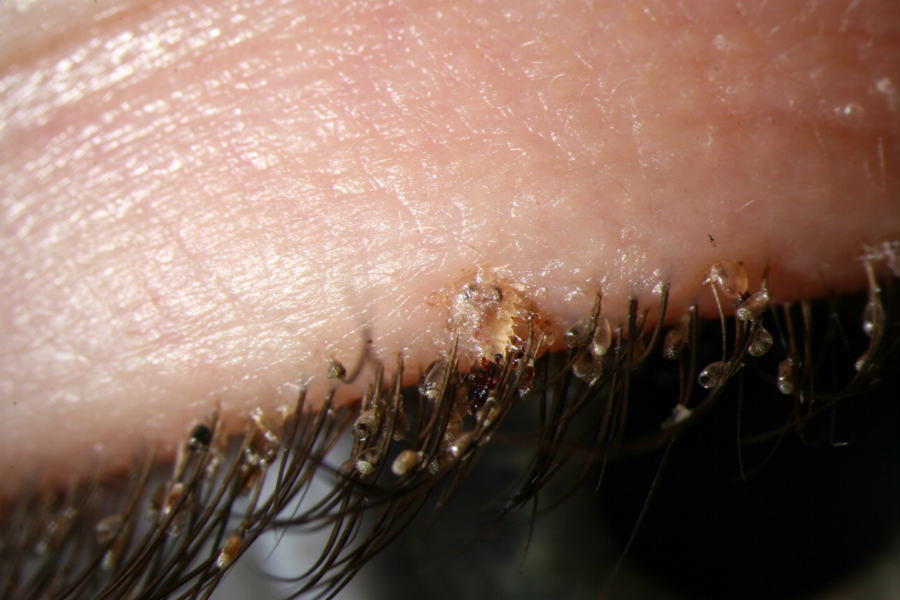
  • When pubic lice are discovered other hairy areas of the body should be examined, as these lice may colonise the eyebrows, eyelashes, beard, axillae, areolar hair and the scalp margins. In more severe cases, the hair on the trunk and limbs may also be affected 

Clinical Images

Please refer to notes on image rights at bottom of the page with regards to individual image ownership.

Management

  • Consider whether the pubic lice infestation has been acquired via sexual or non-sexual contact. If acquired via sexual contact, refer to a genitourinary medicine (GUM) clinic for treatment, screening for other sexually transmitted infections and contact tracing
  • Treat the individual with a topical insecticide: two applications of malathion 0.5% aqueous lotion or permethrin 5% cream, seven days apart. All surfaces of the body should be treated, including the scalp, neck and face (paying particular attention to the eyebrows and other facial hair). If pubic lice infestation is unresponsive to initial insecticide treatment, repeat the previous treatment with the correct technique (rather than switching to a different treatment). If insecticide resistance is suspected, switch to the alternative insecticide (malathion or permethrin)
  • Advise the individual to avoid close body contact until they and any current sexual partner have been treated. Any close contacts over the previous three months should be examined for pubic lice
  • For infestation of the eyelashes, treat the eyelashes with Vaseline ®, or an inert occlusive ophthalmic ointment (eg simple eye ointment BP), twice a day for at least three weeks. Alternatively, use a topical insecticide (a cream rinse or shampoo). An inert occlusive ophthalmic ointment should be used for people under the age of 18 years and for those who are pregnant or breast-feeding

Disclaimer - the author PCDS cannot accept responsibility for any misleading or incorrect statements, and the management of individual patients remains the direct responsibility of the individual doctor. We do however hope that visitors to this site can contact us regarding comments that are considered misleading or incorrect so that we can continue to improve the site.

Image Rights - The PCDS would like to thank Dermatoweb, DermQuest (Galderma), and others who have contributed images. All named individuals and organisations maintain copyright for the relevant images.

Quick Links

The following pharmaceutical companies have had no involvement in the content of this website or in our conference programmes


Almirall
Galderma
Glenmark
Johnson & Johnson
La Roche-Posay
LEO Pharma
Pierre Fabre
Schuco