Scleredema

LAST UPDATED: Aug 01, 2021
Introduction

Scleredema is a form of cutaneous mucinosis characterised by woody induration and hardening of the skin that arise mainly as a result of infection but also in diabetes, and which spontaneously clears in months or years. The term scleredema is a misnomer because neither sclerosis nor oedema is found on microscopic examination. 

It is important to note that scleredema is a separate entity to scleroderma

This chapter is set out as follows:


Clinical findings

Acute onset

  • Mainly affects middle-aged women and children
  • An acute onset with a preceding infection is the most common presentation, although some cases arise spontaneously. Streptococcus pyogenes appears to be the most common pathogen, arising mainly as an URTI, but also as cellulitis. Other infections include measles and mumps
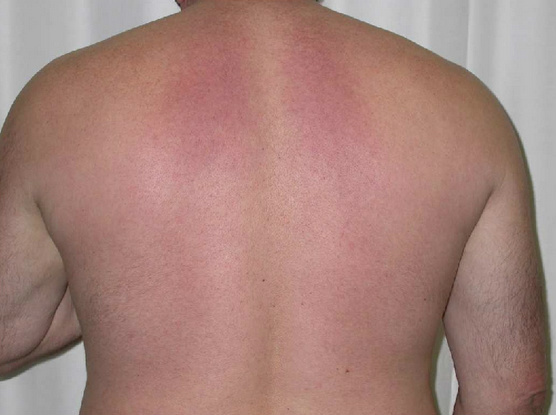
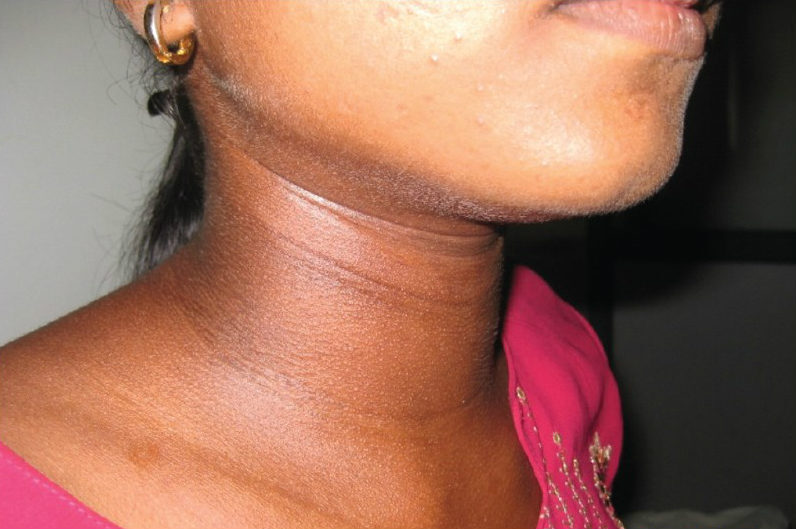
  • Hardening of the skin of the face and neck develops quickly and spreads to the upper trunk and arms in a symmetrical fashion. Hyperpigmentation is a common feature
  • There can be loss of facial expression and difficulties in swallowing 
  • This type of scleredema usually improves spontaneously over six months to two years

Insidious onset

  • ​A more insidious onset is associated with diabetes (sometimes referred to as scleredema adultorum of Buschke, or, scleredema diabeticorum), and sometimes a paraproteinaemia, which can be secondary to multiple myeloma. It can also be associated with other connective tissue disorders such as Sjögren's syndrome and rheumatoid arthritis 
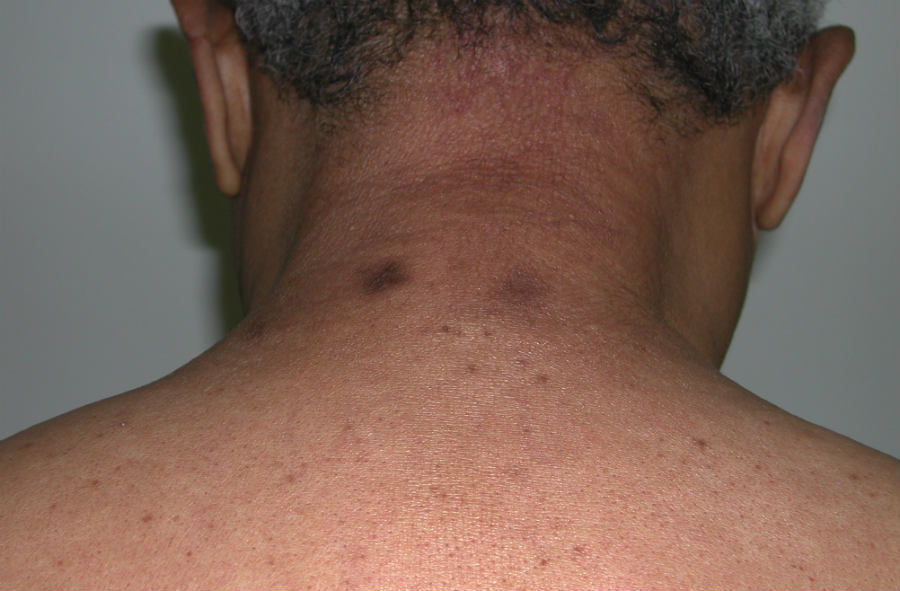
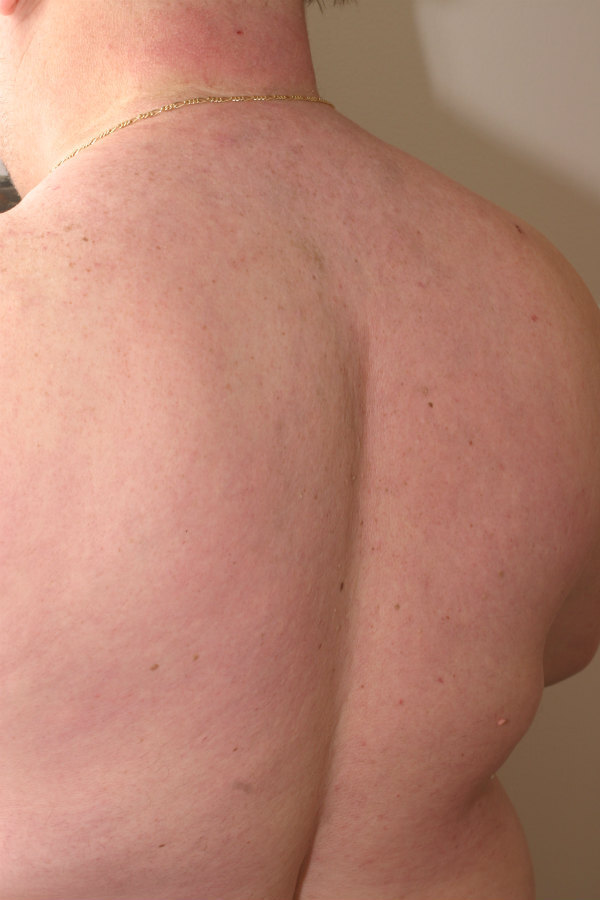
  • Scleredema secondary to diabetes occurs particularly in adult men, and is very persistent. The main sites affected are the skin of the neck and upper back that slowly thicken over months or years

Clinical Images

Please refer to notes on image rights at bottom of the page with regards to individual image ownership.

Investigations

  • In addition to routine bloods, including for diabetes mellitus, immunoglobulin and plasma electrophoresis levels need to be assessed as scleredema can occasionally be associated with paraproteinaemia and multiple myeloma, as well as Waldenstom’s macroglobulinaemia

Management

  • Scleredema may disappear after months to a few years, but some cases, such as those secondary to diabetes mellitus may persist for many years
  • No effective treatment is known although many have been tried

Disclaimer - the author PCDS cannot accept responsibility for any misleading or incorrect statements, and the management of individual patients remains the direct responsibility of the individual doctor. We do however hope that visitors to this site can contact us regarding comments that are considered misleading or incorrect so that we can continue to improve the site.

Image Rights - The PCDS would like to thank Dermatoweb, DermQuest (Galderma), and others who have contributed images. All named individuals and organisations maintain copyright for the relevant images.

Quick Links

The following pharmaceutical companies have had no involvement in the content of this website or in our conference programmes


Almirall
Galderma
Glenmark
Johnson & Johnson
La Roche-Posay
LEO Pharma
Pierre Fabre
Schuco