Urticaria: chronic spontaneous urticaria (chronic ordinary urticaria; chronic idiopathic urticaria)
LAST UPDATED: Dec 21, 2025
Acknowledgements: This chapter has been updated with the kind support of Dr Kash Bhatti
Introduction
Chronic urticaria is defined by symptoms lasting for more than six weeks. 95% of chronic urticaria is spontaneous (CSU; previously known as chronic ordinary and chronic idiopathic urticaria), i.e. no obvious cause or trigger. The remaining will be caused by inducible urticaria (chronic inducible urticaria; ‘CIndU’); refer to the related chapter. Many suffering with CSU also have inducible elements to their urticaria.
This chapter is set out as follows:
Aetiology
- CSU is a mast cell degranulation disorder, of which the principal mediator for the physical signs and symptoms is histamine. Histamine released from mast cells causes vasodilatation and increased vascular permeability, resulting in localised swelling causing wheals and angioedema, and can activate neurons in the skin leading to itch
- Mast cell degranulation is an immune-mediated phenomenon. This can be either IgE mediated (IgE to auto-antigens; autoallergy or type 1 CSU) or non-IgE mediated (autoimmune, or type 2b CSU). Many patients have can have both pathways converging to cause CSU; clinically, reliable distinction between the two pathways is not possible and requires specialist testing usually only performed for research purposes
- CSU is not an allergy and there is no obvious trigger or cause. However, symptoms can be exacerbated by a number of factors such as heat, stress, alcohol, and medications such as aspirin and other NSAID. These can potentiate the inflammatory pathways involved in histamine release and hence exacerbate urticaria in someone susceptible
History
- A slight female predominance. Can affect any age although 50% present between the ages of 20 and 40. 25% of patients have an atopic background
- Symptoms
- Wheals, similar to acute urticarias, present and last for minutes to hours, generally resolving within 24 hours
- By definition, this continues on-and-off for more than 6 weeks, daily or near-daily
- Wheals present randomly over the body, and seem to move from area to another each time they come and go (“here today, gone tomorrow”)
- CSU can present with or without angioedema; chronic spontaneous angioedema can present with or without wheals
- Angioedema in CSU is never life-threatening (i.e. is not anaphylaxis)
- Natural history
- On the average, most people will have CSU for 1 to 4 years
- Remission rates are ~17% at 1 year, 50% at 5 years, and 73% at 20 years
- Relapse occurs in approximately a third of patients
Clinical findings
Distribution
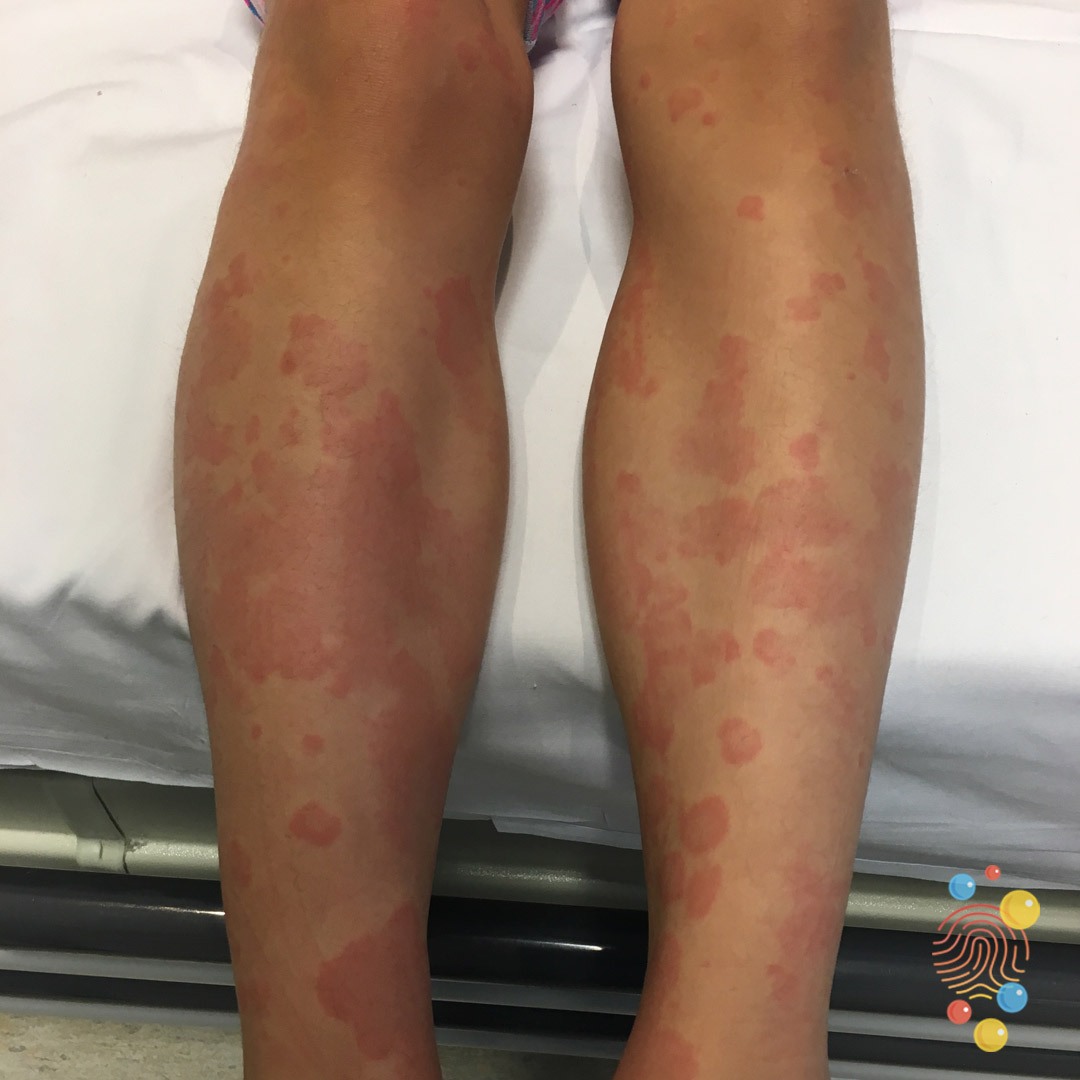
- Can affect any part of the body
Morphology
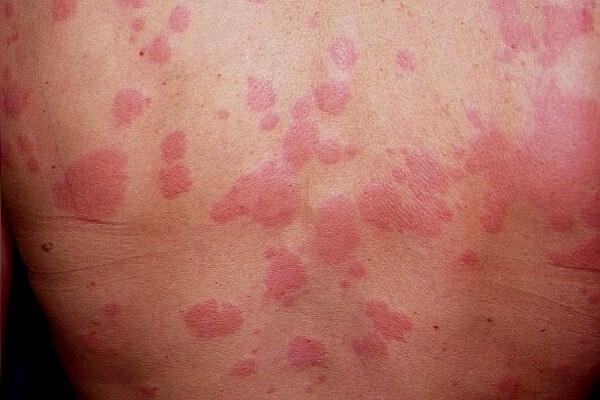
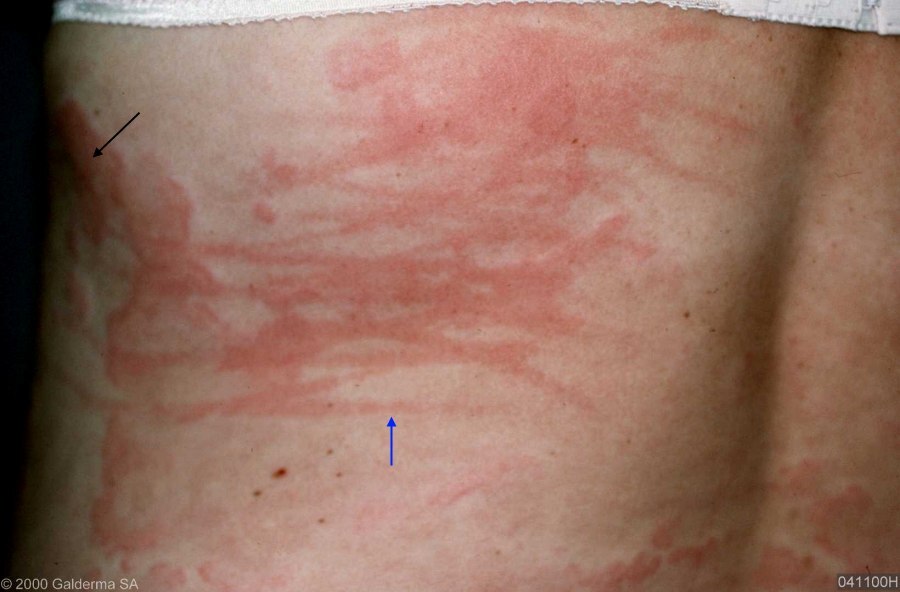
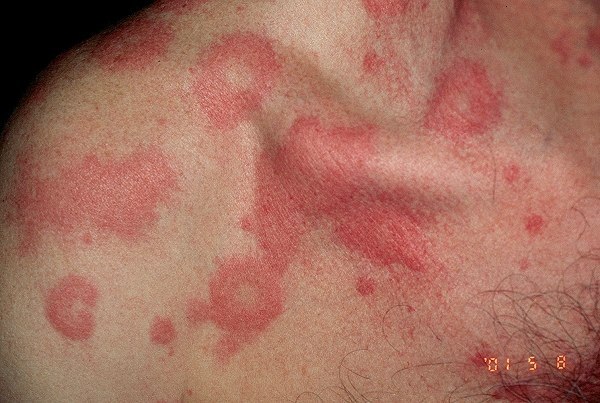
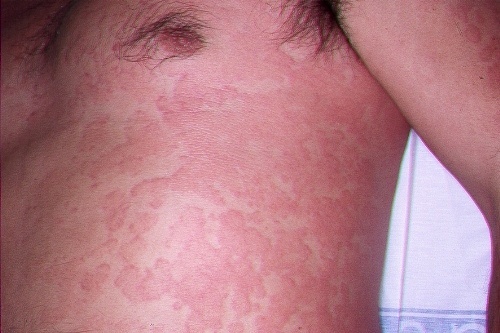
- Lesions vary in size. Some can be very large
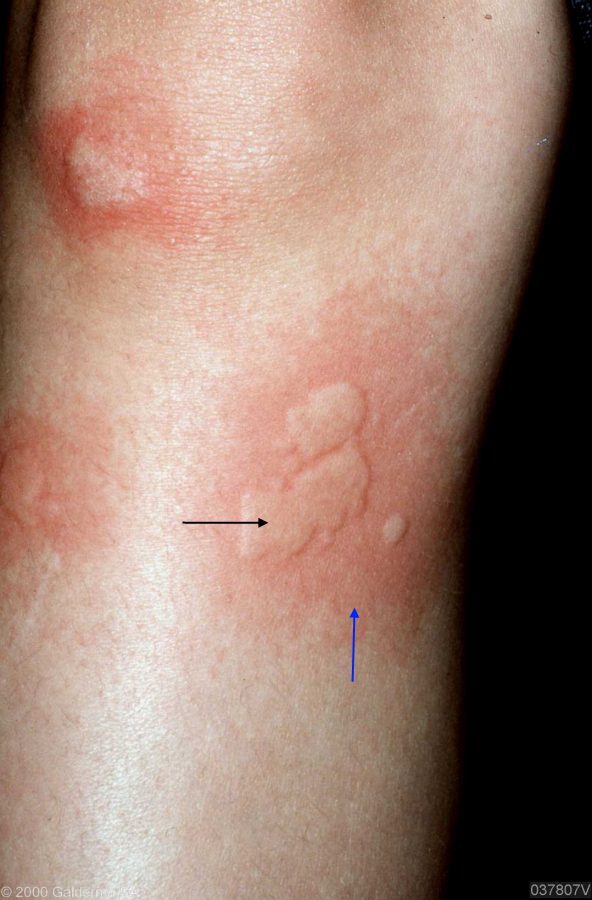
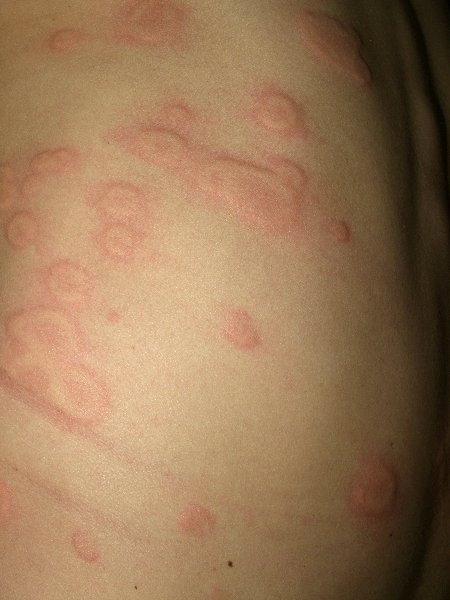
- Wheal and flare - an irregular, elevated, blanched wheal surrounded by an erythematous flare
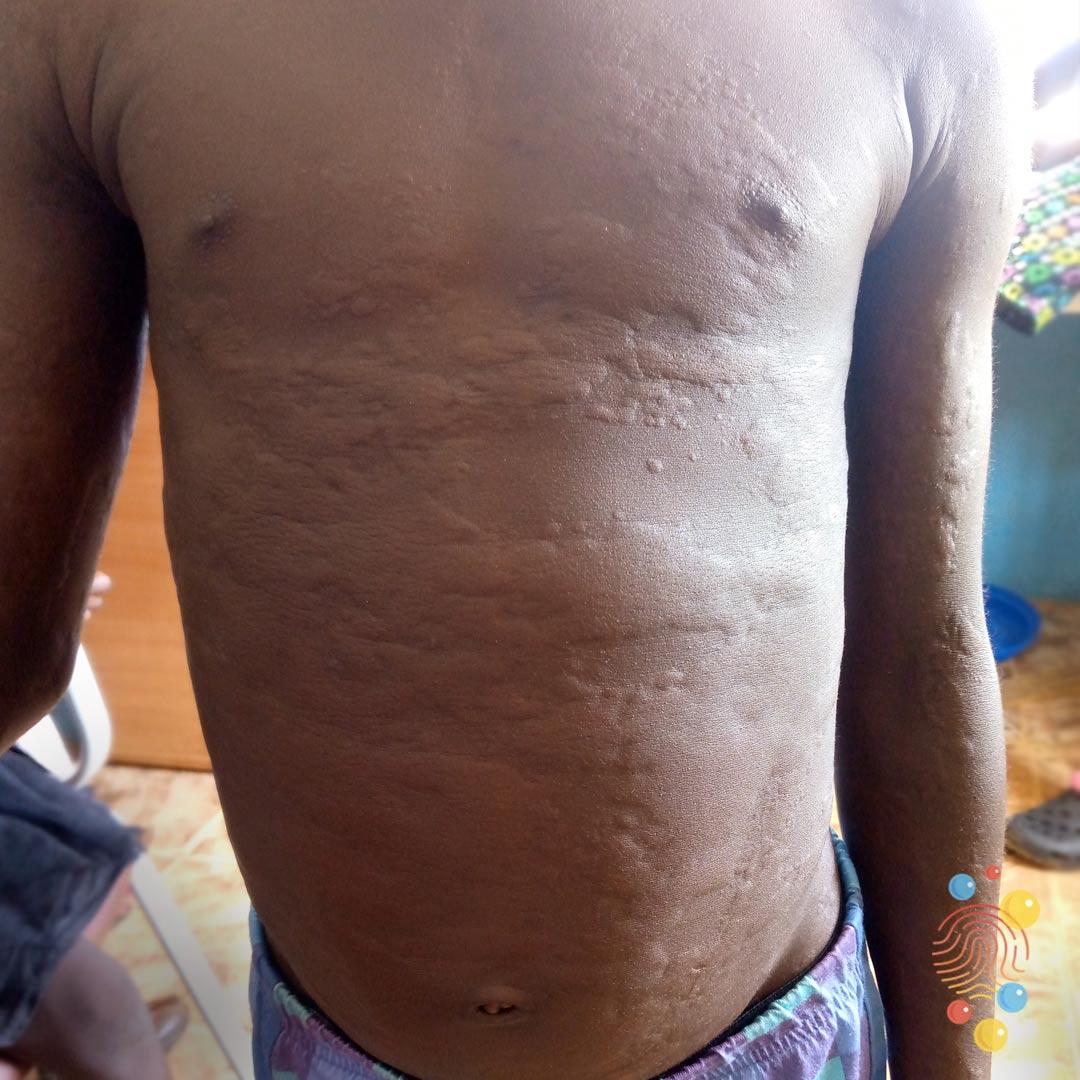
- In persons with skin of colour, wheals may be violaceous, hyperpigmented, or have the same colour as the background skin
- On occasion, some wheals can be surrounded by an ‘avascular’ halo (pale halo)
- Lesions lack scale
- The central aspects resolve to leave annular lesions
- Lesions on lower legs, or lesions excessively scratched, can occasionally bruise and be confused for urticarial vasculitis or panniculitis
Clinical Images
Please refer to notes on image rights at bottom of the page with regards to individual image
ownership.
Investigations
- Blood tests are not routinely required nor usually helpful
- CSU is a clinical diagnosis; blood tests do not help with diagnosis
- Some specialists will check a FBC and ferritin as small case series have shown that CSU may be exacerbated by iron-deficiency anaemia; correcting this may improve CSU symptoms. However, these findings have not been corroborated in larger trials and there is no mechanistic link between iron deficiency, low ferritin, and CSU
- There may be an association between thyroid dysfunction and CSU, but a causal link has not been found
- The presence of thyroid antibodies and total IgE levels may help, in secondary care settings, with understanding and planning treatments as type 2b CSU may be more stubborn to standard treatments
- Other tests
- In general, patients will not benefit from RAST or skin prick tests
- There is no place for patch testing
Management
Step 1: general measures
- Refer to the top right of the page for a patient information leaflet available through a QR code or printable PDF
- Lifestyle - keep the skin cool, reduce stress
- Avoid any obvious physical / other triggers
- Medications
- It is important to check for both prescribed and over the counter medications
- NSAIDs can aggravate urticaria via COX-1 inhibition - consider switching to a COX-2 inhibitor (uncommonly, COX-2 inhibition can trigger urticaria flares in some susceptible individuals). Aspirin is a COX-1 inhibitor; it will trigger urticaria but is dose-dependent and low-dose aspirin (<100mg daily) may be less likely to trigger CSU than standard-dose, but may need a trial-and-error approach to ascertain
- ACEI can cause angioedema in the absence of urticaria
- Opiates aggravate urticaria via direct mast cell degranulation
- Diet - although chronic spontaneous urticaria is not an allergic condition, in some patients pseudoallergens may play a role by provoking the inflammatory pathways that can set-off CSU. If a patient has a strong belief that diet is playing a role provide them with a patient information leaflet on pseudoallergens
Step 2: second-generation H1-antihistamines
- Start with a standard dose of one a day. The aim is to reduce frequency and intensity of flares, and improve symptoms
- Symptoms can be tracked via scoring systems, such as the UCT7 (Urticaria Control Test 7-day score) and DLQI (Dermatology life quality index). A freely available GDPR-compliant app (CRUSE Control) can be downloaded for IOS and Android phones to track symptoms
- If the response is inadequate within 2-4 weeks, increase the dose to one tablet BD. If in 2-4 weeks, the response remains unsatisfactory, then increase the dose as per NICE, BAD and EAACI/GA2LEN guidelines to up to 4 times the usual dose of the chosen antihistamine (eg fexofenadine 180mg QDS). Some individuals will prefer, for concordance purposes to take two tablets twice a day (eg fexofenadine 360mg BD) though steady-state antihistamine levels and effects are thought to occur more rapidly when taken QDS. The clinical difference between either approach is not clear; therefore, work with your patient to see what suits them
- At higher doses it is important to consider co-existent morbidities such that fexofenadine (Telfast ®) 180 mg and cetirizine are excreted by the kidneys, and loratadine and desloratadine (Neoclarityn ®) are metabolised by the liver
- An alternative approach, particularly if symptoms are severe at the outset, is starting second-generation antihistamines at 4-times daily dosing, and when control is achieved, in 2-4 weeks, then wean down the antihistamine dose to the lowest dose that maintains control
- Treatment should be continued at the lowest effective dose until there is no further activity for 12 weeks, but restarted if urticaria recurs. In general it is safe to take second-generation antihistamines for as long as is needed
- In patients not responding adequately to the maximum dose of antihistamines, consider prescribing a leukotriene receptor antagonist (LTRA; such as montelukast or zafirlukast). If there is no adequate response within four weeks then discontinue. Warn risks as per the BNF/MHRA. Some areas require a trial of a LTRA before referral
- There is no role for 1st generation antihistamines or H2 receptor antagonists in the management of CSU
Step 3: referral
- Patients not responding adequately to the maximum dose of antihistamines should be referred to Secondary Care, at the same time check the total IgE level, and document a UAS7 score in the referral letter
- Second-line treatment:
- The most used treatment is omalizumab, an anti-IgE monoclonal antibody
- Omalizumab is delivered via monthly s/c injections of 300 mg for at least 6 months. Patients are usually advised to continue antihistamines during treatment. In most centres, this requires patients to attend the hospital for supervised administration and then move on to home deliveries to self-inject
- Omalizumab prescribing is based upon NICE guidance and as such, a qualifying level of severity is required by some centres; others take a broader view of the patient and disease characteristics and use objective measures such as UCT7 and DLQI to monitor treatment response
- Patients with total IgE <40 are likely to have a slower (benefits may take up to 12 months to be seen) and/or inadequate response
- For patients with inadequate response or those thought to be clinically slow-responders (type 2b CSU; low total IgE) omalizumab therapy should be personalised. This may include higher doses or frequency of administration, until disease is stabilised, then dosing weaned down to standard management
- Third-line treatment:
- Options medical options include dapsone, ciclosporin, azathioprine, methotrexate, mycophenolate mofetil, doxepin, intravenous immunoglobulins, sulfasalazine, and tacrolimus. Narrow-band UVB phototherapy is another option. Treatments available depend on whether the patient is seen by Dermatology or Immunology/Allergy
- Patients responding poorly to treatment, especially if associated with systemic symptoms such as fever and arthralgia, should be investigated for uncommon/rare conditions associated with urticaria such as vasculitic urticaria and the acquired autoinflammatory conditions
Managing acute symptoms
- Patients who develop a severe flare or have significant psychosocial disturbance despite high-dose antihistamines may benefit from a short course of prednisolone:
- For a short-lived severe episode of urticaria or angioedema - 0.5 mg/kg per day for 3-5 days
- In general, needing more than one course of prednisolone is a marker of significant disease and the patient should be referred to secondary care
- For a more generalised episode of recalcitrant urticaria - 30 mg OD for 4 days, 20 mg OD for 3 days, and then 10 mg OD for 3 days (a smaller dose may be needed in children, eg 0.5mg/kg initial dose)
- Patients with a history of life-threatening breathing difficulties / cardiovascular compromise need to be given Epipens and provided with the relevant advice how to use them. This is not CSU and they should be managed for anaphylaxis/anaphylactoid reactions
Pregnancy and young children
- Pregnancy and breast feeding - there is insufficient data. Use in pregnancy must balance risks and benefits and be individualized to the pregnant individual:
- There has never been, thus far, a reported adverse effect in pregnancy due to the use of modern second-generation antihistamines
- Consider loratadine or cetirizine as small studies have not shown harm; dosages can be up-titrated up to 4 times maximum daily dose but with caution as safety studies have not been performed. The lowest effective daily dose should be used to strike a balance between symptom control and potential risks
- Second-generation antihistamines are excreted in breast milk and may cause drowsiness in the breast-fed child
- Children - start with a standard dose of antihistamine. If inadequate response the dose can be increased gradually. Licensed drugs in children include:
- Chlorpheniramine from the age of 1 month (choose other options over the age of 1 year). Use of these is not supported in international guidelines (EAACI/GA2LEN 2022) and most specialists will not use chlorpheniramine and will instead use weight-adjusted cetirizine (0.25mg/kg bd)
- Desloratadine from the age of 1 year
- Loratadine from the age of 2 years
- Fexofenadine from the age of 12 years
Disclaimer - the author PCDS cannot accept responsibility for any misleading or incorrect statements, and the management of individual patients remains the direct responsibility of the individual doctor. We do however hope that visitors to this site can contact us regarding comments that are considered misleading or incorrect so that we can continue to improve the site.
Image Rights - The PCDS would like to thank Dermatoweb, DermQuest (Galderma), and others who have contributed images. All named individuals and organisations maintain copyright for the relevant images.