Acne vulgaris

LAST UPDATED: Jan 31, 2025

Patient Information Leaflet
Link: Acne vulgaris

https://www.pcds.org.uk/patient-info-leaflets/acne-vulgaris

What is acne vulgaris?

Acne is a common skin condition that affects most people at some point. It usually starts during puberty but can develop for the first time in people over 20 years old and beyond (3% of adults have acne over the age of 35). Occasionally it can affect young children.

Acne most commonly occurs on the face, back and chest, ranging from a few spots to a more severe problem causing scarring and/or hyperpigmentation.

What does acne look like?

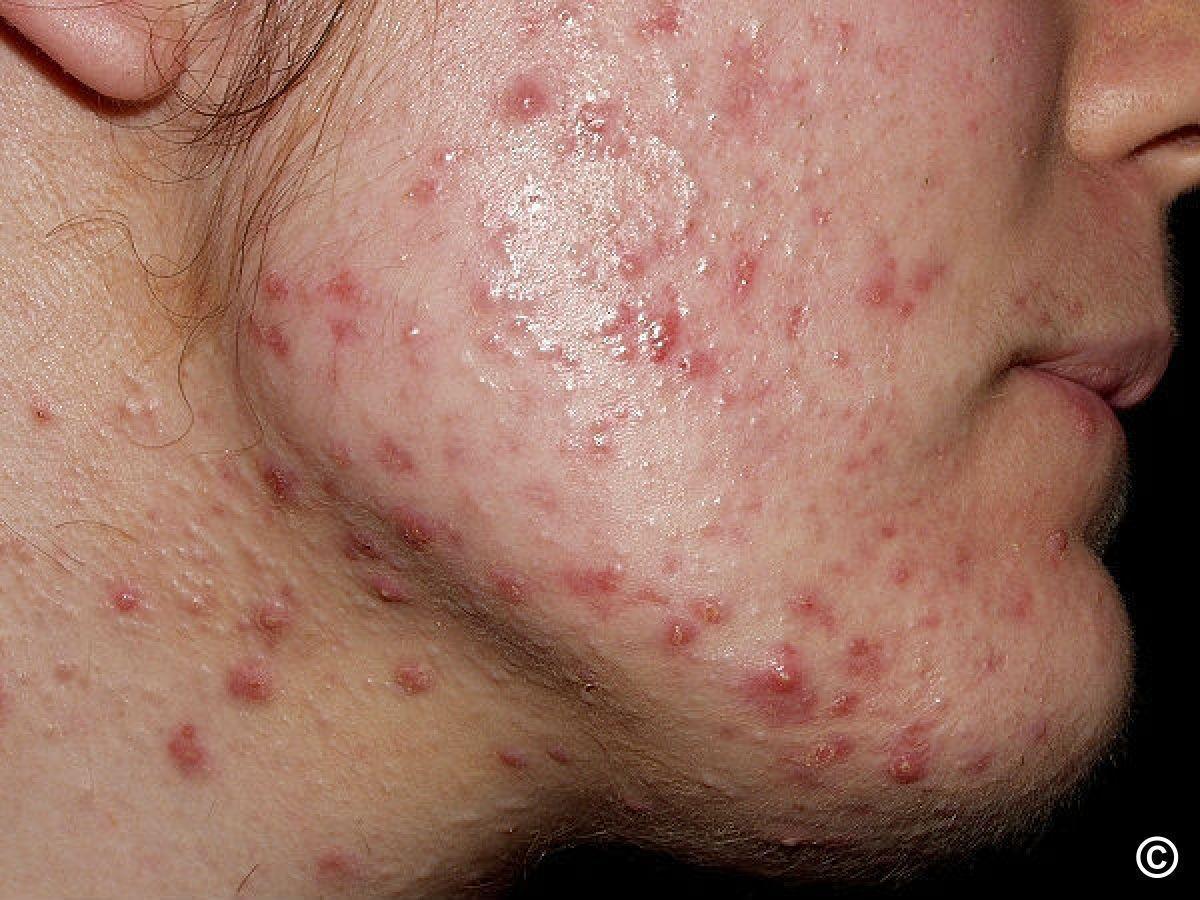
Acne causes oily skin, blackheads and whiteheads (comedones), pus-filled spots (pustules), red bumps (papules), larger deeper bumps (nodules) and discolouration that can be red or hyperpigmented (darker than your normal skin colour). Severe acne can also cause scars, which can be firm and raised (hypertrophic or keloid) or indented (pitted or atrophic).

What causes acne?

The natural oil in our skin (sebum), arises in sebaceous glands. The sebum passes into hair follicles and flows out onto the skin surface.

In acne, the sebaceous glands are oversensitive, even with normal hormone levels, causing too much sebum to be produced along with thickening of the inner lining of the hair follicle leading to a plugging effect. If the plugged follicle fully blocks, it bulges outwards, creating a whitehead (closed comedone). If the plugged follicle remains open it creates a blackhead (open comedone).

The changes described above alter the activity of a usually harmless skin bacterium called Cutibacterium acnes, which becomes more aggressive causing inflammation and pus. Despite of this, acne is NOT contagious (i.e. it cannot be passed onto other people).

What else can contribute to acne?

  • If your parents or siblings had moderate-severe acne, you are more likely to have troublesome acne
  • Hormones most people with acne have normal hormone levels, however, hormones can play a role in some people:
    • Menstrual periods - some women have an acne flare just before their period 
    • Pregnancy - many women suffer with acne, usually during the first 3 months
    • Some contraceptives - the progestogen-only pill or contraceptive implant may make acne worse
    • Polycystic ovarian syndrome (PCOS) - a common condition in women that can cause irregular periods, weight gain, excess hair growth in unusual sites (hirsutism) and/or hair thinning (alopecia). Consult your GP if you have such symptoms as further tests may be needed
    • Misuse of certain hormones e.g. anabolic steroids
  • Other medications e.g. corticosteroids, lithium and certain drugs used to treat epilepsy - ask your health professional if you think you may be on one of these medications and are suffering with acne
  • Diet - food with a high glycaemic index (e.g. sugary foods, white bread, white rice, potatoes) have been shown to contribute to acne in some people
  • Certain occlusive cosmetic products e.g. oily creams and pomade hair products, which have a base of mineral oil or petroleum jelly
  • Smoking can contribute to acne in older people

Things you can do to help yourself

  • Wash the affected area with a mild soap or cleanser and lukewarm water, not more than twice a day
  • While pus-filled spots (pustules) can be gently squeezed to express the pus, other spots must not be squeezed or scratched as this may damage (scar) the skin
  • Avoid oil-based make-up, skincare and suncare products, instead use water-based, non-comedogenic products, as they’re less likely to block the pores in your skin. Remove all make-up before going to bed
  • Eat more foods with a lower glycaemic index (fruit and vegetables, brown bread, brown rice, brown pasta)
  • Sunbathing, sunbeds and sunlamps should not be used to manage acne for any length of time - they will not cure your acne, but they will age your skin (causing more wrinkles) and increase your risk of skin cancer
  • Stopping smoking may help your acne, and brings many other health benefits
  • See your pharmacist and ask about treatments that can be purchased without a prescription. If you pay for your prescription, ask about a pre-payment certificate

Make an appointment at your GP surgery

If you need help with your acne there are many treatments that can be prescribed. Treatment options provided by health professionals include topical treatments (applied directly to the skin), oral antibiotics (taken by mouth) and oral contraceptive pills:

  • Topical treatments should always be part of your treatment plan as they help unblock the plugged pores. They can cause significant dryness and irritation and should be used initially by applying to the skin and washing off after 30 minutes once a day. Over the course of a few weeks increase how long the treatment is left on - some people are only able to manage 1-2 hours, whereas others can apply before bed and wash off in the morning. If the skin is dry, you can use an oil-free moisturiser through the day. If you are using any product containing benzoyl peroxide, note that it can bleach pillowcases and clothing (but not the skin)
  • Oral antibiotics - are used for 3-6 months at a time and must always be combined with a topical treatment that does NOT contain an antibiotic. Some antibiotics should not be taken at the same time as food or can make your skin more sensitive to the sun - read instructions carefully. You must let your doctor know if you are planning a pregnancy as some antibiotics cannot be taken if you are pregnant. There is no current evidence to suggest that long courses of antibiotics used in acne are harmful, however, they will reduce the number of normal bacteria in your gut, especially in the first few weeks of treatment. You may wish to consider taking Probiotic products; live bacteria and yeasts that are added to yoghurts or other food products; whilst there is no conclusive evidence yet to show benefit, these may help restore the number of healthy bacteria
  • Hormonal treatments - some contraceptives are more ‘acne friendly’ than others, discuss this with a health professional. Occasionally other hormone blocking treatments are used

Follow this link for information on specific treatments

Your mental health

Acne often has a significant psychological impact and may affect many areas of daily life including work and personal relationships. If your acne is not improving with treatment and is having a significant impact on your mental health, then you should ask a health professional to be referred for further treatment. If you ever feel very depressed or suicidal about your skin then you must ask for urgent help - speak to family members, phone your GP or the Samaritans (116 123 from any phone) and remember there is ALWAYS HOPE; MUCH CAN BE DONE TO HELP YOU AND YOUR SKIN.

Referral to a specialist

The following groups of people may need to be referred to a specialist, who will be either a Dermatologist or a GPwER/GPwSI in Dermatology (a GP who has been trained in relevant areas of dermatology):

  • If the diagnosis is unclear
  • Severe acne e.g. scarring acne - such patients should be started on treatment by their GP and referred urgently
  • Long-term acne not responding adequately to at least two different oral antibiotic tablets in combination with topical treatments (N.B. acne often recurs once treatment is stopped - it is safe to repeat treatment courses without the need for referral, so long as the acne continues to improve)
  • Active acne causing marked hyperpigmentation (darkening of skin)
  • Moderate-severe psychological distress associated with acne

What will happen when you are referred?

The appointment is most likely to be face-to-face (the person attends the clinic), but occasionally may be a video call (teledermatology).

If you have active acne, you will be referred for consideration of a drug called isotretinoin. Isotretinoin is an excellent treatment for moderate-severe acne. In some patients only one course is needed, in others the acne may come back in future requiring a further course of treatment. One of the reasons why only a specialist can prescribe isotretinoin is that it has been associated with some serious side effects, although it must be remembered that these are extremely uncommon. Isotretinoin is also teratogenic (it is damaging to an unborn child) and must not be used in pregnancy; it does not affect your ability to have children in the future. If you are referred for consideration of isotretinoin:

  • It is important that you understand all the risks and benefits of isotretinoin; for more information refer to the Patient Information Leaflets section on the homepage of www.bad.org.uk
  • Your GP will organise bloods tests prior to your referral, including a check of your liver function and cholesterol/lipid levels, which can sometimes be affected by isotretinoin
  • Most female fertile patients need to be taking a suitable contraceptive agent. There are some exceptions where this is not the case, which your GP will state on the referral letter

Scarring and hyperpigmentation

Most patients will not end up with permanent scarring. For those that do there is no topical treatment or oral medication that can effectively treat scarring. Once your acne treatment has finished there may be some natural improvement in the appearance of your skin for 6-12 months afterwards. If you are still unhappy about the appearance of your skin after this time, ask for a referral to a dermatologist as some patients may benefit from physical treatments such as laser or steroid injections, depending on the type of scarring. Unfortunately, treatments such as laser are generally not available on the NHS.

Skin camouflage may help disguise changes in the pigmentation of the skin - ask your GP to refer you to a camouflage clinic if there is one in your local hospital, otherwise contact:

Helping with other skin conditions

If you, a family member, or friend have an undiagnosed skin condition; or you want to learn more about how to treat skin conditions, please view our short video on how to get the best from this website.

    Disclaimer - the author PCDS cannot accept responsibility for any misleading or incorrect statements, and the management of individual patients remains the direct responsibility of the individual doctor. We do however hope that visitors to this site can contact us regarding comments that are considered misleading or incorrect so that we can continue to improve the site.

    Image Rights - The PCDS would like to thank Dermatoweb, DermQuest (Galderma), and others who have contributed images. All named individuals and organisations maintain copyright for the relevant images.

    Download the Patient Information Leaflet PDF

    Download

    The following pharmaceutical companies have had no involvement in the content of this website or in our conference programmes

    Almirall
    Galderma
    Glenmark
    Johnson & Johnson
    La Roche-Posay
    LEO Pharma
    Pierre Fabre
    Schuco