Actinic (solar) keratosis

LAST UPDATED: Jan 31, 2025

Patient Information Leaflet
Link: Actinic (solar) keratosis

https://www.pcds.org.uk/patient-info-leaflets/actinic-solar-keratosis

What are actinic keratoses?

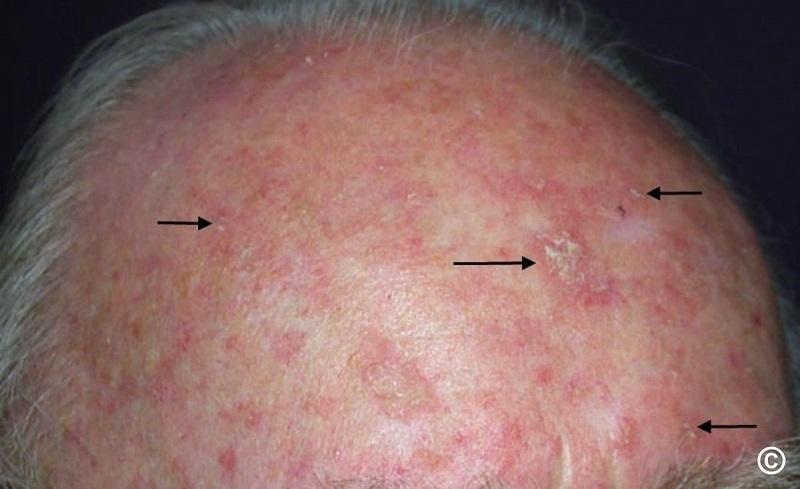
Actinic keratoses are areas of sun-damaged skin found predominantly on sun-exposed parts of the body, particularly the forearms, backs of the hands, face, ears, bald scalp and the lower legs. They may also occur on the lips. They are caused by cumulative sun exposure over many years. Fair-skinned, blue-eyed, red or blonde-haired individuals, who burn easily in the sun but tan poorly, are at particular risk of developing actinic keratoses.

What do actinic keratoses look and feel like?

Most lesions are skin-coloured to pink, with some being more easily felt than seen; some may be red/brown in colour. Lesions feel rough to touch, may develop a white surface scale, and although they are generally flat, the rough white scale may thicken. Lesions may grow up to 1-2 cm in diameter. Actinic keratoses are not painful.

Are actinic keratoses important?

Most are generally harmless. There is a very small risk that an actinic keratosis could progress into a form of skin cancer called squamous cell carcinoma. Patients affected by actinic keratoses are more at risk of all types of skin cancer compared to someone of the same age without actinic keratoses. Those who have numerous actinic keratoses and patients with a weakened immune system (immunosuppressed) are most at risk of developing skin cancer.

General management of actinic keratoses

There are several key aspects:

  • It is best practice for a health professional to do a full skin examination to look for early signs of skin cancer elsewhere on your body
  • Sun protection
    • Seek the shade, especially between 11am to 3pm when the sun is at its strongest
    • Wear protective clothing and a hat
    • Apply sunscreen to exposed skin before going into the sun, using a sun protection factor (SPF) of 30 or above with a 4 or 5 star rating
    • Re-apply sunscreen regularly, according to the manufacturer’s recommendations, especially after swimming
    • Avoid artificial sunlamps, including sunbeds and UV tanning booths
  • Vitamin D has many important functions within the body. Reducing sunlight exposure will cause a reduction in the amount of vitamin D your body produces and so you should consider taking a vitamin D3 supplement (10-25 micrograms per day), and/or increasing your intake of foods high in vitamin D such as oily fish, eggs, meat, fortified margarines and cereals
  • To treat or not to treat? Up to 25% of actinic keratoses will resolve without treatment. While it is often appropriate to treat persisting lesions, for those at low risk (e.g. older patients with a smaller number of lesions), treatment is not always necessary

Treatment of actinic keratoses

  • Most treatments will be provided by healthcare professionals at your GP surgery, although some patients may need to be referred to a doctor specialised in treating actinic keratoses such as a GPwER/GPwSI (a GP who has received additional training in relevant areas of dermatology) or a dermatologist
  • Your healthcare professional may recommend either targeted treatment (treating each individual lesion but not the surrounding skin), or field treatment (treating a larger area of skin in which there are several lesions)
  • Most actinic keratoses are treated with creams (or gels / ointments), although some lesions may need treatment with a cold liquid nitrogen spray (cryosurgery), which can be painful and may leave a pale scar
  • Once treated, the area should settle within 2 months to leave a flat smooth area of skin (although some redness may persist). If this is not the case you must ask for a review with your healthcare professional

Long-term self-management

  • Actinic keratoses is a long-term condition - over time, it is likely that more will appear
  • Untreated, the number of lesions may increase, thereby increasing your risk of skin cancer
  • It may be preferable to wait until a group of several lesions appear (e.g. 5-10) before re-applying treatment. This could be targeted treatment or field treatment (see above)
  • Some treatments may cause moderate-severe redness and crusting of the treated skin and surrounding areas; this is not dangerous and generally indicates that the treatment is working. If using such treatments, the following advice is recommended:
    • avoid using them when you have important social events coming up
    • more severe skin reactions to treatments may be moderated by using the treatment for a shorter time period, using it on alternate days, or using a mild topical steroid cream at the other end of the day to the treatment - you may choose to discuss this with your health professional

When should I seek advice from a healthcare professional?

  • If you have any queries about the treatment, including side-effects
  • Actinic keratoses that are not responding to the full course of treatment
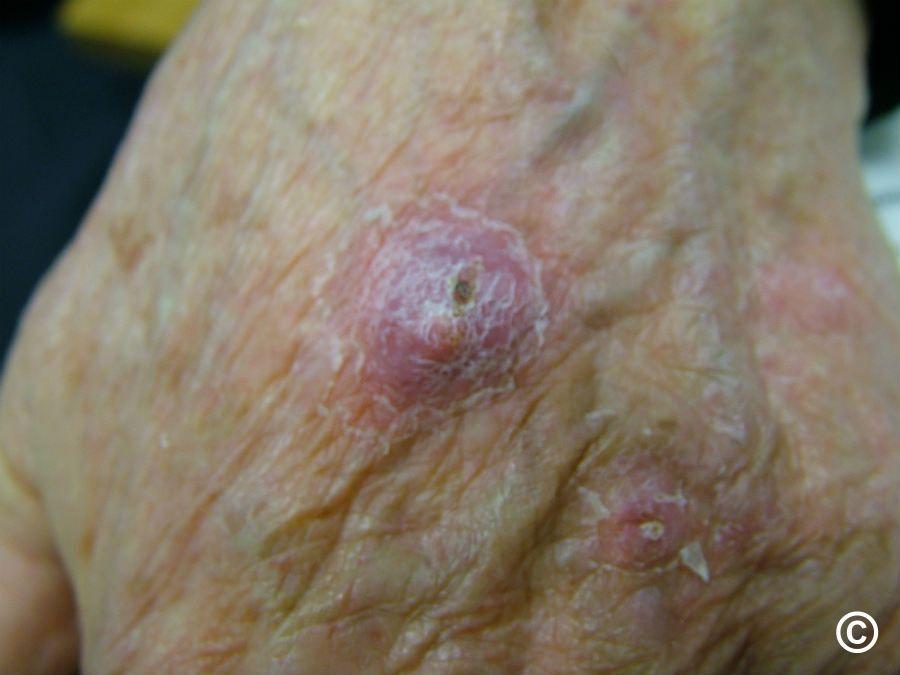
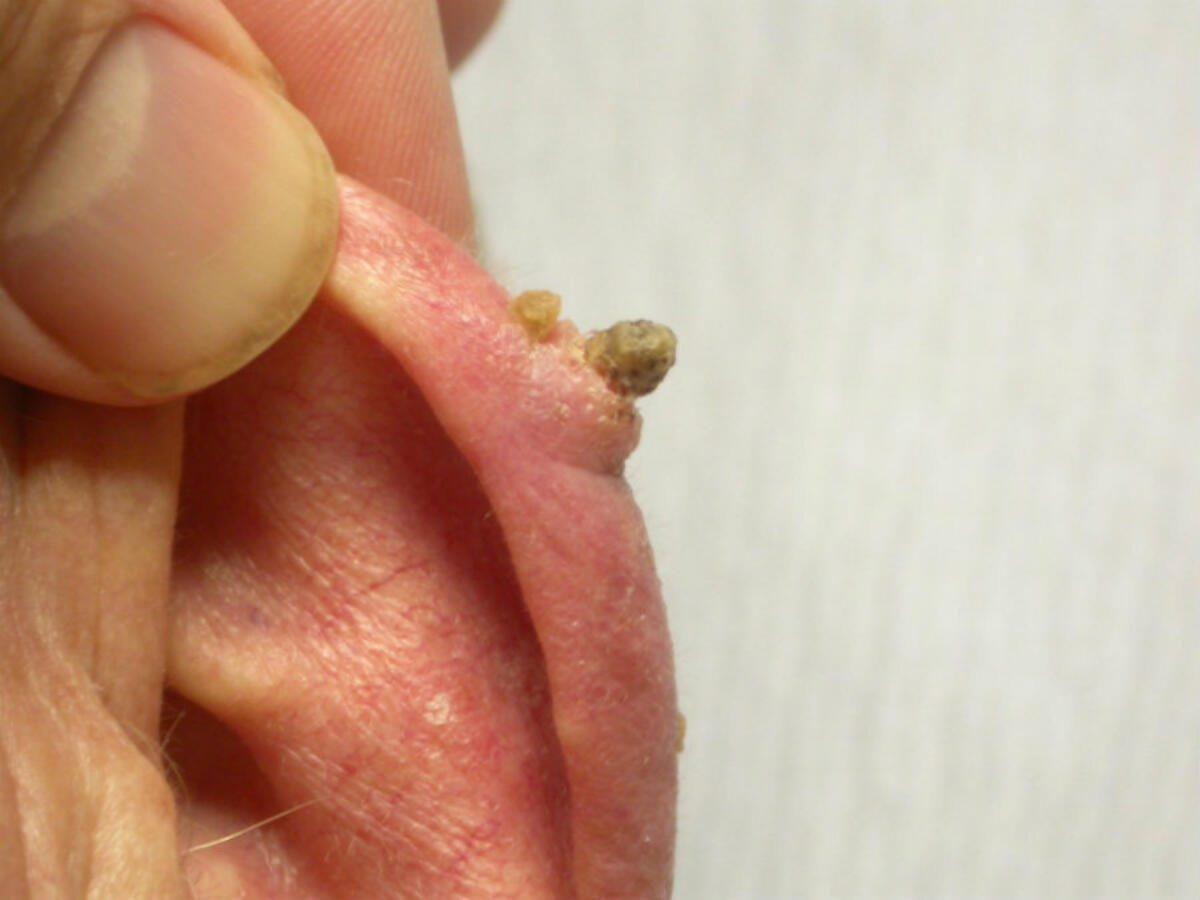
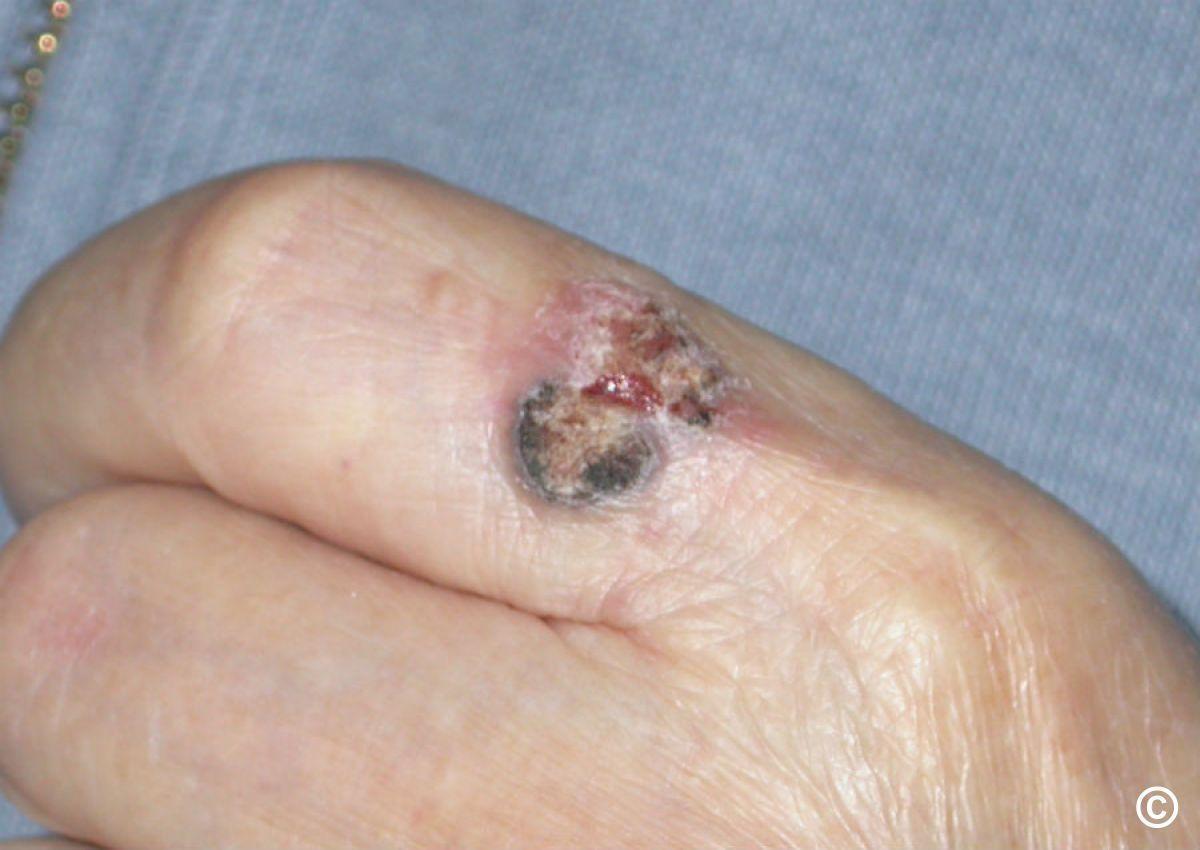
  • If you develop a firm lump, particularly if it continues to grow for a period of 4 or more weeks, is painful or starts to bleed, then medical advice should be sought at the first possible opportunity as these changes could indicate a skin cancer (squamous cell carcinoma). For more information on skin cancer follow this link - the self-examination of moles and other skin lesions 
  • The 3 lesions shown below are examples of squamous cell carcinoma - the first two are referred to as EFGs (all of Elevated and Firm and Growth that is persistent for 4 or more weeks), the second is a non-healing ulcer lasting more than 3 weeks on sun-damaged skin

Disclaimer - the author PCDS cannot accept responsibility for any misleading or incorrect statements, and the management of individual patients remains the direct responsibility of the individual doctor. We do however hope that visitors to this site can contact us regarding comments that are considered misleading or incorrect so that we can continue to improve the site.

Image Rights - The PCDS would like to thank Dermatoweb, DermQuest (Galderma), and others who have contributed images. All named individuals and organisations maintain copyright for the relevant images.

Download the Patient Information Leaflet PDF

Download

The following pharmaceutical companies have had no involvement in the content of this website or in our conference programmes


Almirall
Galderma
Glenmark
Johnson & Johnson
La Roche-Posay
LEO Pharma
Pierre Fabre
Schuco