
LAST UPDATED: Nov 14, 2024

https://www.pcds.org.uk/patient-info-leaflets/eczema-discoid-eczema
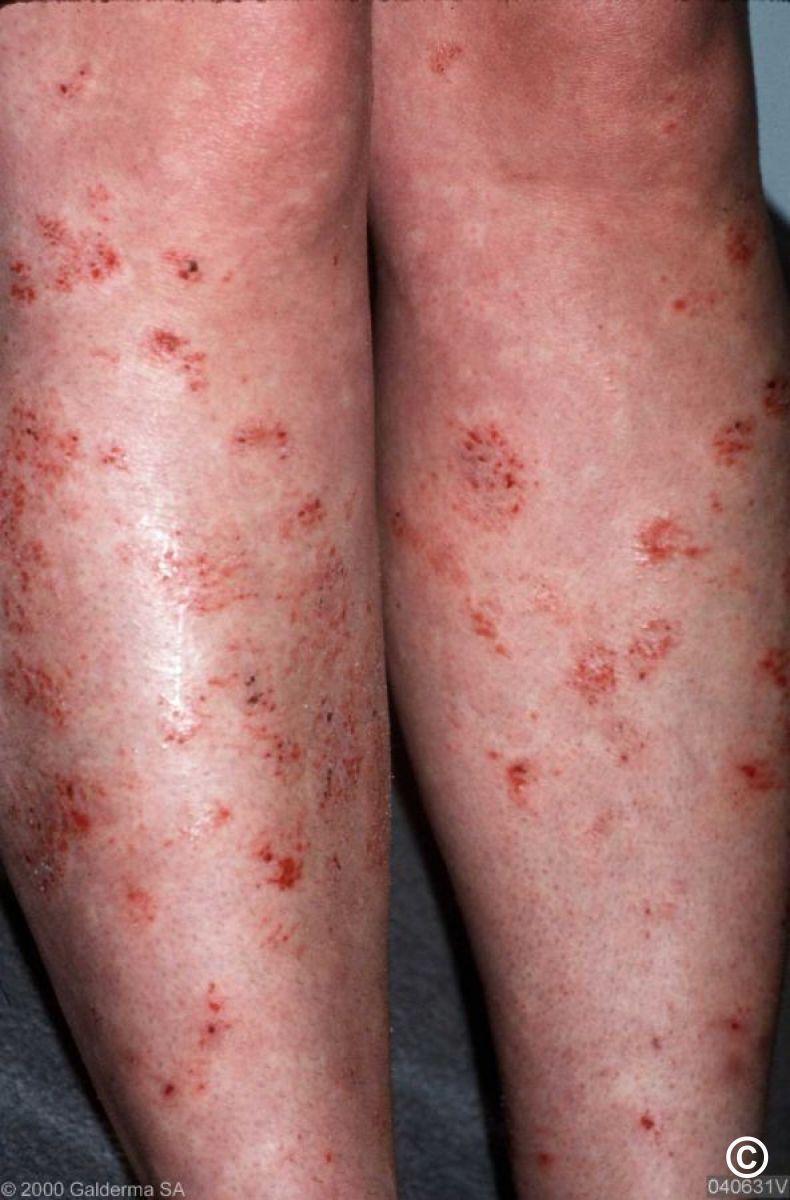
Discoid eczema (nummular eczema) is a type of eczema with characteristic round-oval patches of itchy inflamed skin. Discoid eczema can occur at any age but is seen more frequently in adults.
Discoid eczema can affect any part of the body, although it does not usually affect the face or scalp. It is often very itchy.
The first sign of discoid eczema is usually a group of small spots or bumps on the skin. These quickly join up to form discrete round-oval patches (sometimes referred to as coin-shaped) 1-3 cm in diameter. There may be several patches on each limb and on the body, which develop over weeks to months.
On lighter skin these patches will be pink-red. In skin of colour the patches can be a deep brown or occasionally paler than the skin around them.
Initially, these patches are often swollen, blistered (covered with small fluid-filled pockets) and ooze fluid. Over time, the patches may become dry and crusty.


While the cause is largely unknown, eczema occurs as a result of the skin barrier becoming less effective, something that is more likely as we get older. Discoid eczema is not genetic and so does not run in families. It is considered a distinctive type of eczema, however, similar appearances of round or oval red patches of skin can occur in atopic eczema.
The barrier function refers to the outer skin layer (the Stratum Corneum), which is analogous to a brick wall. In the skin the bricks are dried out, non-living cells called corneocytes. The bricks are held together by mortar/cement, referred to as the intercellular matrix; composed of lipids.
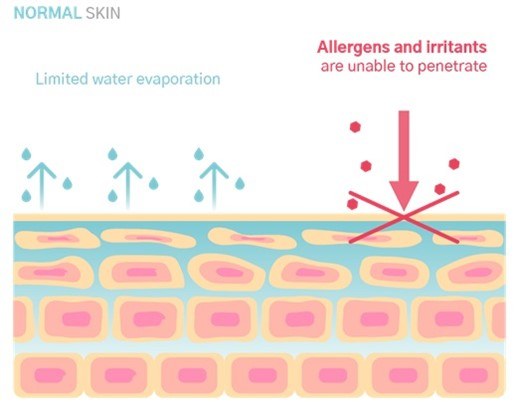
In healthy skin this brick wall is highly impermeable, keeping water loss to a minimum and preventing small particles such as irritants, allergens, and infection from getting into the skin.
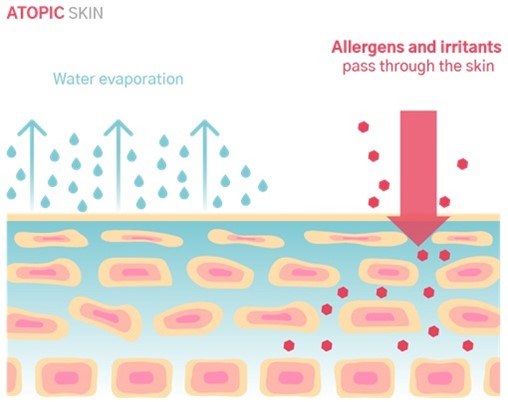
In eczema (discoid, atopic, and other types) the skin barrier becomes less effective - this happens naturally as we get older (whereas in patients with a different type of eczema, atopic eczema, it arises as a result of a faulty gene). Essentially, the bricks are crumblier and the mortar/cement is less effective at holding everything together, resulting in too much water escaping from the skin (the skin dries out), and allowing more irritants and allergens to penetrate the skin, causing itching and inflammation. Accordingly, managing the skin barrier effectively is one of the most important aspect of treating any type of eczema.
If your eczema is not responding to the measures described above, then make an appointment to see a health professional.
This link provides details on specific treatments.
General notes on treatment:
Eczema can have a significant psychological impact and may affect many areas of daily life including work and personal relationships. If the eczema is affecting your mental health the National Eczema Society offers helpful advice. If your mental health continues to be affected, then you should discuss this with a heath professional.
The following groups of people may need to be referred to a specialist, who may be a dermatologist or a GPwER/GPwSI in Dermatology (a GP who has been trained in relevant areas of Dermatology):
Treatment options can include alternative topical treatments (creams, ointments, gels), a course of light treatment (phototherapy), oral medications (tablets) to lessen the immune reaction in your skin (immunosuppressive drugs), or injections.
Please take to your appointment a list of the treatments that you are currently using (and have used) for your eczema, as the specialist may not otherwise know.
Unfortunately not, and if left untreated, discoid eczema may persist for months or years. Whilst discoid eczema has been known to disappear for no apparent reason, there is no guarantee that it will not reoccur.
This leaflet mentions ‘emollients’ (moisturisers). When emollient products come in contact with dressings, clothing, bed linen or hair, there is a danger that a naked flame or cigarette smoking could cause these to catch fire. To reduce the fire risk, patients using skincare or haircare products are advised to be incredibly careful near naked flames to reduce the risk of clothing, hair or bedding catching fire. Cigarette smoking (and being close to people who are smoking) should be avoided.
If you, a family member, or friend have an undiagnosed skin condition; or you want to learn more about how to treat skin conditions, please view our short video on how to get the best from this website.
Disclaimer - the author PCDS cannot accept responsibility for any misleading or incorrect statements, and the management of individual patients remains the direct responsibility of the individual doctor. We do however hope that visitors to this site can contact us regarding comments that are considered misleading or incorrect so that we can continue to improve the site.
Image Rights - The PCDS would like to thank Dermatoweb, DermQuest (Galderma), and others who have contributed images. All named individuals and organisations maintain copyright for the relevant images.
The following pharmaceutical companies have had no involvement in the content of this website or in our conference programmes