
LAST UPDATED: Jan 31, 2025

https://www.pcds.org.uk/patient-info-leaflets/eczema-hand-and-foot
Hand eczema (hand dermatitis) is a common form of eczema that can start in childhood as part of an in-built (genetic) tendency to eczema, but is commonest in teenagers and adults.
It can occur on its own, associated with foot eczema, or with eczema elsewhere on the body.
Hand eczema may be short-lived, however, in some people it lasts for years and can have a profound impact on daily life. Patients with jobs involving frequent handling of irritants are at a considerable risk of hand eczema.
The skin is itchy and sometimes painful. The appearance varies significantly, partly depending on the cause:

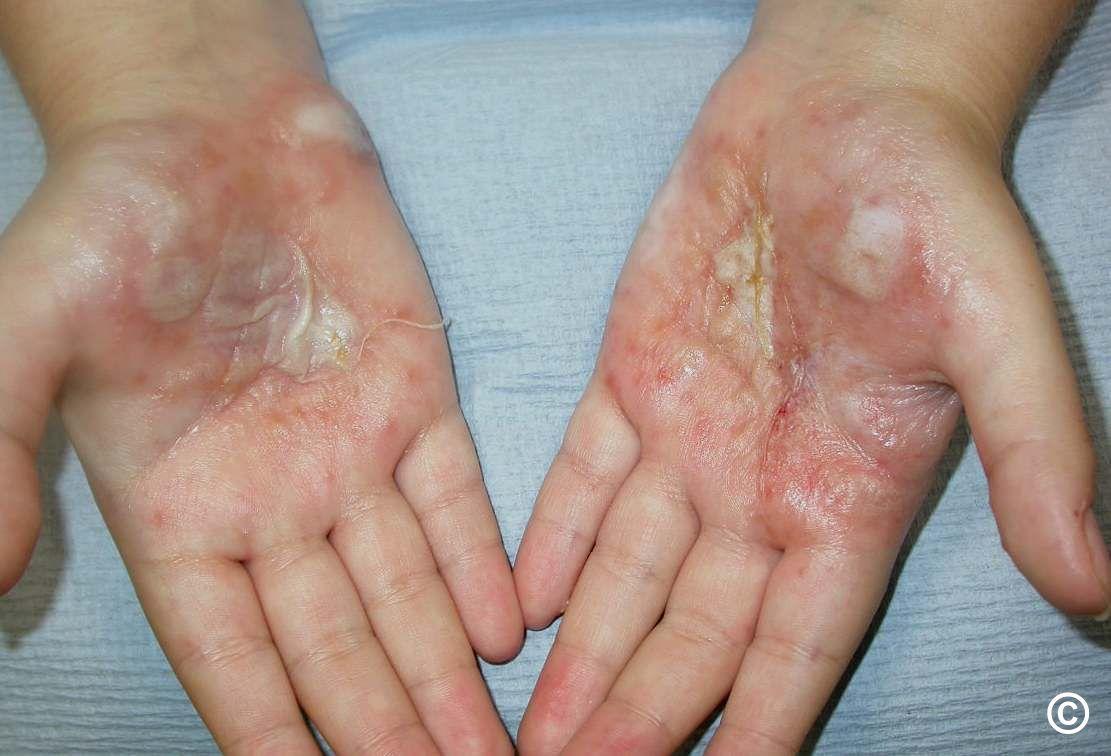
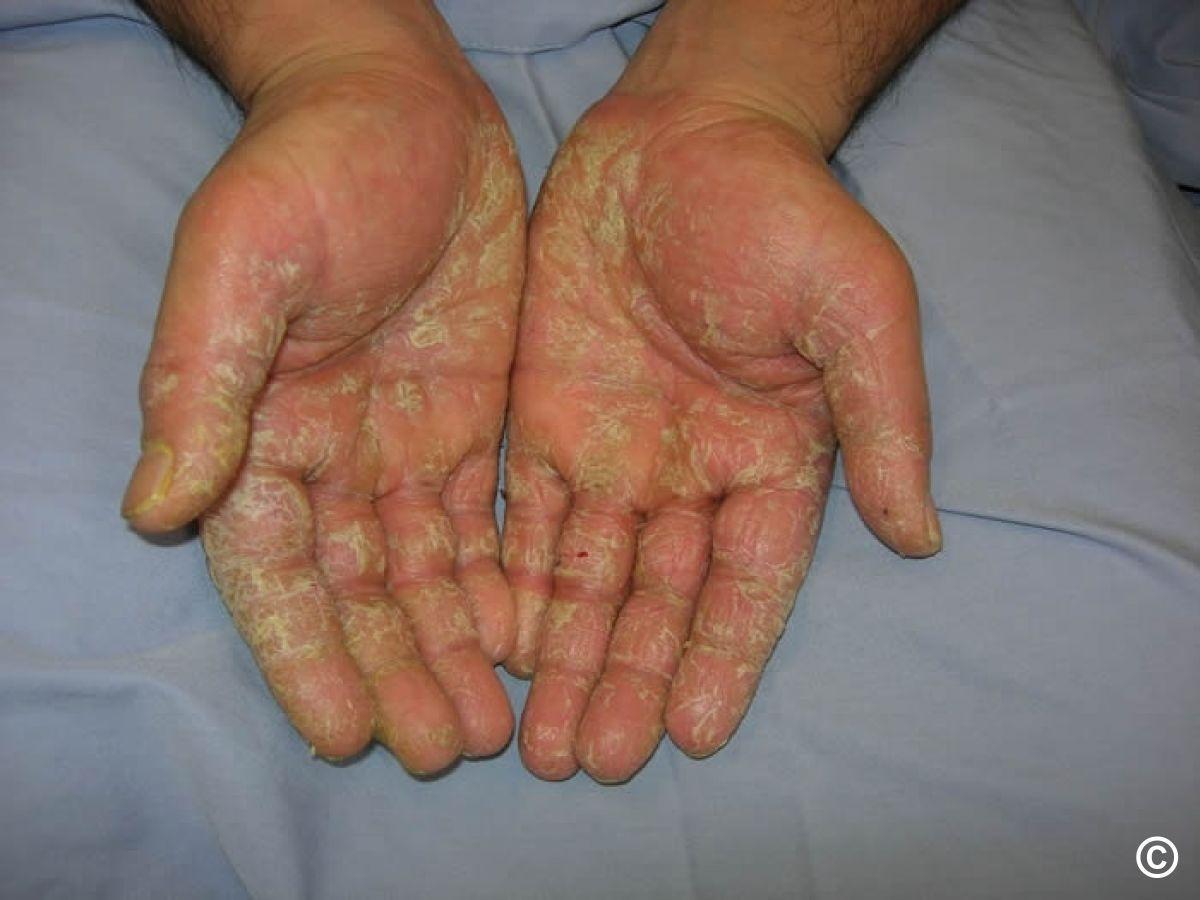
In some people the cause is unknown, in others it can arise as a result of one or more of the following:
Which occupations often cause hand eczema?
Occupations with a high chance of hand eczema include cleaners, carers, people who look after young children, chefs, hairdressers, mechanics, doctors, dentists, nurses, florists, machine operators, aromatherapists, beauticians, and construction workers. Any job which involves repeated contact with water or hand washing more than 10 times a day (‘wet work’) carries an increased chance of causing hand eczema.
If your eczema is not responding to the measures described above, then make an appointment to see a health professional.
This link provides details on specific treatments.
General notes on treatment:
Hand eczema can have a profound psychological impact. If the hand eczema is affecting your mental health, you should discuss this with a heath professional.
The following groups of people may need to be referred to a specialist, usually a dermatologist:
People suspected of having a contact allergic dermatitis may require patch testing - substances are applied to the back in special, small circular containers and left on for a few days to identify any chemicals that you may be allergic to.
For those not suspected of having contact allergic dermatitis then the appointment may be face-to-face (the person attends the clinic), or a video call (teledermatology).
Treatment options can include alternative topical treatments (creams, ointments, gels), a course of light treatment (phototherapy), oral medications (tablets) such as retinoids and occasionally other tablets that lessen the immune reaction in your skin (immunosuppressive drugs).
Please take to your appointment a list of the treatments that you are currently using (and have used) for your eczema, as the specialist may not otherwise know.
In most cases, treatment controls the condition but does not cure it. Early identification and treatment may avoid long standing issues related to hand eczema. In people with allergic contact dermatitis, avoiding the allergen(s) may help or even clear the hand eczema.
Avoid irritants and allergens
Avoid direct skin contact with soaps, detergents, cleaning chemicals and laundry detergents. Foods such as potatoes, tomatoes, citrus fruits, garlic, and chillies can also irritate the skin. Use washing machines and dishwashers when possible. Ask other family members for help with housework and gardening if possible.
Wear gloves
Gloved should be worn when in contact with any of the chemicals described above, when you wash (or treat) you or your children’s hair, for messy domestic tasks including gardening, and exposure to chemicals (including those used for decorating), oils, and grease. Also be aware that fibreglass, plasterboard, and cement are highly irritant.
Wear gloves for as short a time as possible, ideally not more than 20 minutes, because sweating can make eczema worse. Use PVC or disposable nitrile gloves if possible as these are less likely to cause allergies. If sweating is an issue, cotton-lined gloves or separate cotton inner gloves may help. Look after multi-use gloves by turning them inside out and rinsing with warm water and allowing to dry properly before using again. Check for holes and replace if worn.
Emollient moisturisers
You should apply your moisturiser whenever the skin feels dry and after every hand wash. This usually means keeping a supply at your work or school. They can be bought in small tubes to take to work as well as larger pots for use at home.
You may prefer to use a cream during the day as these are less greasy, but overnight an ointment will be more effective. If your moisturiser is in a tub rather than a pump dispenser, it is best to remove the ointment with a clean spoon or similar (rather than fingers), to prevent introducing infection into the tub.
Cotton gloves can be worn at night after applying the moisturiser to stop the bedclothes getting greasy.
Topical steroids
Topical steroids are usually applied either 20 minutes before moisturisers, or 20 minutes afterwards. As with moisturisers, creams are better tolerated but ointments are more effective. Steroids must not be used to moisturise dry skin. To limit the damage caused by skin thinning with topical steroids, they should only be used on active areas of your eczema, for example areas that are red and itchy.
How to wash hands
For general hand washing use a soap substitute such as Dermol, however, if your hands are dirty, use a non-perfumed soap applied sparingly then rinse thoroughly. Remove rings if possible before washing your hands to avoid getting soap and moisture trapped underneath. After washing, dry your hands carefully, especially between the fingers, then apply your moisturiser. Do not use harsh cleaners or wire wool to clean your skin.
Employers of healthcare workers (and others using alcohol-based hand gel) should provide their employees with a suitable alternative (as above).
This leaflet mentions ‘emollients’ (moisturisers). Pure petroleum emollients are flammable and should never be used near a naked flame. Non-paraffin-based emollients may also act as accelerants if they have a high oil content, so caution is advised with all topical treatments.
Your hands may be slippery after applying a greasy moisturiser, so allow time for them to soak in before driving or operating machinery.
If you, a family member, or friend have an undiagnosed skin condition; or you want to learn more about how to treat skin conditions, please view our short video on how to get the best from this website.
Disclaimer - the author PCDS cannot accept responsibility for any misleading or incorrect statements, and the management of individual patients remains the direct responsibility of the individual doctor. We do however hope that visitors to this site can contact us regarding comments that are considered misleading or incorrect so that we can continue to improve the site.
Image Rights - The PCDS would like to thank Dermatoweb, DermQuest (Galderma), and others who have contributed images. All named individuals and organisations maintain copyright for the relevant images.
The following pharmaceutical companies have had no involvement in the content of this website or in our conference programmes