LAST UPDATED: Jan 31, 2025

https://www.pcds.org.uk/patient-info-leaflets/granuloma-annulare
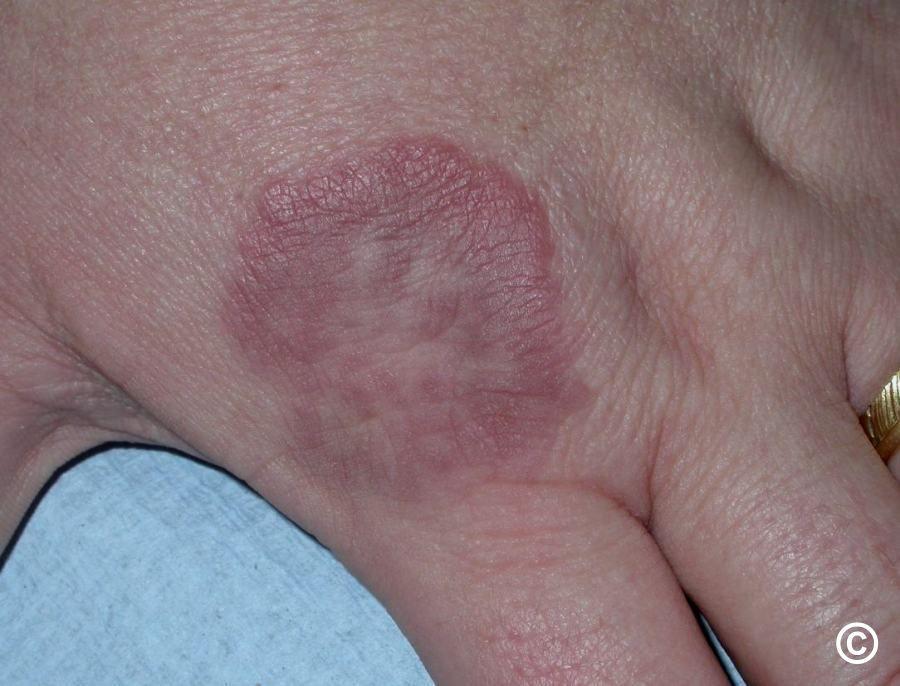
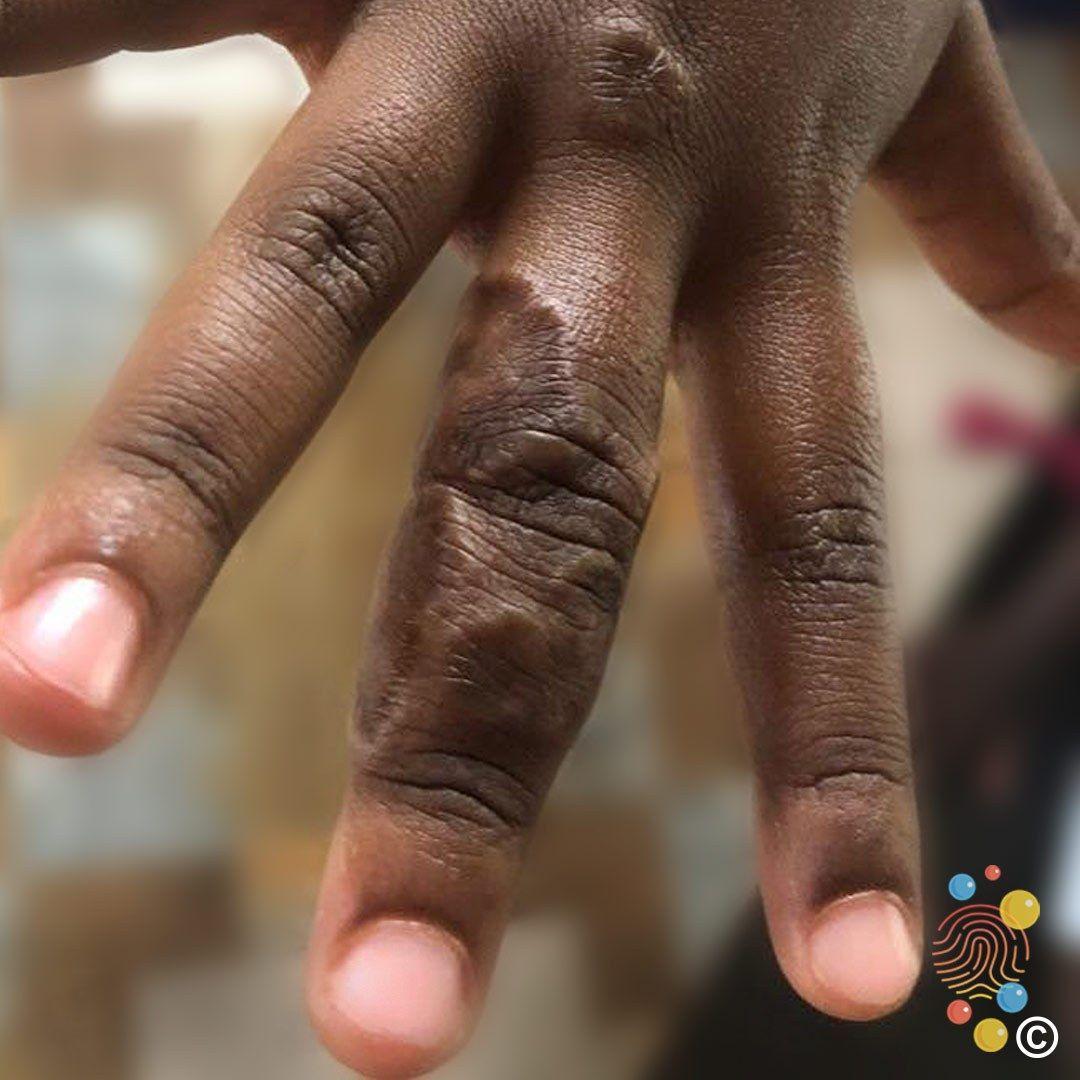
Granuloma annulare (GA) is a relatively common harmless inflammatory skin condition which typically manifests as smooth, ring-like areas in the skin, often with a raised or bumpy edge. It often affects the back of the hands, feet, ankles and elbows; occasionally it can be more widespread across the body. All age groups can be affected, although it is rare in infants.
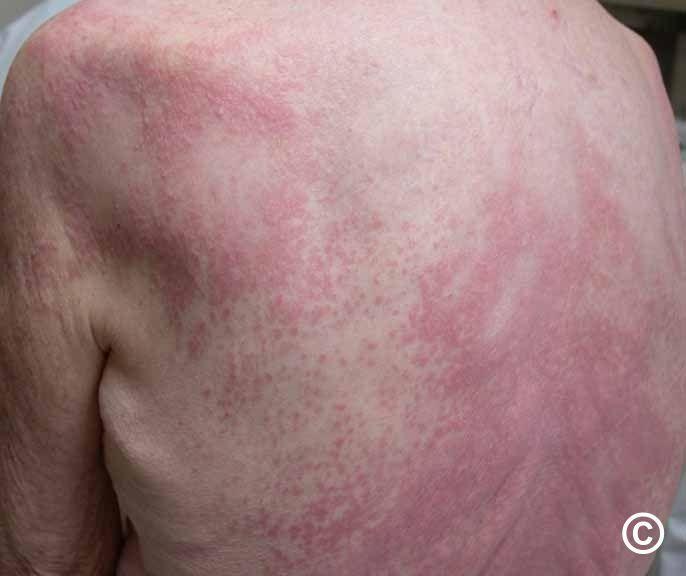
It appears as smooth, skin-coloured or pink-purple patches in the skin, often forming ring shapes, which may be flatter in the middle and more raised or bumpy at the edge. It may only affect a small area of the body (localised GA) or many areas (generalised GA). The patches may slowly grow to reach several cm in size, and generally fade away with time.
It may appear similar to a fungal rash (“ringworm”) but this will usually be rough and scaly, unlike GA which is smooth.
Rarely, GA can develop deeper in the skin (subcutaneous GA), leading to firm, deep swellings. There are also a few other rare forms of GA.
Usually there are no associated symptoms, but occasionally patients report mild itch or tenderness of the patches.
The cause of GA is unknown. It is not infectious (cannot be spread from person to person) and is not hereditary (passed down through families). More research is needed to determine if GA is linked to any other underlying health conditions, such as diabetes.
Most cases of GA will not require treatment and will resolve by themselves. In half of cases, the patches will have faded away by 2 years without any treatment (although it can often come back).
If the patches of GA are very visible and causing you distress, you may wish to try camouflage creams. You can contact the following charities for support with this:
If you want to discuss possible treatment options, make an appointment at your GP surgery. It is important to understand that there is no cure for GA and in most cases, treatment is unnecessary for this harmless condition.
If GA is causing significant distress, strong steroid creams may be tried to see if this encourages the patches to fade more quickly. These are likely to be needed for prolonged periods and can cause side-effects including thinning of the skin.
If the GA become more widespread other treatments are sometimes considered; these treatments can only be provided from a hospital clinic.
GA can have a significant psychological impact and may affect many areas of daily life including work and personal relationships. If you require support with your mental health then you can discuss this with your health professional.
For some cases of generalised or other rarer subtypes of GA, or to confirm the diagnosis, you may be referred to see a specialist. This may be a dermatologist or a GPwER/GPwSI in dermatology (a GP who has been trained in relevant areas of dermatology).
Sometimes a small skin biopsy may be required to confirm the diagnosis of GA. This involves numbing the skin with an injection of local anaesthetic (you are awake during the procedure), taking a small sample of skin and closing the wound with stitches.
A specialist may discuss other treatments for GA, which can include phototherapy (a type of light therapy that is usually only available in a hospital clinic) and strong oral medications, such as anti-malarials, isotretinoin or drugs that suppress your immune system. Usually, these treatments will only be considered for generalised (more widespread) types of GA, are required for many months, and there is very little evidence to show that they help, so the decision to treat will be taken on an individual basis.
If you, a family member, or friend have an undiagnosed skin condition; or you want to learn more about how to treat skin conditions, please view our short video on how to get the best from this website.
Disclaimer - the author PCDS cannot accept responsibility for any misleading or incorrect statements, and the management of individual patients remains the direct responsibility of the individual doctor. We do however hope that visitors to this site can contact us regarding comments that are considered misleading or incorrect so that we can continue to improve the site.
Image Rights - The PCDS would like to thank Dermatoweb, DermQuest (Galderma), and others who have contributed images. All named individuals and organisations maintain copyright for the relevant images.
The following pharmaceutical companies have had no involvement in the content of this website or in our conference programmes