LAST UPDATED: Jan 31, 2025

https://www.pcds.org.uk/patient-info-leaflets/grovers-disease
Grover’s disease, also known as transient acantholytic dermatosis, is a fairly common itchy skin condition which predominantly affects the trunk in middle-aged and older people. This condition is more common in men than in women. It may last for several weeks or months, and can be recurrent (i.e. come and go).
Grover’s disease causes groups of small bumps or blisters to appear on the chest, middle of the back and arms, which are usually itchy. These may be flesh-coloured, red, or sometimes darker in colour.

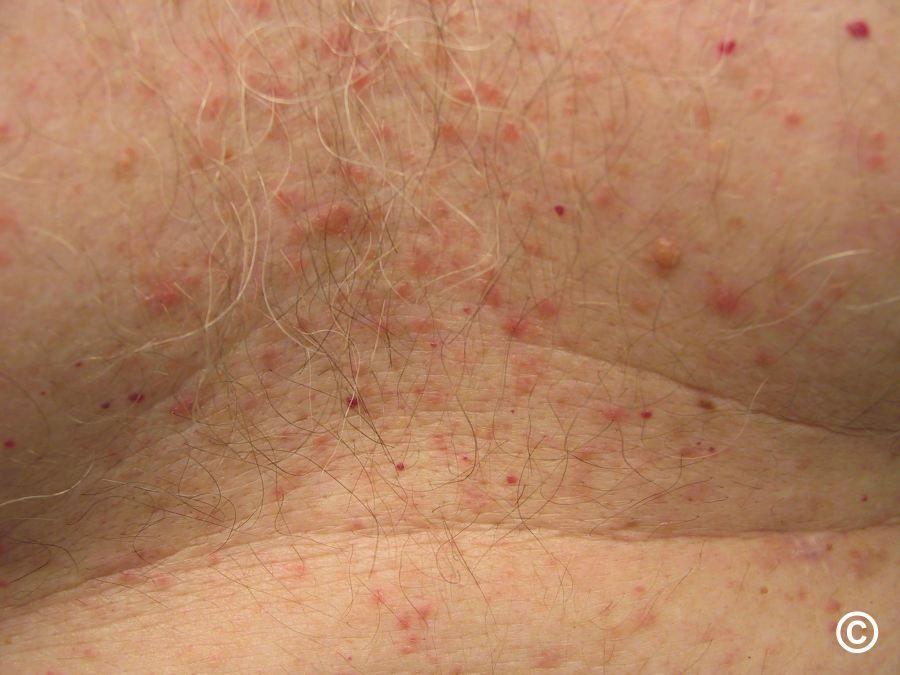
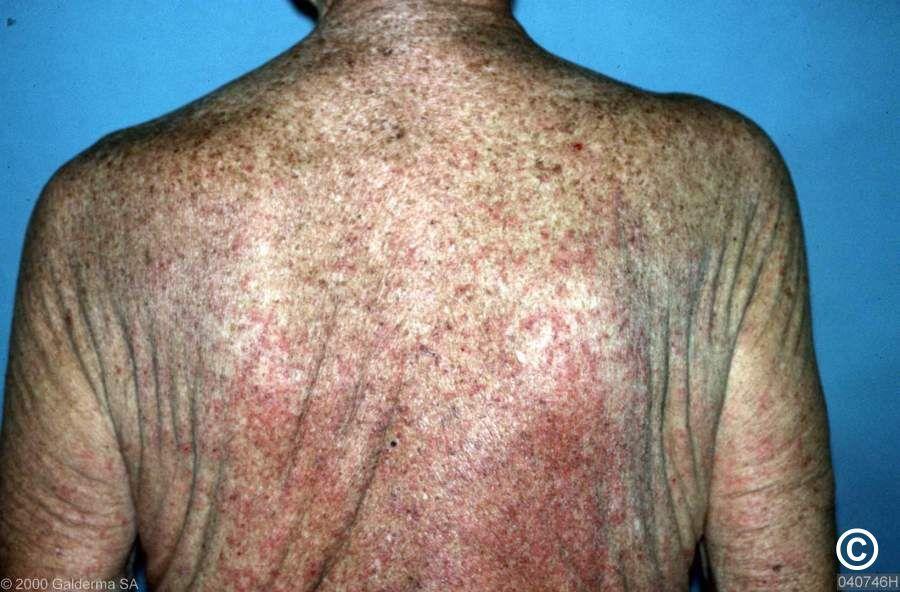
While the exact cause of Grover’s disease is not known, it is thought to be aggravated by heat and sweat. It is not thought to be hereditary (cannot be passed down generations) and is not infective (cannot be passed from person to person).
It is more common in patients who have had chronic sun exposure, prolonged bed rest, and certain illnesses.
Remaining cool and avoiding sweating is the best way to help manage the symptoms of Grover’s disease. The use of cooling emollient creams (such as those containing menthol) may be helpful. You may wish to try an antihistamine tablet, which can be bought over the counter, to see if this helps reduce itching. Keeping your skin protected in the sun is also important.
Although there is no cure for Grover's disease, if you need help there are various treatments that can be prescribed. Treatment options provided by a healthcare professional include topical treatments (applied directly to the skin) such as emollients and steroid creams.
Grover’s disease can have a significant psychological impact. If Grover’s disease is affecting your mental health, you should discuss this with a health professional.
If the diagnosis is uncertain you may need to be referred to a specialist, who will be either a Dermatologist or a GPwER/GPwSI in Dermatology (a GP who has also been trained in relevant areas of dermatology).
The appointment may be face-to-face (the person attends the clinics), or a video call (Teledermatology).
If the diagnosis is uncertain a small sample of skin (a biopsy) may be taken under local anaesthetic to be examined under a microscope.
Other treatment options for patients experiencing more persistent or severe symptoms may include a course of light treatment (phototherapy) or oral medications such as retinoids.
If you, a family member, or friend have an undiagnosed skin condition; or you want to learn more about how to treat skin conditions, please view our short video on how to get the best from this website.
Disclaimer - the author PCDS cannot accept responsibility for any misleading or incorrect statements, and the management of individual patients remains the direct responsibility of the individual doctor. We do however hope that visitors to this site can contact us regarding comments that are considered misleading or incorrect so that we can continue to improve the site.
Image Rights - The PCDS would like to thank Dermatoweb, DermQuest (Galderma), and others who have contributed images. All named individuals and organisations maintain copyright for the relevant images.
The following pharmaceutical companies have had no involvement in the content of this website or in our conference programmes