LAST UPDATED: Jan 31, 2025
Melasma is a common, harmless disorder. In melasma, areas of increased skin pigmentation develop on sun-exposed sites of the body. It is not cancerous and is not contagious. It does not cause any physical symptoms such as itch nor pain but can cause significant psychological distress.
Melasma most commonly affects the face and appears as flat, darker-coloured patches. Depending on your own skin colour, these patches will be darker in colour than surrounding skin. The patches may be light-brown, darker brown, or blue-grey in colour. Melasma may appear like freckle- or confetti- like patches, or may join up to form larger patches.
There are different ways in which melasma can appear on the face:
Rarely, melasma, (known as extra-facial melasma), can develop on the neck, chest, and forearms.

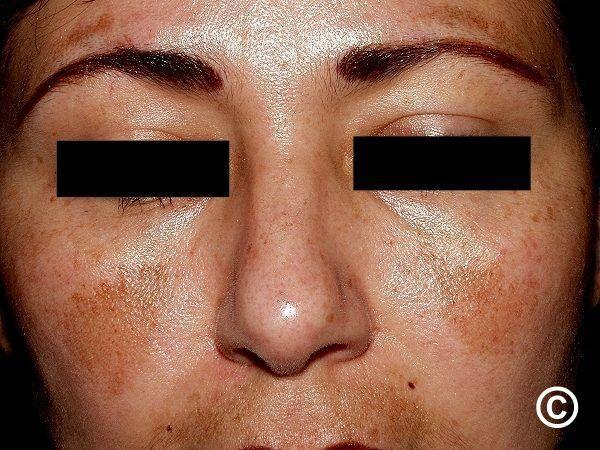

Melasma is a condition that develops in time (it is not present from birth). It develops on sun-exposed skin. Though anyone can develop melasma, it is more common in women. Though the exact cause is unknown, multiple factors are thought to be responsible, usually in combination:
Most cases of melasma do not need treatment unless causing distress due to its appearance.
If you want to confirm the diagnosis or discuss treatment options, make an appointment at your GP surgery. It is important to understand there is no cure for melasma, and in most cases, treatment is unnecessary for this harmless condition.
Principles of treatment include identifying and stopping triggers, and sun (ultraviolet) protection. Melasma triggered by hormonal contraceptives may require stopping the contraception method and considering alternative non-hormonal contraception. Phototoxic medicines may need to be changed to non-phototoxic alternatives, where possible.
For information on specific treatments refer to the clinical chapter on Melasma.
One of the treatments that can be prescribed is Azelaic acid. It is usually applied twice daily; works slowly so needs to be used for at least 8-12 weeks before results can be assessed; and can be used safely in pregnancy and breastfeeding patients. Uncommonly, it may cause stinging and itching that fade with use. It is usually prescribed as a 20% cream, though a 15% gel can be used too.
If melasma persists despite the above measures, depending on local provision, a referral to a specialist for further advice and treatment may be appropriate.
Melasma can have a significant psychological impact and may affect many areas of daily life including work and personal relationships. Sudden stressful events may cause a worsening of melasma. If you require support with your mental health, then discuss this with your health professional.
You may be referred to a specialist if either to confirm the diagnosis, or for specialist treatments not available from your GP. This may be to a consultant dermatologist or a GPwER/GPwSI in dermatology (a GP who has been trained in relevant areas of dermatology).
Although making the diagnosis of melasma can be straightforward most of the time, sometimes it can be challenging. If the diagnosis is unclear, a small skin biopsy may be required to confirm the diagnosis of melasma. This involves numbing the skin with an injection of local anaesthetic (you are awake during the procedure), taking a small sample of skin and closing the wound with stitches. This will leave a small scar. An investigation called patch testing is sometimes used if the specialist thinks you may have contact allergic dermatitis (i.e. an allergic reaction to something coming into contact with the skin).
A specialist will reinforce the need for sun protection but may discuss other treatments for melasma. Treatments available depend on local NHS provision, as availability on the NHS is not widespread.
‘Triple combination’ cream combining a topical retinoid (0.1% tretinoin), a weak topical steroid (1% hydrocortisone), and a skin lightening cream (4% hydroquinone) is often prescribed. Triple combination creams are safe, but rarely, can be associated with a side effect known as ochronosis in which there is permanent darkening of skin colour. This usually occurs with prolonged treatment (using the cream for more than a year). Tranexamic acid, usually used in tablet form is another treatment used for melasma. In some areas, it is also available as a topical solution. Neither of these treatments can be used in pregnancy or breastfeeding patients.
In addition to the 'triple combination cream', several other treatments may be offered by private cosmetic practitioners. These include other topical treatments (vitamin C, kojic acid, and cysteamine), chemical (facial) peels, platelet-rich plasma injections, micro-needling, dermabrasion, and laser therapy. It is vital that one does their own research in to what is being claimed and promised and to seek a reputable practitioner. Be careful that over the counter creams do not contain harmful ingredients, such as potent steroids, or high-dose hydroquinone. Insist on looking at the product label. There is no treatment, to date, that results in complete melasma reversal. Treatments are best thought of, in conjunction with rigorous sun protection, as controlling and managing melasma, rather than curing.
If you, a family member, or friend have an undiagnosed skin condition; or you want to learn more about how to treat skin conditions, please view our short video on how to get the best from this website.
Disclaimer - the author PCDS cannot accept responsibility for any misleading or incorrect statements, and the management of individual patients remains the direct responsibility of the individual doctor. We do however hope that visitors to this site can contact us regarding comments that are considered misleading or incorrect so that we can continue to improve the site.
Image Rights - The PCDS would like to thank Dermatoweb, DermQuest (Galderma), and others who have contributed images. All named individuals and organisations maintain copyright for the relevant images.
The following pharmaceutical companies have had no involvement in the content of this website or in our conference programmes