
LAST UPDATED: Jan 31, 2025

https://www.pcds.org.uk/patient-info-leaflets/molluscum-contagiosum
Molluscum contagiosum (MC) is a common viral infection of the skin mainly affecting children but can arise at any age. MC normally gets better within a few months without treatment; however, it can spread around the skin and take up to 18 months or more for the condition to clear completely.
Usually several to many firm, skin-coloured or pink-red, dome-shaped spots (lesions), often less than 5 mm in diameter, with a central dimple. They are occasionally itchy and if scratched or traumatised they can become infected and feel sore.
The spots often develop in small clusters (close together) and can spread across various parts of the body. In a few cases, particularly when MC occurs through sexual contact, spots can develop on the genitals and nearby skin.
People with a weakened immune system (immunosuppressed) or who have an underlying skin condition such as eczema often have an increased number of lesions. Less commonly, there can be one or two larger lesions known as giant molluscum contagiosum, which can be up to 20 mm in diameter.

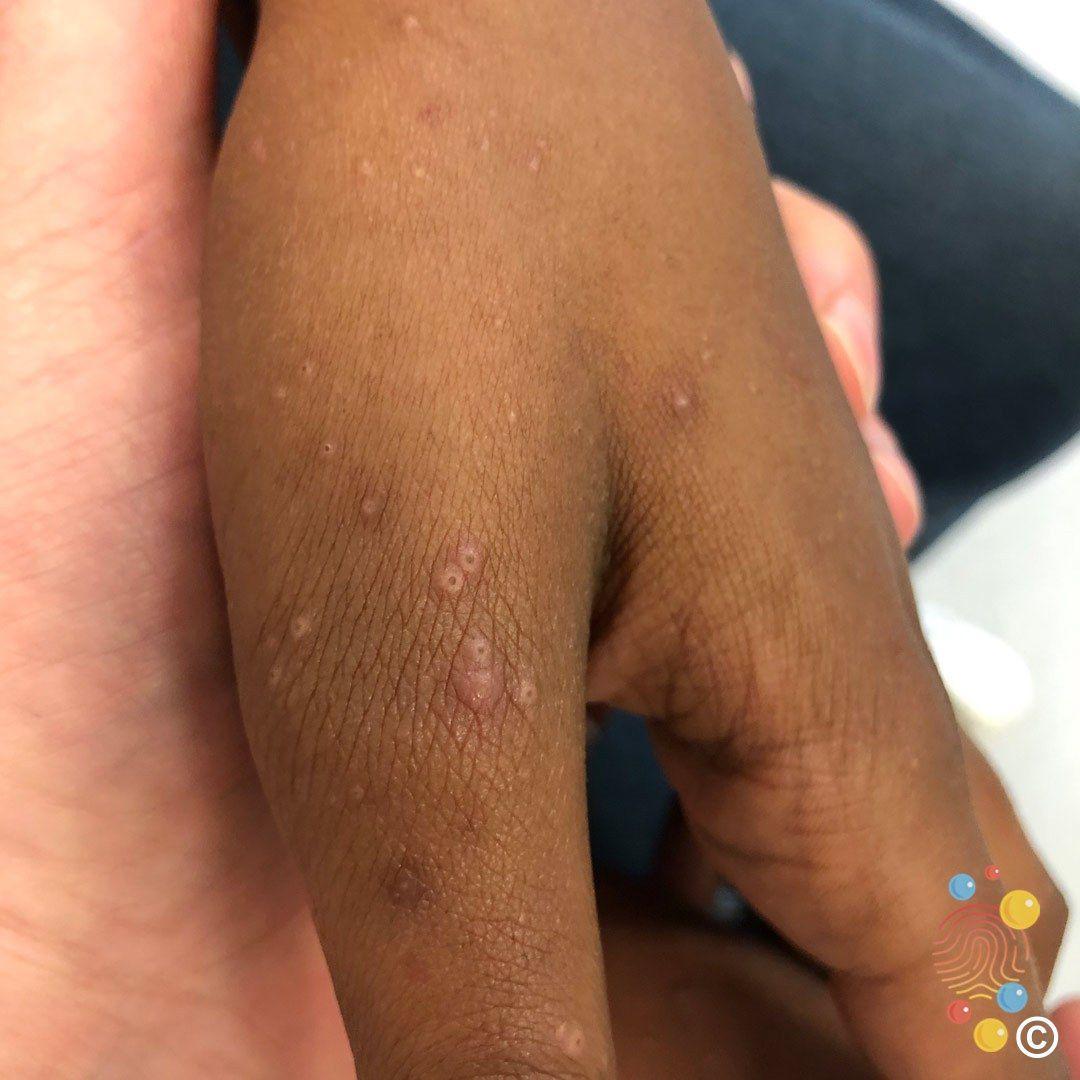

Molluscum contagiosum is caused by a type of virus called a poxvirus (the molluscum contagiosum virus).
MC is contagious (an infection that can be spread from one person to another) and can be passed on as a result of the following:
It is not known exactly how long someone with MC is contagious for, but it is thought the contagious period may last up until the last spot has disappeared.
Many adults will have had MC when they were younger and so are unlikely to catch it from their children as they will have developed an immunity to the infection.
It is important to remember that in the vast majority of cases, MC is a harmless condition which is self-resolving and no treatment is required.
Treatment may be sought in older children and adults, for example, if there is a significant impact on quality of life or if the person has a weakened immune system.
If you need advice then see your local pharmacist who may recommend a treatment called MolluTinc ®, that can be purchased from a pharmacy without a prescription. It can be used in children aged 2 years and older.
If a child is being treated, the liquid must be applied by an adult. The treatment should be applied directly to the spots twice a day (preferably once in the morning and once in the evening). Occasionally, MolluTinc can cause a slight burning sensation or irritation; this usually only lasts for a few minutes after you apply it. Continue using the treatment until the spots become inflamed (red and swollen/crusty, or, in skin of colour the spots may become darker than the surrounding skin) which is usually around day 5. If the spots have not become inflamed by day 14 then stop treatment as this would suggest that the treatment is not going to work, which is the case in some people.
After applying the treatment, adults must wash their hands with soap and water to reduce the chance of spreading the virus.
If MC becomes persistent, troublesome, and does not respond to treatments described above then you may choose to make an appointment with a health professional.
Other stronger treatments such as freezing the lesions (cryosurgery) are only usually recommended for adults and older children who have persistent spots that are particularly unsightly and are affecting their quality of life. Treatment may also be recommended for people with weakened immune systems, as the condition can take several years to clear in these cases.
Cryosurgery and other stronger treatments are painful, generally not tolerated by younger children, and can leave permanent marks on the skin.
The main reasons for referring a patient to a specialist is if the diagnosis is unclear. You may be referred to a dermatologist or a GPwER/GPwSI (a GP who has been trained in relevant areas of dermatology).
There is almost no reason to refer young children as treatment is likely to do more harm than good. Very occasionally an older child or adult may benefit from referral for the reasons discussed in the section above.
The appointment may be face-to-face (the person attends the clinic), or a video call (teledermatology).
If you, a family member, or friend have an undiagnosed skin condition; or you want to learn more about how to treat skin conditions, please view our short video on how to get the best from this website.
Disclaimer - the author PCDS cannot accept responsibility for any misleading or incorrect statements, and the management of individual patients remains the direct responsibility of the individual doctor. We do however hope that visitors to this site can contact us regarding comments that are considered misleading or incorrect so that we can continue to improve the site.
Image Rights - The PCDS would like to thank Dermatoweb, DermQuest (Galderma), and others who have contributed images. All named individuals and organisations maintain copyright for the relevant images.
The following pharmaceutical companies have had no involvement in the content of this website or in our conference programmes