
LAST UPDATED: Jan 31, 2025

https://www.pcds.org.uk/patient-info-leaflets/pityriasis-rosea
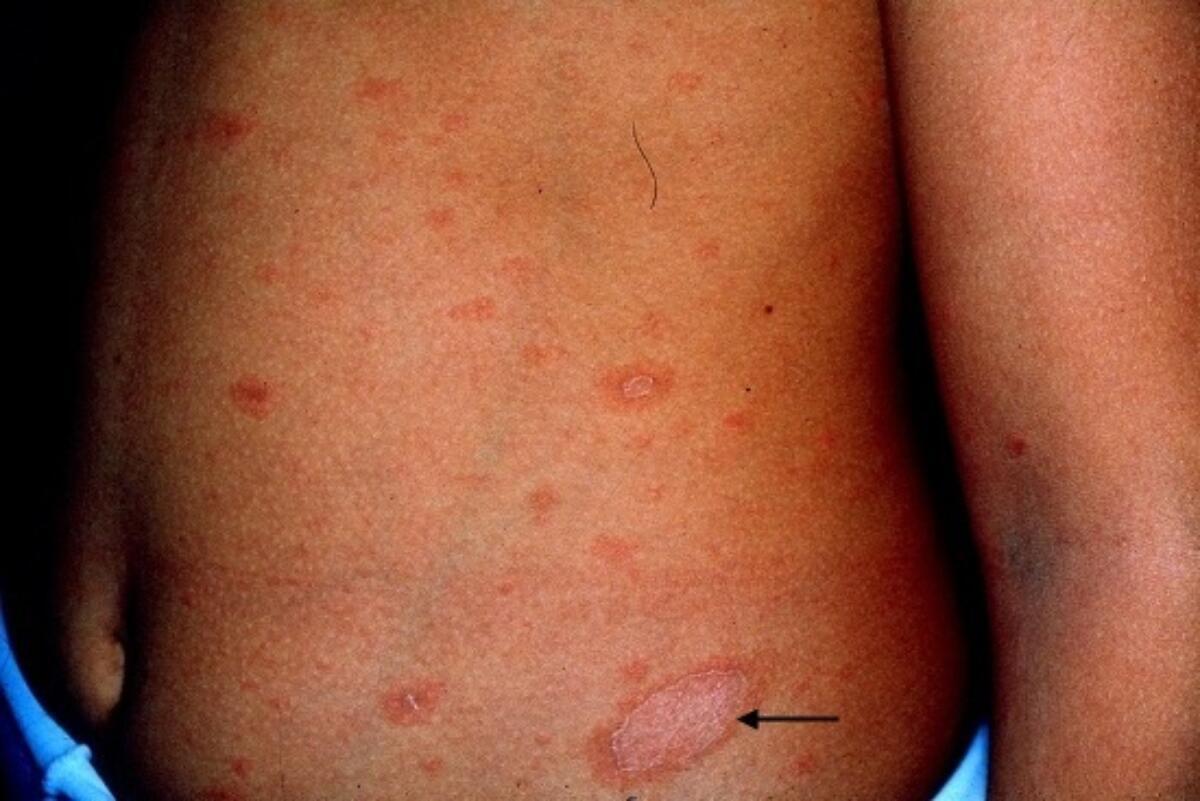
Pityriasis rosea is a common skin condition with many small, slightly scaly, oval patches on the chest and back. It most frequently affects people between 10-35 years of age and is self-resolving (going away without treatment) usually after 6-12 weeks.
People usually feel well, athough a mild headache and fever can occur just before the rash appears. Pityriasis rosea is occasionally itchy.
The first sign of pityriasis rosea is the herald patch; a single scaly round to oval patch 2-10 cm in diameter.
Up to 2 weeks after the herald patch appears, a more widespread rash develops comprised of small oval patches with fine scale usually ranging in size up to 1.5 cm. On the chest and back the rash often runs in the same direction as the ribs, sometimes resembling the branches of a Christmas tree. The neck, upper arms, and upper thighs can also be affected. The face, hands, and feet are not usually affected.
In light skin the patches are usually pink-red. In skin of colour the patches can sometimes be grey, deep brown or black. After the rash has gone, you may have some darker or lighter areas of skin. These should return to normal within a few months and will not leave permanent scarring.
The cause is unknown. It is not contagious (i.e. you cannot pass it on to anyone).


Pityriasis rosea usually gets better without treatment within 12 weeks.
If the skin is itchy or uncomfortable an emollient moisturising cream applied as often as needed can help. Sometimes a mild topical steroid cream is needed which can be purchased at your pharmacy without a prescription.
An appointment with a health professional is usually only required if the diagnosis is uncertain, the itch is not responding to the treatments described above, or the rash is not starting to improve after three months.
This leaflet mentions ‘emollients’ (moisturisers). Pure petroleum emollients are flammable and should never be used near a naked flame. Non-paraffin-based emollients may also act as accelerants if they have a high oil content, so caution is advised with all topical treatments.
Your hands may be slippery after applying a greasy moisturiser, so allow time for them to soak in before driving or operating machinery.
If you, a family member, or friend have an undiagnosed skin condition; or you want to learn more about how to treat skin conditions, please view our short video on how to get the best from this website.
Disclaimer - the author PCDS cannot accept responsibility for any misleading or incorrect statements, and the management of individual patients remains the direct responsibility of the individual doctor. We do however hope that visitors to this site can contact us regarding comments that are considered misleading or incorrect so that we can continue to improve the site.
Image Rights - The PCDS would like to thank Dermatoweb, DermQuest (Galderma), and others who have contributed images. All named individuals and organisations maintain copyright for the relevant images.
The following pharmaceutical companies have had no involvement in the content of this website or in our conference programmes