LAST UPDATED: Jan 31, 2025

https://www.pcds.org.uk/patient-info-leaflets/pityriasis-versicolor
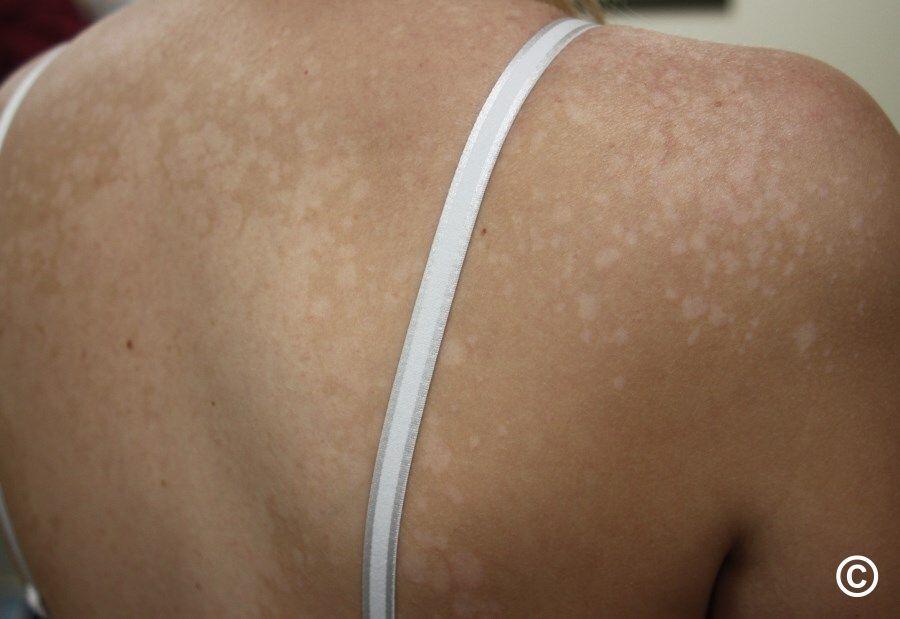
Pityriasis versicolor, sometimes called tinea versicolor, is a common condition caused by an overgrowth of yeast, leading to the development of scaly discoloured skin patches, which occasionally can be mildly itchy. It most frequently affects young adults but can arise in children and older adults.
The sites most commonly affected are the chest and upper back, but there is often involvement of the upper arms, neck, and abdomen.
The rash arises as many small, round-oval, slightly scaly patches, often joining together to form large areas of affected skin.
On white skin the affected areas usually appear darker than surrounding skin (fawn-coloured or pink); in skin of colour the affected patches are often paler than the surrounding skin.


It is caused by a type of yeast called Malassezia (formerly known as Pityrosporum ovale). This yeast is found on the skin of more than 90% of adults, where it normally lives without causing any problems.
Pityriasis versicolor can develop if this yeast starts to multiply more than usual. Although the environmental factors listed below can cause the yeast to multiply, it is not clear why this happens in some people and not in others.
Pityriasis versicolor is more common in hot, humid climates and in people who are prone to heavy sweating, and may clear in the winter months and recur each summer. It is also more common in people who have a weakened immune system.
There is no evidence that it is related to yeast in food so there is no need to change your diet.
If the rash does not respond to treatment, then make an appointment to see a health professional who is likely to prescribe a short course of an antifungal tablet.
If you, a family member, or friend have an undiagnosed skin condition; or you want to learn more about how to treat skin conditions, please view our short video on how to get the best from this website.
Disclaimer - the author PCDS cannot accept responsibility for any misleading or incorrect statements, and the management of individual patients remains the direct responsibility of the individual doctor. We do however hope that visitors to this site can contact us regarding comments that are considered misleading or incorrect so that we can continue to improve the site.
Image Rights - The PCDS would like to thank Dermatoweb, DermQuest (Galderma), and others who have contributed images. All named individuals and organisations maintain copyright for the relevant images.
The following pharmaceutical companies have had no involvement in the content of this website or in our conference programmes