
LAST UPDATED: Jun 02, 2025

https://www.pcds.org.uk/patient-info-leaflets/psuedofolliculitis
Pseudofollicultis is also known as razor/shaving bumps, “barber's itch”, scarring pseudofolliculitis of the beard, and folliculitis barbae traumatica.
Pseudofolliculitis is a recurring inflammatory reaction to hair follicles caught within the skin as they grow. It typically affects people with coarse curly hair. It is not usually caused by infection.
Pseudofolliculitis most commonly affects men especially of African ancestry, and women (from all ethnic groups) who shave, pluck, or wax. It affects any site where coarse hairs are shaved/removed e.g. beard area, scalp, armpits, pubic area and legs.
Multiple, firm, skin-coloured to red/dark bumps and pus filled spots. The spots are centred on hair follicles (hair growth sites) at any site of shaving or plucking. An itching or burning sensation can occur within 24-48 hours of shaving.

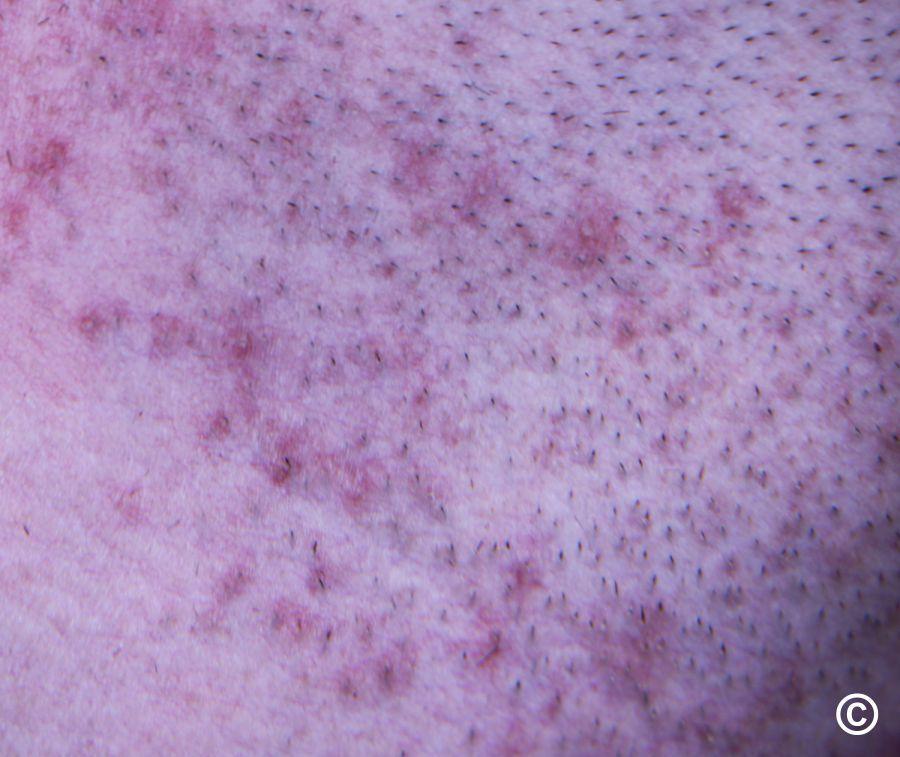
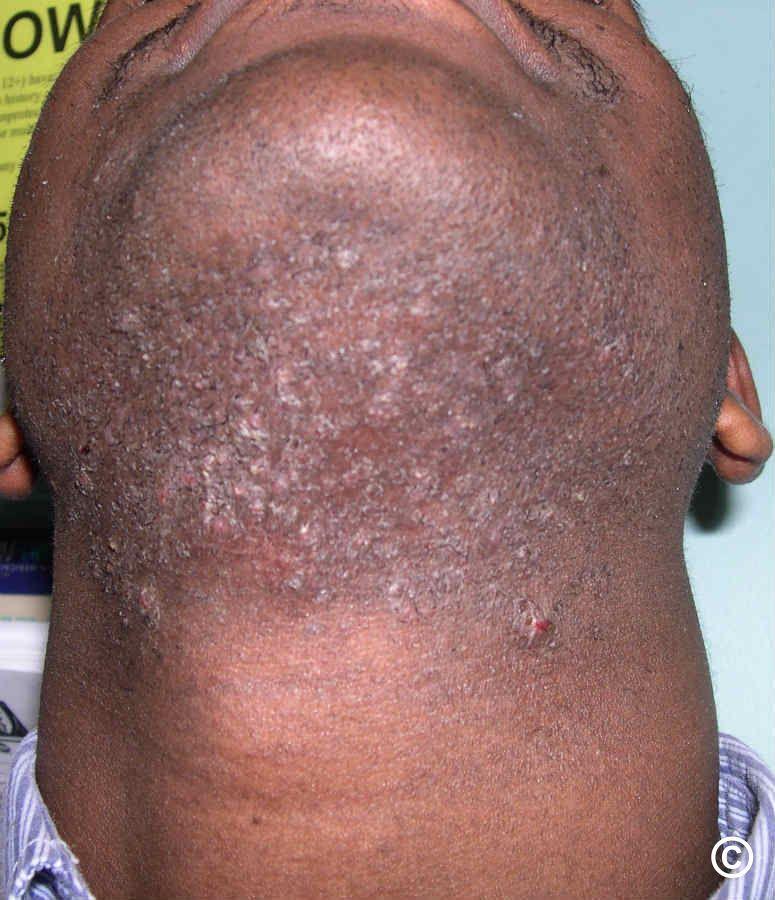
After close shaving, plucking or waxing, sharp hair ends below the skin surface (or just above the surface) grow from the curved hair follicle and project downwards into the lower layer of the skin (dermis). This sometimes leads to puncturing of the hair follicle, causing inflammation.
These include:
Pseudofolliculitis can have a significant psychological impact and may affect many areas of daily life including work. If there is a requirement to be clean shaven a GP letter may be needed to support not shaving.
Ideally stop shaving if possible and avoid waxing or plucking - the skin will often settle 4-6 weeks after stopping shaving. Once settled, resume shaving as follows:
If things are not improving, your primary care health professional may swab an active spot. You might be prescribed:
Depending on the problems you are experiencing you could be referred either to a dermatologist or a GPwER/GPwSI (a GP who has been trained in relevant areas of dermatology). One of the most common reasons for referral is if you have developed thick scars, which can be injected with a steroid.
None of the treatments listed below are permanent; if helpful, treatments need to be repeated. In most areas of the UK the following treatments are not available on the NHS:
If you, a family member, or friend have an undiagnosed skin condition; or you want to learn more about how to treat skin conditions, please view our short video on how to get the best from this website.
Disclaimer - the author PCDS cannot accept responsibility for any misleading or incorrect statements, and the management of individual patients remains the direct responsibility of the individual doctor. We do however hope that visitors to this site can contact us regarding comments that are considered misleading or incorrect so that we can continue to improve the site.
Image Rights - The PCDS would like to thank Dermatoweb, DermQuest (Galderma), and others who have contributed images. All named individuals and organisations maintain copyright for the relevant images.
The following pharmaceutical companies have had no involvement in the content of this website or in our conference programmes