Pyogenic granuloma
LAST UPDATED: Jan 31, 2025
What is a pyogenic granuloma?
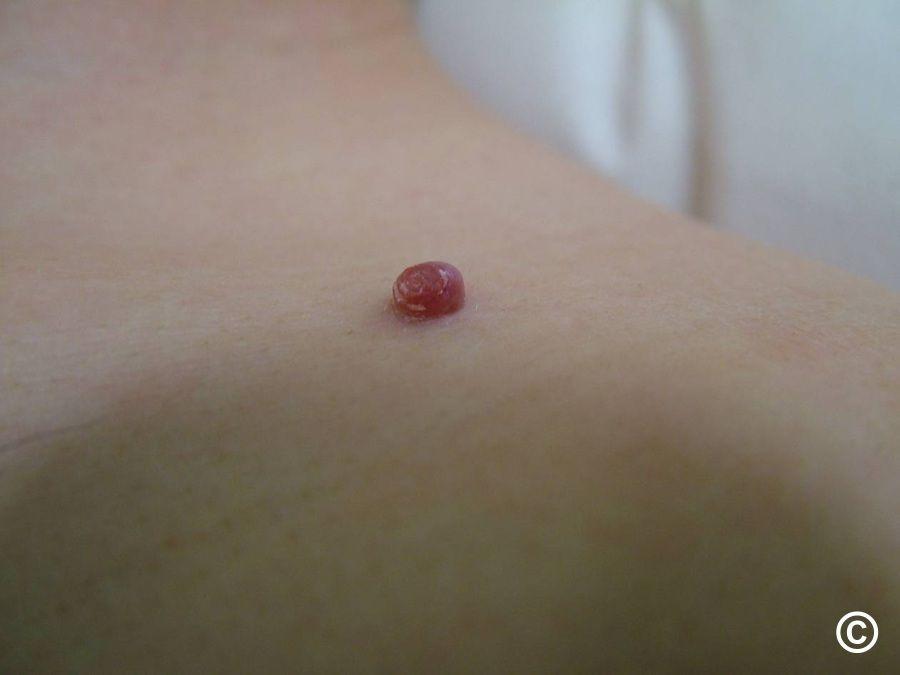
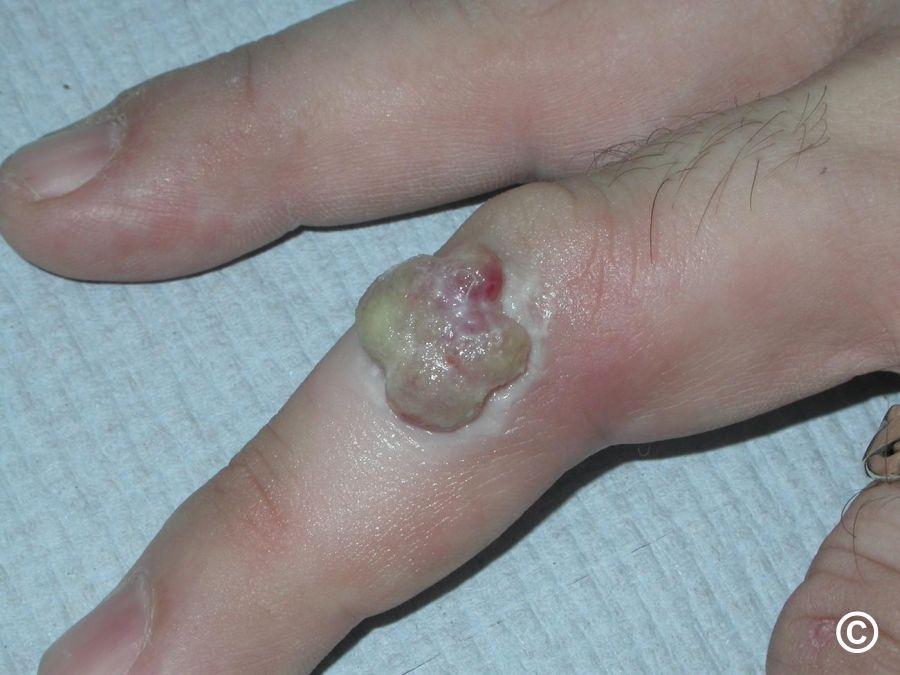
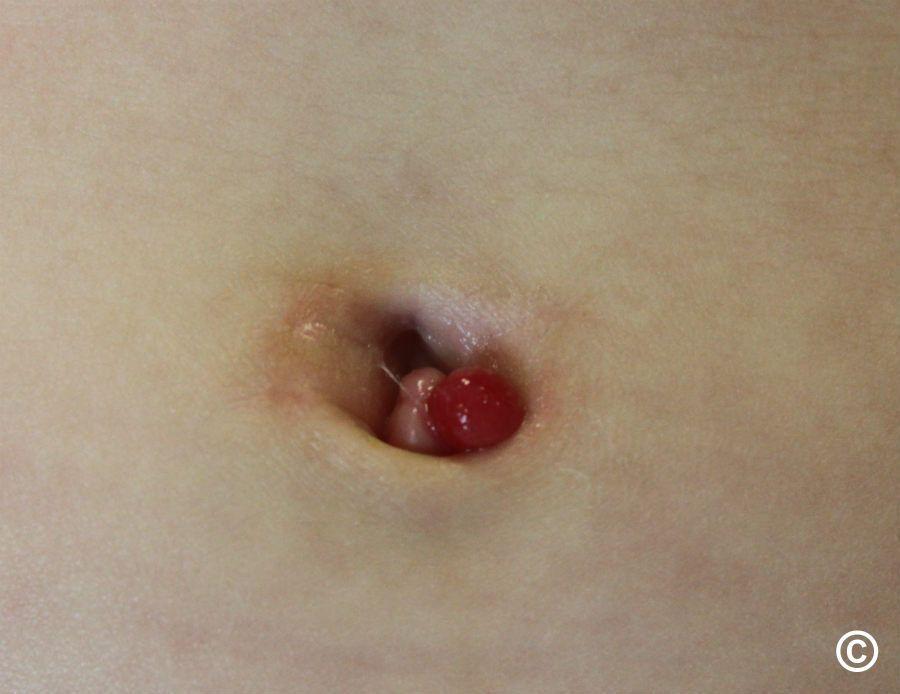
A pyogenic granuloma (also known as a lobular capillary haemangioma) is a harmless overgrowth of small blood vessels in the skin. It cannot turn into a skin cancer.
What does a pyogenic granuloma look and feel like?
- Most commonly affect the fingers, face and scalp, but can arise anywhere including inside the mouth
- Usually solitary
- Appear as a bright red, rapidly-growing skin lump. Occasionally a pyogenic granuloma may look like it is attached to the skin by a stalk
- A pyogenic granuloma grows over several weeks and then stops, rarely getting bigger than 1 cm. Over time the lump may become darker
- The surface is often shiny and moist but may become crusty
- Usually painless
- Often bleed heavily when knocked
What causes a pyogenic granuloma?
- They can occur at any age but are most common in children and young adults. They are also more common in pregnancy
- For many the cause is unknown, although some appear after a minor skin injury. They are more common with certain medications, such as retinoids (which are sometimes used for acne) and the oral contraceptive pill
- They are not infectious, and cannot be passed on to other people
Make an appointment at your GP surgery
If you have not already done so, you must make an appointment to see a health professional to get the diagnosis confirmed, as occasionally skin cancer can have a similar appearance.
Treatment of a pyogenic granuloma
- A few pyogenic granulomas get better themselves without treatment
- The vast majority require treatment, most of which can be treated with salt as follows:
- First apply Vaseline to the surrounding skin to prevent irritation
- Standard table salt should then be applied to the whole pyogenic granuloma before then being covered, e.g. using a plaster, surgical tape, or Clingfilm. Use as much salt as you can so it is completely covered
- The dressing should be kept dry and the whole process repeated each day until the pyogenic granuloma resolves
- If the lesion has not gone (or almost gone) within two weeks of starting the salt treatment you must contact your GP surgery straightaway as they would need to refer you to a specialist urgently to review the diagnosis
- Occasionally creams containing timolol or topical corticosteroids are tried - this may be especially useful in young children
- If the pyogenic granuloma is in an awkward site, making the use of salt therapy not practical, or the pyogenic granuloma has not responded to salt therapy (or creams), it will need to be treated surgically
- Surgical treatment involves numbing the skin with an injection of local anaesthetic and then scooping out the pyogenic granuloma (called curettage), before then stopping the bleeding. The sample will then be examined under a microscope (histology) to confirm the diagnosis
Is there a risk of the pyogenic granuloma coming back?
Up to 15% recur, usually soon after treatment. It is important to contact the team who treated you so they can organise to review you and discuss further management options.
Helping with other skin conditions
If you, a family member, or friend have an undiagnosed skin condition; or you want to learn more about how to treat skin conditions, please view our short video on how to get the best from this website.
Disclaimer - the author PCDS cannot accept responsibility for any misleading or incorrect statements, and the management of individual patients remains the direct responsibility of the individual doctor. We do however hope that visitors to this site can contact us regarding comments that are considered misleading or incorrect so that we can continue to improve the site.
Image Rights - The PCDS would like to thank Dermatoweb, DermQuest (Galderma), and others who have contributed images. All named individuals and organisations maintain copyright for the relevant images.